

In This Article
Standing in the pillow aisle — or scrolling through forty open tabs at 1 a.m. — eventually boils down to one question: memory foam pillow vs down pillow, which one is actually going to fix your mornings? It’s a fair fight. One material contours to your head like it was poured there; the other surrounds you in a cloud you can punch into shape. Neither is “wrong,” but the right pick depends on how you sleep, how hot you run at night, and whether you wake up rubbing your neck.
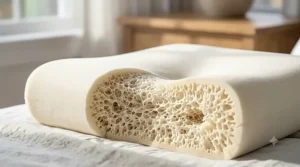
This guide breaks the decision down without the marketing fluff. We’ll compare how each fill type performs for side, back, and stomach sleepers, walk through six real, current pillows spanning budget to premium, and dig into the practical stuff — heat retention, allergies, durability, and what you’ll actually spend over the life of the pillow. By the end, you’ll know which side of the memory foam vs down pillow debate fits your sleep style, instead of guessing based on whichever one was on sale.
One quick framing before the product breakdown: a 2024 systematic review of pillow effects on chronic neck pain treats sleep posture and pillow support as part of ongoing care, not just comfort — so this isn’t purely a softness contest. The right fill can genuinely change how your neck feels in the morning.
Quick Comparison Table: Memory Foam vs Down Pillow
| Feature | Memory Foam | Down |
|---|---|---|
| Support | High — contours and holds shape | Moderate — moldable, compresses over the night |
| Heat retention | Higher (less so with gel/graphite/shredded designs) | Lower — airy and breathable |
| Best for | Side sleepers, neck pain, stomach sleepers (low-loft options) | Back/stomach sleepers, anyone who likes a “sink-in” feel |
| Allergy risk | Low (hypoallergenic by nature) | Higher unless treated/certified |
| Average lifespan | 2–4 years | 2–3 years (less if untreated) |
| Typical price range | $60–$200 | $70–$250+ |
| Best for | Pressure relief, alignment | Plush, hotel-style luxury feel |
What this actually means: if you fall asleep on your side and wake up with a stiff neck, memory foam’s contouring support usually wins — it stops your head from sinking past a neutral spine angle. If you’re a back or stomach sleeper who runs cold and craves that “five-star hotel” sink-in feeling, down has the edge, provided you don’t have allergies. Hybrid and down-alternative options exist specifically to split the difference, and a few make our list below.
💬 Just one click — help others make better buying decisions too!😊
✨ Don’t Miss These Exclusive Deals!
🔍 Found a fill type that matches your sleep style? Tap any highlighted pillow below to check current pricing and availability before stock or sizing options change. 😊
Top 6 Memory Foam & Down Pillows: Expert Analysis
We picked a mix of both fill types — budget through premium — so you can compare apples to apples instead of guessing from spec sheets alone. Every pick below links to its current Amazon listing so you can check live pricing and stock.
1. Nectar Tri-Comfort Cooling Pillow (Memory Foam)
The Tri-Comfort’s headline feature is its zip-adjustable firmness: open both zippers for soft, close one for medium, close both for firm. That’s a real advantage over fixed-loft foam pillows — most buyers guess wrong on firmness once and never bother returning it, so being able to dial it in after the fact actually gets used. The fill blends memory foam with a down-alternative microfiber, which keeps the contouring benefit of foam without the dense, “stuck” feeling solid foam blocks can have.
✅ Pros: adjustable firmness, cooling polyethylene cover, allergy-friendly down-alternative blend
❌ Cons: premium price for a synthetic-fill pillow, firm setting may feel dense for stomach sleepers
Best for: side sleepers who want foam’s support but haven’t settled on a firmness level yet. Typically falls in the $150–$180 range.

2. Tempur-Pedic TEMPUR-Neck Pillow (Memory Foam)
This is a contoured pillow, not a flat rectangle — it’s shaped to cradle the back of the neck while supporting the head, which matters more than it sounds. A flat pillow lets your neck droop into the gap between your shoulder and head; a contoured one fills that gap. Tempur’s proprietary foam is also genuinely different from generic memory foam in density and recovery speed, which is part of why it carries a 5-year warranty most competitors don’t offer.
✅ Pros: purpose-built neck support, gel layer for heat, long warranty
❌ Cons: not for stomach sleepers, narrow shape isn’t ideal if you move around a lot at night
Best for: side and back sleepers managing neck pain. Generally priced in the $70–$100 range for the contour size.
3. Saatva Graphite Memory Foam Pillow (Memory Foam)
The standout here is the graphite-infused top layer, which actively pulls heat away rather than just letting it escape passively the way a perforated foam would. Underneath, a shredded memory foam and natural latex core gives a softer, more adjustable feel than a single foam slab — useful for stomach sleepers who need a lower, less rigid profile than side sleepers do.
✅ Pros: active cooling layer, machine-washable cover, low-loft option suits stomach sleepers
❌ Cons: latex blend means it’s not fully vegan-foam, higher price than most cooling pillows in this category
Best for: stomach sleepers and hot sleepers who still want foam’s support. Usually in the $100–$150 range.
4. Coop Sleep Goods Eden Pillow (Memory Foam)
Coop’s shredded memory foam fill ships with extra foam included, so you can add or remove material to land on your own firmness — a budget-friendly version of the adjustability you’d pay much more for elsewhere. It also holds its shape well over time, which is the area where cheap shredded-foam pillows usually fall apart first (literally — they flatten).
✅ Pros: adjustable fill at a low price, good shape retention, breathable shredded design
❌ Cons: bamboo-blend cover sleeps warmer than gel-cooled options, no contour shaping for neck-specific support
Best for: budget shoppers who still want adjustable memory foam. Typically $60–$90.
5. Brooklinen Down Pillow (Down)
Brooklinen keeps things simple — no chambers or baffles, just down (and a feather-heavier core in the firmer lofts) inside a cotton sateen shell. That construction means the soft “plush” loft sinks deep, which stomach sleepers tend to prefer, while the firmer lofts hold more shape thanks to a higher feather ratio. The standout perk isn’t the fill, though — it’s the 365-day return window, which is unusually generous for a down pillow you can’t really test without using it.
✅ Pros: long return window, multiple firmness options, classic plush feel
❌ Cons: not certified hypoallergenic, softer lofts compress fast for back/side sleepers
Best for: stomach sleepers and traditionalists who want a classic down feel without committing blind. Generally $80–$120.

6. Boll & Branch Down Pillow (Down)
The three-chamber build is the real differentiator: the soft option is down throughout, while medium and firm use a feather-and-down inner core wrapped in a down outer layer. That construction is what gives the firmer lofts actual structure instead of just “more feathers poking through” — you get support without losing the soft outer feel. It also carries Responsible Down Standard certification, which matters if ethical sourcing is part of your buying decision.
✅ Pros: RDS and OEKO-TEX certified, three real firmness tiers, balances structure with softness
❌ Cons: higher price point, still not allergy-safe for true down sensitivities
Best for: back and side sleepers who want down’s feel with more backbone. Usually $100–$150.
Top 6 Comparison Table
| Product | Fill | Best For | Price Range |
|---|---|---|---|
| Nectar Tri-Comfort | Memory foam + down-alt | Side sleepers, adjustable firmness | $150–$180 |
| Tempur-Pedic TEMPUR-Neck | Memory foam | Neck pain, side/back sleepers | $70–$100 |
| Saatva Graphite | Memory foam + latex | Stomach/hot sleepers | $100–$150 |
| Coop Sleep Goods Eden | Memory foam | Budget, adjustable | $60–$90 |
| Brooklinen Down | Down/feather | Stomach sleepers, plush feel | $80–$120 |
| Boll & Branch Down | Down/feather | Back/side, structured plush | $100–$150 |
Looking at the spread, the budget tier (Coop, Tempur-Neck contour) proves you don’t need a triple-digit price to get a purpose-built pillow — you just trade away premium cooling tech or certifications. The mid-range cluster ($80–$150) is where most of the meaningful upgrades live: certified down, active cooling layers, and adjustable fill. Past $150, you’re mostly paying for brand polish and added firmness tiers rather than a fundamentally different sleep experience.
Practical Usage Guide: Getting the Most Out of Either Fill Type
Whichever side of the memory foam pillow vs down pillow decision you land on, the first 30 days set the tone for how long the pillow performs.
For memory foam: let it fully decompress for 24–48 hours after unboxing before judging the firmness — compressed shipping foam needs time to recover its true loft. Spot-clean the foam core (never submerge it) and wash only the cover regularly; foam that absorbs water breaks down fast and can develop odor. Rotate which end you sleep on weekly to prevent one section from compressing faster.
For down: fluff it by hand every morning — down doesn’t recover loft on its own the way foam does, it needs the air re-distributed. Use a breathable cotton protector under the pillowcase to slow oil and moisture buildup, since both shorten a down pillow’s lifespan faster than normal wear does. Every few months, run it through a low-heat dryer cycle with a couple of clean tennis balls to re-loft clumped clusters.
Real-World Scenarios: Which Sleeper Fits Which Pillow
The side-sleeping desk worker: hunches over a laptop all day, then needs a pillow that won’t let the neck droop at night. A contoured memory foam pillow like the TEMPUR-Neck, or an adjustable foam pillow set to a firmer setting, keeps the cervical spine in the same neutral line a good ergonomic chair maintains during the day.
The hot-sleeping stomach sleeper: wants low loft so the neck doesn’t kink upward, but also overheats on dense foam. The Saatva Graphite’s low-loft, cooling-layer design or a soft-loft down pillow like Brooklinen’s plush option both solve the height problem — down wins slightly on temperature, foam wins slightly on keeping its shape through the night.
The luxury-hotel chaser: has stayed somewhere with incredible pillows and wants that exact feeling at home, budget allowing. A three-chamber structured down pillow like Boll & Branch, or a classic plush option like Brooklinen, gets closest, since hotel pillows are almost always down or down-blend for that specific sink-in sensation.
✨ Don’t Miss These Exclusive Deals!
🔍 Side sleeper or stomach sleeper, there’s a fill type built for your position. Check current pricing on the picks above before sizing or firmness options sell out. 😊
How to Choose Between Memory Foam and Down
- Start with your sleep position. Side sleepers generally need more loft and firmer support (lean foam); stomach sleepers need low loft and softness (lean down or low-loft foam).
- Factor in allergies before anything else. If you have asthma or dust mite sensitivity, hypoallergenic memory foam is the safer default unless you’re buying RDS– and OEKO-TEX-certified down specifically.
- Decide how much heat you run at night. Down breathes better by default; foam needs gel, graphite, or shredded construction to compete.
- Check the firmness adjustability. Foam pillows increasingly let you customize loft after purchase; most down pillows lock you into the firmness tier you bought.
- Set a realistic budget band. Both materials span from roughly $60 to $250+ — pick your tier first, then compare within it rather than across the whole market.
- Read the maintenance fine print. Down generally needs more frequent at-home care (fluffing, occasional drying); foam needs less day-to-day effort but degrades if it ever gets wet through.
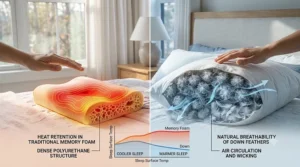
Memory Foam vs Down: Heat Retention, Allergies, and Durability
This is where the spec sheets stop telling the whole story. On heat: solid memory foam traps body heat by design — the same density that gives it support also limits airflow. Shredded foam and gel/graphite infusions close some of that gap, but down still wins on raw breathability because it’s structured to trap air pockets that vent, not body heat that lingers.
On allergies: memory foam is inherently hypoallergenic, since there’s no organic material for dust mites to colonize. Down is a different story unless it’s been treated and certified — the Responsible Down Standard exists specifically to give buyers visibility into how the down in a product was sourced and processed, though that standard addresses ethical sourcing more than allergen control, so allergy-prone sleepers should still look for hypoallergenic-treated down specifically, not just RDS certification.
On durability: this one’s closer than people expect. Quality memory foam holds shape for roughly 2–4 years before noticeable compression; quality down lasts a comparable 2–3 years before clusters break down and loft drops — but cheap, untreated down loses loft much faster than cheap foam loses shape. If you’re buying at the lower end of either category, foam tends to age more gracefully.
Memory Foam vs Down Pillows for Side Sleepers
Side sleeping puts the most demand on a pillow, because the gap between your shoulder and your ear has to be filled precisely or your neck bends sideways all night. Memory foam — especially contoured designs — is generally the better default here because it holds a fixed loft under pressure instead of compressing flat the way down can by 3 a.m.
That said, a well-built down pillow with the right loft can work for side sleepers too, provided it’s structured (chambered or baffled) rather than a single soft pouch of fill. A three-chamber design like Boll & Branch’s firm option behaves more like a supportive pillow that happens to feel like down, rather than a soft pillow that happens to support your neck. If you’ve tried down and felt like it “goes flat” under your head specifically, that’s usually a structure problem, not a fill problem — a baffled or chambered down pillow solves it without switching materials.
✨ Don’t Miss These Exclusive Deals!
🔍 Side sleeper or stomach sleeper, there’s a fill type built for your position. Check current pricing on the picks above before sizing or firmness options sell out. 😊
Common Mistakes When Buying a New Pillow
- Buying loft based on the picture, not your shoulder width. Wider shoulders need taller loft for side sleeping; the same pillow that’s perfect for a narrow-framed back sleeper will leave a broad-shouldered side sleeper’s neck unsupported.
- Assuming “hypoallergenic” on a down pillow means allergy-proof. It usually means the down has been cleaned and treated, not that it’s risk-free for severe allergy sufferers — foam is still the safer bet there.
- Skipping the care instructions entirely. Submerging a solid memory foam core or skipping down fluffing for months is the fastest way to cut a pillow’s lifespan in half.
- Buying the cheapest option in a fill type you’ve never tried. Budget pillows are a reasonable way to test whether you even like a fill type, but expect a shorter lifespan than the mid-range picks above.
- Ignoring the return policy. Down pillows in particular vary a lot between brands once you actually sleep on them — a long return window (like Brooklinen’s) takes the risk out of trying a new loft.
Long-Term Cost & Maintenance: What You’ll Actually Pay Over Time
A $60 foam pillow and a $150 down pillow don’t actually compare evenly once you factor in lifespan and upkeep. Budget memory foam typically needs replacing every 2 years; mid-range and premium foam (Tempur-Pedic tier) often stretches to 4–5 years thanks to denser, slower-degrading foam. That puts premium foam’s effective annual cost surprisingly close to budget foam’s, once you stop replacing it every other year.
Down has a steeper maintenance cost in time rather than money — regular fluffing and occasional low-heat drying aren’t expensive, but they’re recurring chores foam doesn’t require. Certified, well-constructed down tends to outlast lower-quality down by a meaningful margin, so the $80–$150 tier (like Brooklinen or Boll & Branch) often ends up a better per-year value than a $40 bargain-bin down pillow that flattens within a year.
Bottom line: in both categories, the middle price tier — roughly $80–$150 — tends to deliver the best cost-per-year, since the cheapest options in either fill type degrade fast enough to erase their upfront savings.

FAQ
❓ Is memory foam or down better for side sleepers?
❓ Do memory foam pillows or down pillows last longer?
❓ Which is better for hot sleepers, memory foam or down?
❓ Can you wash a memory foam pillow the same way as a down pillow?
❓ Is down alternative the same as memory foam?
Conclusion
There’s no universal winner in the memory foam pillow vs down pillow debate — there’s just a better fit for how you actually sleep. If you’re a side sleeper, deal with neck pain, or want a low-maintenance pillow that holds its shape without weekly fluffing, memory foam — particularly a contoured or adjustable option — is the safer bet. If you’re a back or stomach sleeper chasing that plush, hotel-bed feeling and don’t mind a bit of upkeep, a well-constructed down pillow, ideally RDS-certified, delivers a feel foam can’t fully replicate.
Sleep position support matters enough that even a pillow placed correctly under the right body part can meaningfully reduce strain — a point backed by clinical research on pillows and chronic neck pain — so whichever fill you choose, prioritize the loft and firmness that match your actual sleep position over the one that looks best in photos. Of the six pillows above, start with whichever matches your sleep position and budget tier, and don’t be afraid to use a generous return window to course-correct if the first pick doesn’t feel right after a week.
Recommended for You
- 7 Best Memory Foam Pillows for Side Sleepers in 2026
- Memory Foam Pillow for Neck Pain: 7 Real Picks Worth Buying in 2026
- 7 Best Memory Foam Pillows of 2026 (Tested for Real Sleep)
Disclaimer: This article contains affiliate links. As an Amazon Associate, I earn from qualifying purchases. If you purchase products through these links, we may earn a small commission at no additional cost to you.
✨ Found this helpful? Share it with your friends! 💬🤗
