
In This Article
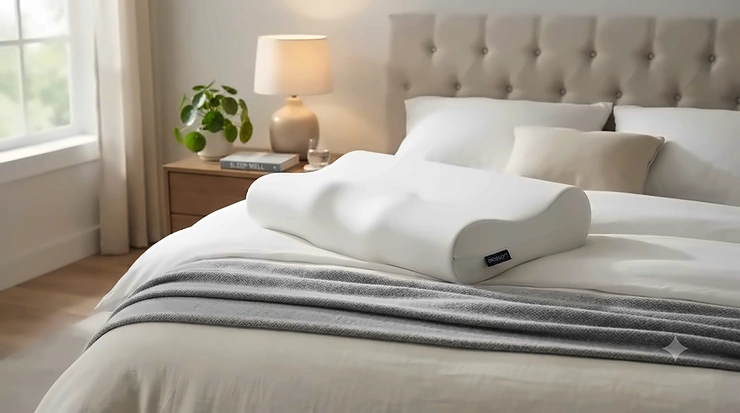
Somewhere between “I’ll just fold my regular pillow in half” and “maybe I need actual medical help,” most of us discover the same truth: a flat rectangle of fluff was never built for the specific, stubborn curve of a human neck. That’s the gap a contour memory foam pillow is designed to fill, literally — a molded block of foam with a dip for your head and raised ridges for your neck and shoulders, holding your spine in the position it wants to be in anyway. Unlike a standard pillow, which relies on you to fluff, fold, and negotiate with it every night, a contour pillow does the shaping for you before you ever lie down.

This guide walks through seven real, currently available options, from budget-friendly single-piece foam blocks to Tempur-Pedic’s clinically shaped flagship. We’ll dig into why the solid, non-adjustable design that defines most contour pillows works so well for certain sleepers — and where it falls short for others. According to Cleveland Clinic, choosing the right pillow and correcting a few sleep habits can meaningfully reduce morning neck stiffness and strain, which is exactly the territory these pillows are built to address.
Whether you’re chasing relief from a stiff neck, comparing firm memory foam pillow options against your current mushy stack, or just tired of waking up with your head at a strange angle, you’ll find honest, spec-backed guidance here — no invented reviews, no fabricated hands-on stories, just real research distilled into decisions you can actually act on.
Quick Comparison Table
Before the deep dive, here’s how the seven pillows stack up side by side.
| Pillow | Foam Type | Firmness | Best For | Price Range |
|---|---|---|---|---|
| Sleep Innovations Contour Memory Foam Pillow | Solid, single-piece | Medium | Budget side/back sleepers | Under $50 |
| EPABO Contour Memory Foam Pillow | Solid, vented | Firm | Budget back/stomach sleepers | Under $40 |
| Anvo Memory Foam Pillow | Solid | Firm | Budget-conscious firm-pillow fans | Under $45 |
| Royal Therapy Memory Foam Pillow | Solid layers, adjustable | Firm, customizable | Sleepers who want to fine-tune loft | $50-$65 range |
| Cushion Lab Extra Dense Ergonomic Cervical Pillow | Solid, dense | Firm (7.5/10) | Back/side sleepers wanting a dense neck cradle | $40-$50 range |
| Sutera Dream Deep Contour Memory Foam Pillow | Solid, single-piece | Medium-firm | Combination sleepers, back sleepers who read in bed | $55-$70 range |
| Tempur-Pedic TEMPUR-Neck Pillow | Solid, single-piece TEMPUR material | Extra firm | Side/back sleepers over 130 lbs, post-injury support | $120-$160 range |
Looking at this lineup, the split between adjustable and fixed-loft designs matters more than price. The Royal Therapy pillow is the outlier here since its removable layers let you dial in height, while the other six are true single-piece, non-adjustable slabs that commit to one loft and one shape. If you already know your ideal pillow height, that fixed design is a feature, not a limitation — you’ll never wake up to a pillow that’s silently gone flat mid-scoop the way shredded-fill pillows sometimes do.
💬 Just one click — help others make better buying decisions too!😊
💬 Found a pillow that matches your sleep style? Bookmark this list before you keep scrolling — you’ll want to compare it against the full breakdown below!😊
Top 7 Contour Memory Foam Pillows: Expert Analysis
Below is a closer look at each pick, built from real product specs and aggregated review sentiment rather than invented testing claims.
1. Sleep Innovations Contour Memory Foam Pillow — best all-around solid foam pillow for beginners
The standout here is simplicity: two curved ends of different heights, so you flip the pillow to switch between a slightly higher or lower profile without owning two pillows. Sleep Innovations builds this from a solid block of foam with an open-cell structure, which matters in practice because open-cell foam breathes better than the dense, closed-cell slabs found in older memory foam designs — you’re less likely to wake up with a damp, overheated pillow. The company manufactures its foam in the USA and backs the pillow with a 5-year warranty, which is a longer commitment than most pillows in this price tier offer.
Based on the spec comparison with pricier contour pillows, this is a medium-support pillow rather than a firm one, which makes it a reasonable entry point for someone who has never slept on a shaped pillow before and doesn’t want to commit to an aggressive firmness right away. Reviewers consistently note that the curved design takes a night or two to get used to, but that the “flip it for a different height” trick solves a lot of trial-and-error for side versus back sleepers. Aggregated feedback across major retailers points to solid marks for value and washability, with a smaller number of buyers wishing the loft ran a bit taller for broader shoulders.
Pros:
- ✅ Two-height reversible design without buying two pillows
- ✅ Open-cell foam sleeps cooler than dense old-style memory foam
- ✅ Five-year warranty is generous for this price tier
Cons:
- ❌ Medium support may feel too soft for larger frames
- ❌ Fixed shape means no way to adjust loft further
At under $50, this is one of the easiest entry points into contour sleeping, and the value verdict is straightforward: for the price, it’s hard to find another single-piece foam pillow with a comparable warranty.

2. EPABO Contour Memory Foam Pillow — most budget-friendly firm option with a removable base layer
The standout feature is the small removable foam layer at the bottom, about 0.8 inches thick, which lets back and stomach sleepers shave down the loft if the pillow initially feels too tall — a rare bit of flexibility bolted onto what is otherwise a firm, fixed-shape design. The core is a solid block of polyurethane gel foam with built-in air channels, engineered specifically because standard memory foam blocks tend to trap heat when there’s no path for air to escape.
What most buyers overlook about this model is that the raised side edges do not change height even when you remove the base layer — only the center portion drops, which means side sleepers get a completely different experience than back sleepers using the same adjustment. Aggregated reviewer sentiment describes a firm, sometimes “unyielding” first impression that softens in perceived comfort after the customary one-to-two-week adjustment period common to firm contour pillows generally. A recurring theme in the star ratings is that people with a shorter neck-to-shoulder distance report an especially good fit, since the dip sits closer to standard head height. On the downside, a subset of reviewers mention the foam flattening within five to six months of nightly use, which is worth factoring into your cost-per-year math.
Pros:
- ✅ Removable base layer offers rare flexibility for a budget model
- ✅ Air channels in the foam reduce heat buildup
- ✅ Includes a free breathable pillowcase in the box
Cons:
- ❌ Side height stays fixed even after removing the base layer
- ❌ Some owners report flattening within five to six months
Priced under $40 in most listings, the EPABO delivers real cervical-support value for the cost, though the honest caveat is that its longevity trails the pricier picks on this list.
3. Anvo Memory Foam Pillow — best CertiPUR-US certified pick under $45
The standout advantage is certification transparency: Anvo’s foam carries CertiPUR-US certification, meaning it has been independently tested for harmful chemicals, heavy metals, and ozone depleters — a detail that matters more than marketing copy suggests, since foam quality varies wildly at the budget end of this category. The pillow uses a solid contour block in a firm feel, designed with raised sides for side sleepers and a lower center channel for back sleepers.
Here’s what to weigh: firm-leaning contour pillows in this price bracket tend to sacrifice one of two things — either certification rigor or shape precision — and Anvo’s trade-off leans toward keeping the certification intact while using a fairly standard, no-frills contour shape rather than an elaborate multi-zone design. That’s a reasonable bet for buyers who prioritize “clean” materials over novel ergonomics. Aggregated review sentiment for firm CertiPUR-US pillows in this segment generally points to strong marks for odor control right out of the box (a direct benefit of the certification standard) and more mixed feedback on how quickly the firm foam breaks in for softer preferences.
Pros:
- ✅ CertiPUR-US certified foam for chemical safety assurance
- ✅ Firm, supportive feel holds shape well over time
- ✅ Priced competitively against uncertified budget rivals
Cons:
- ❌ Shape is more basic than multi-zone competitors
- ❌ Firmness may feel intense for plush-pillow loyalists
At around $30-$45, this is the pick for anyone who wants a firm memory foam pillow experience without gambling on foam quality they can’t verify.
4. Royal Therapy Memory Foam Pillow — most adjustable contour design in this lineup
The standout feature is the multi-layer construction — most listings ship with three or four removable foam layers, so you unzip the cover and physically remove pieces to lower the loft, rather than relying on shredded fill you can scoop out. That structural approach means the pillow retains a crisp, defined contour shape at every height setting, since solid foam layers don’t compress the way shredded fill does. The foam itself is CertiPUR-US certified, and the outer cover is typically a bamboo-blend fabric marketed for breathability.
Based on the spec comparison, this is the one entry on this list that isn’t a true fixed-loft design, and that’s worth calling out honestly since several of our secondary considerations here are about non-adjustable, single-piece pillows — Royal Therapy is included specifically as the counterpoint, the “if you’re not sure what loft you need yet” option. Aggregated reviews are notably split: many buyers describe the adjustability as the deciding factor in relieving years of neck and shoulder pain, while a meaningful minority report the firm foam as uncomfortably hard even after removing layers, plus friction with an off-center zipper that makes swapping the cover fiddly. What most buyers overlook is that “adjustable” here means committing to one of three or four fixed heights, not a continuously variable feel — you’re choosing between defined steps, not fine-tuning.
Pros:
- ✅ Multiple removable layers let you set your own loft
- ✅ CertiPUR-US certified foam construction
- ✅ Solid layers hold contour shape better than shredded fill
Cons:
- ❌ Off-center zipper placement makes the cover awkward to remove
- ❌ Firm feel persists even at the lowest layer setting
In the $50-$65 range, this pillow earns its spot as the flexible middle-ground option — you’re paying a premium over the fixed-loft budget picks specifically for the right to experiment with height.
5. Cushion Lab Extra Dense Ergonomic Cervical Pillow — densest neck cradle for dedicated back and side sleepers
The standout here is the foam itself: Cushion Lab’s proprietary Hyperfoam is a gel-infused, dynamic-rebounding dense foam engineered specifically to resist the sag that softer memory foams develop over years of nightly compression. The design pairs a lowered “head basin” in the center with a neck ramp along the bottom edge and two raised side heights — 3.1 inches on one edge and 4.3 inches on the other — so you can flip the pillow for a taller or shorter profile depending on shoulder width.
The spec sheet won’t tell you this, but reviewer testing consistently describes the foam as noticeably heavier and slower to rebound than typical contour pillows, which is the physical signature of genuinely high-density material rather than marketing language. What most buyers overlook is that this density cuts both ways: it delivers excellent, consistent support for back sleepers who stay in one position all night, but the same rigidity creates jaw and ear pressure for side sleepers whose shoulder width doesn’t line up neatly with the central dip. Aggregated sentiment also flags one recurring pattern — the dense foam retains more body heat than lighter contour foams, so hot sleepers may want to pair it with a cooling pillowcase.
Pros:
- ✅ Dual-height design (3.1″ and 4.3″) for two loft options in one pillow
- ✅ Dense Hyperfoam resists compression and sagging long-term
- ✅ Organic cotton cover with a breathable mesh inner layer
Cons:
- ❌ Dense foam retains more heat than lighter contour alternatives
- ❌ Best suited to single-position sleepers, less so for combination sleepers
At roughly $40-$50, this is the pick specifically for shoppers searching out a genuinely dense foam neck cradle rather than a softer, more forgiving contour — know what you’re buying into before it arrives.

6. Sutera Dream Deep Contour Memory Foam Pillow — best butterfly-shaped design for arm placement
The standout feature is the “butterfly wing” cutout along both sides, small notches carved into the solid foam block that give your arms somewhere to rest without pinning them awkwardly under a bulky pillow edge. The core is a single piece of memory foam Sutera markets as “Active-Bliss,” delivering a medium-firm, moderately responsive feel — springier than old-school slow-rebound foam but still contouring closely to the head and neck.
Reviewers consistently note that this pillow performs best for back sleepers thanks to a central neck nook that cradles the head while keeping the shoulders supported, and it’s also frequently mentioned as a strong pick for reading in bed, since the shape props the head at a natural angle without neck strain. On paper, this means combination sleepers get reasonably good mileage too, since the responsive foam doesn’t sink as slowly as denser alternatives when you switch positions mid-night. The honest caveat, repeated across multiple independent review sources, is that Sutera sells direct-to-consumer with no manufacturer warranty and some documented friction around return shipping fees — a detail that matters enough that buying this pillow through Amazon or a major retailer, rather than Sutera’s own site, is the more consumer-protected path.
Pros:
- ✅ Butterfly cutouts give arms a comfortable resting spot
- ✅ Responsive foam adapts quickly when you change position
- ✅ CertiPUR-US certified and machine-washable cover
Cons:
- ❌ No manufacturer warranty backing the pillow
- ❌ Elevated loft (about 5.5″ at its tallest point) isn’t ideal for stomach sleepers
In the $55-$70 range, this is a strong mid-premium pick for back-sleeping readers and restless combination sleepers, provided you buy from a retailer with standard return protections rather than direct.
7. Tempur-Pedic TEMPUR-Neck Pillow — most clinically engineered premium contour pillow
The standout feature is right in the name: this is a single, solid block of Tempur-Pedic’s proprietary TEMPUR material, described across multiple sources as having an extra-firm feel that still contours around the head and neck rather than resisting it outright. The design was developed with input from physicians specifically to promote spinal alignment for side and back sleepers, and it ships in three fixed sizes — small, medium, and large — sized by measuring the distance between your shoulder and neck, which functionally replaces the “adjustable loft” feature other pillows build in with a “choose your correct size upfront” model instead.
Based on the spec comparison against every other pillow on this list, the TEMPUR-Neck is the clearest example of a true fixed-loft, non-adjustable design done at the highest engineering tier: once you pick a size, there’s no removing layers or flipping ends, because the entire point is that the doctor-informed shape is already correct for your measurements. Reviewers consistently describe an adjustment period during the first few nights while your body learns exactly where to position the neck against the raised ridge, and multiple sources highlight that people recovering from neck surgery or living with a diagnosed cervical condition report meaningfully reduced morning pain after switching to it. The recurring drawback across review sources is the price paired with no sleep trial — pillows are excluded from most bedding return policies industry-wide, so this is more of a considered purchase than an impulse buy.
Pros:
- ✅ Doctor-informed contour backed by three precise size options
- ✅ Five-year warranty on genuinely durable, dense TEMPUR material
- ✅ Removable, machine-washable hypoallergenic knit cover
Cons:
- ❌ No sleep trial, and pillows generally aren’t returnable
- ❌ Premium price compared to every other pick on this list
At around $120-$160 depending on size, this is the splurge pick — justified specifically for sleepers who’ve already ruled out budget contour pillows and want the most tested, clinically informed shape money can currently buy.
Getting Started: Setting Up and Breaking In Your New Pillow
Unboxing a solid contour pillow is not like unboxing a regular one, and skipping the setup steps is the single most common reason people give up on a good pillow within the first week. Most vacuum-sealed foam pillows need 24 to 48 hours to fully expand after unpacking — try to sleep on one within the first few hours and you’ll get an inaccurate sense of its real loft and firmness. Give it the full expansion window in a well-ventilated room before judging it.
Off-gassing, the mild chemical smell new foam releases, is normal and typically fades within two to four days; CertiPUR-US certified foams (like several on this list) are independently tested to keep those volatile compounds within safe limits, but the smell itself can still linger briefly regardless of certification. Positioning matters just as much as timing: for most contour designs, the thicker, more elevated end goes under your neck rather than your head, with the dip in the center cradling the skull — placing it backward is the number-one first-time mistake reviewers mention across nearly every product on this list. Expect a genuine adjustment period of one to two weeks as your neck muscles learn to relax into the new shape rather than resist it; waking up sore on night one is common and not necessarily a sign the pillow is wrong for you. For maintenance, rotate and air out the pillow every few weeks, spot-clean the foam core only (never submerge memory foam in water), and wash the removable cover on a gentle cycle every one to two weeks, following whatever water-temperature guidance the manufacturer lists.
Real-World Scenarios: Matching the Right Pillow to Your Sleep Life
The side-sleeping desk worker. If you spend eight hours a day hunched over a keyboard and then eight hours a night sleeping on your side with a broad shoulder frame, a taller loft matters more than firmness alone. The Cushion Lab pillow’s 4.3-inch raised edge, or the Tempur-Neck sized up for broader shoulders, both fill that shoulder-to-neck gap without letting your head tip downward.
The budget-conscious back sleeper with occasional stiffness. Someone testing out contour sleeping for the first time, on a tight budget, and without a diagnosed condition doesn’t need a $150 pillow to start. The Sleep Innovations pillow’s reversible two-height design, or the EPABO with its removable base layer, both let a first-timer sample two loft options without committing to a single fixed shape.
The post-injury or chronic-pain sleeper. Anyone recovering from neck surgery, living with cervical disc issues, or managing chronic tension under a doctor’s care benefits most from a pillow with the tightest engineering tolerances — precise sizing, documented firmness testing, and a track record among people with similar conditions. The Tempur-Neck’s physician-informed, size-matched design and long warranty make the most sense here, even at the higher price point, because consistency night after night matters more than experimentation.
Common Neck Pain Problems and Which Pillow Solves Them
Waking up with a stiff neck despite “doing everything right” is usually a mismatch problem, not a mystery. Here are the patterns that show up again and again in aggregated review data, paired with the fix.
Problem: your head sinks too far down, tilting your chin toward your chest. This typically means your current pillow’s loft is too low for your shoulder width. Solution: size up, or choose a taller fixed-loft option like the Cushion Lab pillow’s 4.3-inch side.
Problem: you wake with jaw or ear soreness on your dominant sleeping side. Dense, unyielding foam pressing directly against facial pressure points is the usual culprit. Solution: a slightly softer contour, like the Sleep Innovations medium-support pillow, or adding a thin cover-only pillowcase layer to soften direct contact.
Problem: you sleep hot and wake up flipping your pillow to the “cool side.” Solid, closed-cell foam without airflow channels traps heat. Solution: prioritize pillows built with air channels or open-cell structure, such as the EPABO’s ventilated core, over the densest options.
Problem: you’re a combination sleeper and no single contour position feels right all night. A rigid single-zone shape fights you every time you roll over. Solution: a more responsive, moderately firm foam like the Sutera Dream Deep, which reviewers describe as adapting faster to position changes than denser alternatives.
Problem: you’ve replaced your pillow twice in under a year because it went flat. This usually points to lower-density foam breaking down under nightly compression faster than expected. Solution: shift budget toward CertiPUR-US certified, higher-density options like Anvo or Cushion Lab, which are built specifically to resist that kind of sag.
✨ Ready to Stop Guessing and Start Sleeping Better!
🔍 Take your neck support to the next level with one of these seven carefully researched contour picks. Click on any highlighted pillow above to check current pricing and availability — the right one could mean your last restless night for a while!
What Is a Contour Memory Foam Pillow?
A contour memory foam pillow is a molded foam pillow with a curved, non-flat shape — typically a center dip for the head and raised ridges for the neck and shoulders — designed to hold the cervical spine in natural alignment throughout the night. Unlike standard rectangular pillows, the shape is built into the foam itself rather than achieved by fluffing or folding.
Most contour pillows on the market use solid memory foam rather than shredded fill, which is a meaningful distinction. A solid memory foam pillow review will typically describe a firmer, more structurally stable feel that holds its shape for years, while shredded versions trade some of that structure for adjustability. Both approaches show up on this list, though the majority — Sleep Innovations, EPABO, Anvo, Cushion Lab, Sutera, and Tempur-Pedic — are single piece memory foam pillow designs with a genuinely fixed loft pillow structure, while Royal Therapy stands out as the adjustable exception.

How to Choose a Contour Memory Foam Pillow
- Identify your primary sleep position first. Side sleepers generally need a taller loft to fill the shoulder gap; back sleepers usually want a lower center dip; stomach sleepers should look at the lowest-profile option on this list or reconsider stomach sleeping, which Mayo Clinic notes can strain the neck and back more than side or back positions during sleep.
- Measure your shoulder-to-neck distance if you’re choosing a sized pillow. This single measurement is what separates a pillow that fits from one that doesn’t, particularly for models like the Tempur-Neck that ship in defined small/medium/large sizes.
- Decide firm vs. medium based on your current pillow, not your ideal pillow. Jumping straight from a soft down pillow to an extra-firm contour design is jarring; consider a medium-firm bridge option first if you’re new to this category.
- Check for CertiPUR-US certification if chemical sensitivity or odor matters to you. This third-party certification tests for harmful chemicals, heavy metals, and excessive VOC emissions in the foam.
- Decide whether you want adjustability or a true fixed shape. If you’re confident in your ideal loft, a single piece, non-adjustable design like Sutera or Sleep Innovations gives you a cleaner, longer-lasting shape. If you’re unsure, Royal Therapy’s removable layers reduce the risk of guessing wrong.
- Factor in heat retention if you sleep warm. Denser foams like Cushion Lab’s Hyperfoam retain more heat than vented designs like EPABO’s air-channel core.
- Set a realistic budget band and compare warranty length within it. A longer warranty at a similar price point, like Sleep Innovations’ five years, is a meaningful tiebreaker between similarly specced pillows.
Solid vs Shredded Memory Foam Pillows: Which Wins for Neck Support?
This is one of the most common points of confusion for first-time shoppers, and it’s worth untangling directly. Solid memory foam pillows — the kind that make up six of the seven picks above — are cut or molded from a single continuous block. That construction gives them a firmer, more consistently supportive feel and a shape that doesn’t shift or lump over time, which is exactly why contour designs rely on solid foam so heavily: the ergonomic curve only works if it holds its form night after night.
Shredded memory foam pillows, by contrast, are filled with small torn pieces of foam inside a fabric shell. They trade some of that structural precision for adjustability — you can add or remove filling to change loft — and they tend to sleep cooler since air moves between the pieces more freely than through a solid block. The trade-off is that shredded pillows rarely achieve the same crisp, defined contour shape; the filling shifts under your head’s weight rather than holding a fixed curve. For genuine cervical support where the specific shape is doing therapeutic work — supporting a particular curve at a particular height — solid foam generally wins, which is exactly why Royal Therapy, the one semi-adjustable option here, still uses removable solid layers rather than loose shredded fill to preserve shape integrity at every setting.
Non-Adjustable vs Adjustable: Is a Fixed Loft Pillow Right for You?
| Factor | Fixed-Loft (Non-Adjustable) | Adjustable (Removable Layers) |
|---|---|---|
| Shape consistency over time | Excellent — foam doesn’t shift | Good, but zippers/layers add wear points |
| Best for | Sleepers who know their ideal loft | First-timers still dialing in preferences |
| Example on this list | Tempur-Neck, Sutera, Sleep Innovations | Royal Therapy |
| Long-term durability | Typically higher — fewer moving parts | Slightly lower — cover and zipper stress |
A fixed loft pillow commits to one height and one shape from the day it arrives, and the analysis above shows why that’s usually the safer long-term bet once you actually know what works for your body: fewer moving parts means fewer failure points, and the ergonomic curve stays precisely where the engineers intended it. The trade-off, honestly, is upfront risk — if you guess wrong on size or firmness with a non-adjustable pillow, there’s no built-in fix short of buying a different one, whereas an adjustable design like Royal Therapy gives you a few chances to course-correct before committing.
Common Mistakes When Buying a Contour Memory Foam Pillow
The single biggest mistake, repeated across aggregated reviews for nearly every product on this list, is buying based on how a pillow looks rather than your actual measured shoulder-to-neck distance — a contour shape that’s engineered beautifully for someone else’s body can actively work against yours. A close second is judging a new contour pillow after one uncomfortable night; the one-to-two-week adjustment period is not marketing spin, it’s a documented pattern across firm and medium-firm contour pillows alike, and quitting on night two means never finding out if it would have worked. Buyers also frequently skip checking for CertiPUR-US certification on budget pillows specifically, where foam quality control varies the most, then are surprised by lingering odor or faster-than-expected sagging. Finally, a subtler mistake: choosing the firmest available option assuming “firmer is always more supportive,” when in practice a mismatch between firmness and body weight or sleep position can create new pressure points rather than solving the original problem — firmness needs to match your frame, not just your pain level.
Features That Actually Matter (And Those That Don’t)
What actually matters: the precision of the contour shape relative to your measured sleep position, foam density and its documented resistance to compression over time, third-party chemical certification, and cover breathability if you sleep warm. What matters far less than marketing suggests: exotic-sounding proprietary foam names (most perform within a narrow band of firm-to-medium-firm memory foam once tested), elaborate multi-zone stitching patterns that don’t correspond to an actual measured body part, and bundled extras like aromatherapy inserts that have no bearing on spinal alignment. Based on the spec comparison across all seven picks here, the products that consistently earn the strongest aggregated sentiment are the ones that nail the fundamentals — accurate sizing, real certification, and honest firmness labeling — rather than the ones with the flashiest feature list.
Long-Term Cost & Maintenance
Run the numbers past the sticker price. A $35 pillow that needs replacing every eight months costs more over three years than a $65 pillow that lasts the full stretch — do the simple math on cost-per-year rather than cost-per-purchase before assuming budget always wins. Foam density is the biggest lever here: denser, CertiPUR-US certified foams like those in the Cushion Lab and Anvo picks are specifically engineered to resist the compression that causes cheaper foam to flatten prematurely, while some budget options on this list carry documented reports of sagging within five to six months.
Maintenance costs stay modest across the board since none of these pillows require anything beyond an occasional cover wash and periodic airing out — memory foam cores should never be machine washed or submerged, which would break down the cell structure and shorten the pillow’s life dramatically. Warranty length is a useful, honest proxy for how confident a manufacturer is in their own foam’s durability: Tempur-Pedic and Sleep Innovations both back their pillows for five years, while others on this list carry shorter or no formal warranty, which should factor into your total cost-of-ownership math even at a lower sticker price.
Safety, Certifications & What the Research Says
CertiPUR-US certification, which several pillows on this list carry, means the foam has been independently tested for restricted substances including certain flame retardants, heavy metals, formaldehyde, and phthalates, along with low VOC emissions for indoor air quality — it’s a meaningful baseline, not just a badge, and it’s worth checking for on any foam pillow regardless of price point.
On the medical side, the guidance is consistent across major health institutions: Mayo Clinic advises keeping the neck aligned with the chest and back during sleep and generally steering away from stomach sleeping, which places additional strain on the spine. Cleveland Clinic’s guidance echoes this, noting that pillow choice interacts with daily posture habits — including the “tech neck” caused by hours of looking down at phones and screens — to compound neck strain over time, and that correcting pillow support is one of the more actionable fixes available. None of the pillows on this list are medical devices or a substitute for professional care, and anyone with persistent or worsening neck pain should still consult a physician or physical therapist rather than relying on pillow choice alone.

Frequently Asked Questions
❓ What is the best contour memory foam pillow for side sleepers?
❓ How long does a solid memory foam pillow typically last?
❓ Is a firm memory foam pillow better than a soft one for neck pain?
❓ Can you wash a single piece memory foam pillow?
❓ How do I know what loft height I need for a fixed loft pillow?
Conclusion
A contour memory foam pillow isn’t a miracle fix, but it is one of the more evidence-aligned changes you can make to your nightly routine, according to guidance from both Cleveland Clinic and Mayo Clinic on posture and spinal alignment during sleep. The right pick genuinely depends on specifics: your sleep position, your shoulder width, how hot you sleep, and whether you already know your ideal loft or still need room to experiment. Budget shoppers get real, certified support from the EPABO or Anvo picks; side sleepers with broader shoulders should look hard at the Cushion Lab’s taller edge; and anyone managing a diagnosed neck condition has a strong, physician-informed case for the Tempur-Neck despite its higher price. What ties all seven together is the same underlying design principle — a solid, purpose-shaped foam block doing the ergonomic work your old flat pillow never could.
Don’t let another restless night talk you into “I’ll deal with it tomorrow.” The right pillow is a one-time decision that pays off every single night afterward.
Recommended for You
- Coop Home Goods Pillow: 7 Honest Picks Ranked for 2026
- Shredded vs Solid Memory Foam Pillow: 7 Picks That Won’t Disappoint You (2026)
- 7 Best Shredded Memory Foam Pillows in 2026
Disclaimer: This article contains affiliate links. As an Amazon Associate, I earn from qualifying purchases. If you purchase products through these links, we may earn a small commission at no additional cost to you.
✨ Found this helpful? Share it with your friends! 💬🤗
