
In This Article
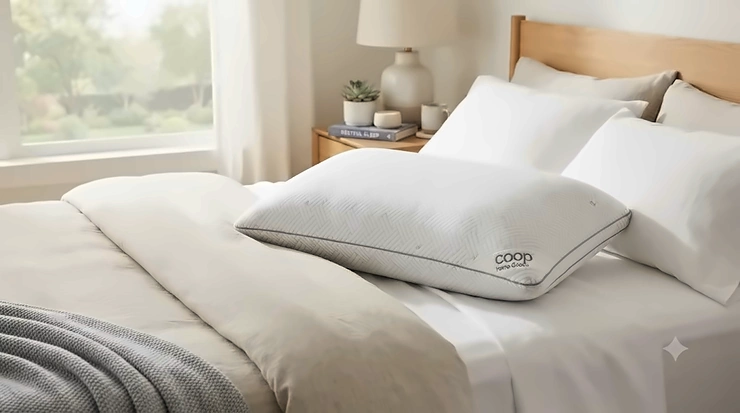
Somewhere around 2 a.m., you flip your pillow over for the fourth time, punch it into a new shape, and give up. This is the exact frustration that turned the coop home goods pillow into one of the most talked-about names in bedding — a shredded memory foam pillow you can actually open up and adjust like a science experiment until it fits your neck instead of the other way around. What is a coop home goods pillow, in plain terms? It’s an adjustable-fill pillow made from cross-cut memory foam and microfiber blends, built so you add or remove stuffing until the loft matches your sleep position, all backed by CertiPUR-US and GREENGUARD Gold safety certifications.

That last part matters more than marketing copy usually admits. Side sleepers need serious loft to fill the gap between the ear and the mattress, while back and stomach sleepers need the opposite — and a fixed-fill pillow simply can’t do both. Coop’s entire catalog is built around solving that mismatch, and in this guide, we’re breaking down seven real Coop models — from the brand’s original bestseller to its cooling, latex, and orthopedic spinoffs — with honest analysis on who each one actually suits, what reviewers consistently report, and where the real value sits once you look past the marketing.
Quick Comparison Table
Before diving into the deep dive, here’s the shortcut version for anyone who just wants a quick answer.
| Pillow | Best For | Fill Type | Price Range |
|---|---|---|---|
| Original Adjustable Pillow | Best all-around value | Memory foam + microfiber | Around $60–$75 |
| Eden Pillow | Combination sleepers wanting a softer feel | Gel memory foam + microfiber | Around $70–$90 |
| EdenCool+ Adjustable Pillow | Hot sleepers who want the coolest option | Plus-shaped gel foam + phase-change layer | $135–$160 range |
| Essence Down Alternative (2-Pack) | Budget-conscious hotel-style feel | Down-alternative fiber | Around $85–$100 for two |
| Adjustable Latex Pillow | Eco-conscious buyers wanting bounce | Talalay latex + microfiber | $95–$120 range |
| Adjustable Orthopedic Pillow | Neck and cervical support | Memory foam + microfiber, contoured | $70–$90 range |
| Cool+ Crescent Adjustable Pillow | Dedicated side sleepers | Cooling gel foam, crescent shape | $80–$100 range |
Looking at the spread above, the Original still wins on pure value-per-dollar since it delivers the same adjustable-fill mechanism as pricier siblings for roughly half the cost. Where the extra money genuinely buys something is temperature regulation — the EdenCool+ uses a heavier, more deliberate cooling architecture than the standard Eden, so hot sleepers paying the premium are buying a real engineering difference, not just a label. Budget shoppers eyeing the Essence set should note it trades memory foam contouring for a fluffier, more traditional feel, which is a meaningful trade-off depending on whether you have neck pain or simply want a plush hotel pillow.
💬 Just one click — help other cruising parents make better packing decisions too!😊
💬 Found a favorite already? Compare it against the full breakdown below before you decide — the details change the picture more than you’d expect.
Top 7 Coop Home Goods Pillows: Expert Analysis
1. Coop Home Goods Original Adjustable Pillow — best all-around value for every sleep position
The Original earns its reputation honestly: it’s the pillow that built the brand, and it’s still the one most reviewers point new buyers toward first. Inside, you’ll find Coop’s proprietary Oomph Fill, a cross-cut memory foam and microfiber blend wrapped in a Lulltra bamboo-derived rayon cover, and you can unzip both layers to add or remove fill until the loft matches your body. Because the memory foam is cross-cut rather than shredded into random chunks, it resists the clumping and flattening that plague cheaper foam pillows within a few months.
This is the pillow to buy if you’re not sure which Coop model to pick, since its medium-firm feel splits the difference between side, back, and stomach sleeping better than any other model in the lineup. Reviewers consistently report that the biggest adjustment period is the first week, when the foam needs a few nights of fluffing to fully expand from its vacuum-sealed shipping state. A common complaint in user reviews is a noticeable off-gassing smell straight out of the box — normal for new memory foam, but worth airing out for a day before sleeping on it.
Pros:
- ✅ Fully adjustable loft for any sleep position
- ✅ CertiPUR-US and GREENGUARD Gold certified foam
- ✅ Machine-washable cover and liner
Cons:
- ❌ Noticeable off-gassing smell on first unboxing
- ❌ Not the coolest option for hot sleepers
At around $60–$75 for a queen, the Original delivers the best cost-per-night of anything in Coop’s range, and it’s the pillow we’d point most first-time buyers toward before upgrading to a specialty model.
2. Coop Home Goods Eden Pillow — softer, gel-infused upgrade for combination sleepers
The Eden is Coop’s answer to buyers who found the Original a touch too firm. Where the Original uses a medium-firm blend, the Eden swaps in gel-infused memory foam pieces alongside microfiber for a noticeably softer, squishier feel, plus a gusseted edge that keeps fill distributed evenly across the surface instead of pooling in the center. In practice, this means the Eden holds its shape better through a full night of position changes, which is exactly what a combination sleeper needs.
Based on the spec comparison between the two flagship models, the Eden’s cooling gel is a modest improvement rather than a dramatic one — reviewers who tested it side-by-side with the Original found the temperature difference subtle at best, so anyone expecting a dramatically cooler pillow should look toward the EdenCool+ instead. What most buyers overlook about the Eden is the gusset: that reinforced edge is what makes it hold loft for side sleepers specifically, more so than the gel itself. Aggregated review sentiment consistently praises the softness for stomach and back sleepers, while side sleepers with broader shoulders sometimes need to use the included extra fill bag to reach adequate height.
Pros:
- ✅ Softer, more contouring feel than the Original
- ✅ Gusseted edge holds shape through the night
- ✅ Comes with bonus fill for extra loft
Cons:
- ❌ Cooling improvement over the Original is modest
- ❌ Pricier than the Original for a similar core design
Priced in the $70–$90 range, the Eden is worth the step up specifically if softness matters more to you than firmness — not because it sleeps dramatically cooler.
3. Coop Home Goods EdenCool+ Adjustable Pillow — most serious cooling tech in the lineup
If the standard Eden’s cooling felt like a marketing footnote to you, the EdenCool+ is Coop’s real answer. It uses plus-shaped memory foam pieces designed to maximize airflow between fill particles, paired with a heat-wicking phase-change gel layer on one face of the pillow, so you can literally flip it for a firmer, cooler sleep or a softer, more traditional one. Independent testers who slept on it for two weeks in warm conditions confirmed the cooling claim held up, even reporting comfort during a fever, which is about as real-world a stress test as a pillow review gets.
Here’s what to weigh before paying the premium: this is Coop’s second-most-affordable cooling pillow behind the standard Eden, and at $139 list for queen and $159 for king, it sits meaningfully above the rest of the catalog. What the spec sheet won’t tell you, but reviewers note, is that it does require occasional mid-night fluffing to keep its shape, a minor maintenance cost of the plus-shaped fill design. For anyone who wakes up flipping their pillow to find the “cool side,” this is the model built to solve that exact problem permanently.
Pros:
- ✅ Dual-sided design for firm or soft cooling
- ✅ Genuinely tested cooling performance, not just marketing
- ✅ CertiPUR-US and GREENGUARD Gold certified
Cons:
- ❌ Premium price compared to the rest of the lineup
- ❌ Requires more frequent fluffing to maintain shape
At $135–$160, the EdenCool+ only makes financial sense if you are specifically a hot sleeper; for anyone else, the standard Eden or Original delivers 80% of the comfort for roughly half the cost.
4. Coop Home Goods Essence Down Alternative Pillow (Set of 2) — budget-friendly, hotel-style softness
The Essence line represents a genuine departure from the rest of Coop’s catalog: instead of memory foam, it’s filled with a proprietary blend of down-alternative fiber puffs, which Coop calls “Phluff.” This gives it a squishier, more traditional pillow feel closer to a hotel pillow than a memory foam one, while still keeping the brand’s signature adjustability and a 2-inch gusset for edge support. Because it ships as a two-pack, the effective per-pillow cost undercuts almost everything else on this list.
Based on the spec comparison, the trade-off is durability of loft rather than comfort — down-alternative fiber compresses more readily overnight than cross-cut foam, and reviewers who tested it noted occasional gripes about needing more fill for side sleepers or anyone with sleep apnea who needs consistent elevation. Reviewers consistently note that this is the pick for people who specifically dislike the “memory foam feel” and want something closer to a classic bed-in-a-box pillow. If you’re outfitting a guest room or want a lighter, fluffier feel without full memory foam contouring, this is the practical choice.
Pros:
- ✅ Two pillows for one budget-friendly price
- ✅ Fluffy, traditional feel without foam density
- ✅ OEKO-TEX Standard 100 certified materials
Cons:
- ❌ Loses loft faster than memory foam models
- ❌ May underperform for side sleepers needing firm elevation
At around $85–$100 for the pair, the Essence set delivers the lowest per-pillow price in Coop’s catalog, which makes it the practical pick for anyone furnishing multiple beds at once.
5. Coop Home Goods Adjustable Latex Pillow — bouncier support with an eco-conscious edge
The Adjustable Latex Pillow takes Coop’s core adjustable-fill concept and swaps memory foam for shredded Talalay latex blended with microfiber. The practical difference is responsiveness: latex springs back immediately when you shift positions, rather than slowly reshaping the way memory foam does, which combination sleepers who move a lot overnight tend to prefer. It’s also positioned as Coop’s more sustainably sourced option, since natural latex has a smaller manufacturing footprint than petroleum-based foam.
What most buyers overlook about this model is that natural latex is naturally more breathable and temperature-neutral than memory foam by default, so you get some of the Eden’s cooling benefit without needing gel infusion at all. On the flip side, the latex fill can’t be laundered or exposed to significant moisture the way the foam-based pillows can, so care routines differ from the rest of the lineup. Reviewers who compared it directly to the Original describe it as bouncier and more supportive rather than squishy — a meaningfully different feel, not just a marketing variation.
Pros:
- ✅ Naturally responsive, bouncy support
- ✅ More breathable than standard memory foam by default
- ✅ Eco-friendlier material sourcing
Cons:
- ❌ Latex fill cannot be machine washed like foam models
- ❌ Higher price point than the Original
In the $95–$120 range, this is the pick for anyone who found memory foam’s slow-recovery feel frustrating and wants a more classically supportive material instead.

6. Coop Home Goods Adjustable Orthopedic Pillow — targeted cervical support for neck pain
This is Coop’s most specialized model, built with a contoured shape designed specifically around cervical alignment rather than general comfort. The core fill is still the familiar memory foam and microfiber blend, but the pillow’s structure includes an ergonomic curve intended to cradle the neck’s natural angle, which is the feature people with chronic stiffness or recurring morning headaches are typically shopping for. Coop still allows fill adjustment here, so the ergonomic curve can be tuned to different neck lengths and shoulder widths rather than forcing a one-size-fits-all shape.
Here’s what to weigh: an orthopedic contour only helps if the loft is dialed in correctly, and reviewers note that first-time buyers often need a week of trial-and-error removing small amounts of fill before the curve sits properly under the neck. Reviewers consistently report noticeable relief from mild tension headaches after the adjustment period, though this is aggregated anecdotal sentiment rather than a clinical claim, and anyone with a diagnosed cervical condition should still check with a physician before relying on any pillow as treatment.
Pros:
- ✅ Contoured shape targets neck and cervical support
- ✅ Still fully adjustable like the rest of the lineup
- ✅ GREENGUARD Gold and CertiPUR-US certified
Cons:
- ❌ Takes longer to dial in the correct fit
- ❌ Contour shape isn’t ideal for stomach sleepers
Priced around $70–$90, this is worth the upgrade specifically for people whose complaint is neck stiffness rather than general pillow comfort — it’s a targeted tool, not a universal upgrade.
7. Coop Home Goods Cool+ Crescent Adjustable Pillow — purpose-built shape for side sleepers
Rounding out the list is Coop’s crescent-shaped cooling pillow, designed explicitly around the anatomy of side and back sleeping. The plus-shaped cooling gel foam fill is the same family used in the EdenCool+, but the crescent silhouette curves inward to cradle the neck while leaving open space for the shoulder — solving the exact problem Sleep Foundation research identifies as central to side-sleeper comfort: keeping the head, neck, and spine aligned without the shoulder fighting the pillow for space.
Based on the spec comparison with the rectangular EdenCool+, the crescent shape doesn’t add cooling capacity — it’s the same fill technology — but it does change how effectively that fill supports a side sleeper’s actual head position through the night. What the spec sheet won’t tell you is that the curved shape makes this a poor fit for strict back or stomach sleepers, since the crescent cutout is specifically wasted space for anyone not sleeping on their side. This is a narrow-use pillow by design, and it earns its price by doing one job unusually well rather than trying to be universal.
Pros:
- ✅ Ergonomic shape built specifically for side sleeping
- ✅ Same advanced cooling fill as the EdenCool+
- ✅ Adjustable loft for shoulder-width variation
Cons:
- ❌ Poor fit for back or stomach sleepers
- ❌ Crescent shape takes getting used to visually and physically
At $80–$100, this is the smartest buy for a committed side sleeper who wants the EdenCool+’s cooling tech in a shape actually engineered for their position.
Adjustable Fill and Removable Insert: How to Break In and Customize Your Coop Pillow
Every Coop Home Goods pillow shares the same core mechanism: an outer machine-washable cover, an inner zippered liner, and a removable fill of cross-cut memory foam, gel foam, latex, or down-alternative fiber depending on the model. On unboxing, the pillow arrives vacuum-sealed and needs 24 to 48 hours to fully expand — resist the urge to judge the loft on day one, since compressed shipping temporarily flattens the fill more than it will sit long-term.
To customize it, unzip the outer cover, then unzip the inner liner, and pull out small handfuls of fill at a time rather than guessing at a large amount upfront. Side sleepers generally want to keep most or all of the included extra fill bag in place, since side sleeping typically requires the highest loft of any position to fill the gap between the head and mattress. Back sleepers should remove fill gradually until the neck sits level rather than tilted up, and stomach sleepers usually need the most aggressive reduction, since a lower loft prevents the neck from craning backward.
A common first-30-days mistake is over-removing fill in one sitting, which is hard to reverse without buying a refill bag separately. Fluff the pillow by hand or run it through a dryer on low heat for ten minutes every few weeks to prevent the shredded fill from settling and clumping, especially with memory foam models where compression is more permanent than with latex or down-alternative fill.
✨ Ready to build your own custom fit? Grab the model that matches your sleep position and start adjusting tonight.

Real-World Sleeper Profiles: Which Coop Pillow Fits You
The budget-conscious side sleeper. If you’re a college student or first apartment renter sleeping on a tight budget, the Original Adjustable Pillow at $60–$75 gives you the adjustability of the pricier models without the cooling-tech markup — just plan to keep most of the bonus fill in place for adequate shoulder clearance.
The hot sleeper who wakes up sweaty. For anyone who consistently flips their pillow at 3 a.m. looking for the cool side, the EdenCool+ or Cool+ Crescent are worth the $135–$160 investment; the dual-sided cooling architecture and phase-change gel are a real engineering upgrade, not a marketing label, according to independent testing that measured actual heat retention over multi-night use.
The combination sleeper with neck stiffness. If you roll between back and side multiple times a night and wake up with a stiff neck, the Adjustable Orthopedic Pillow’s contoured cervical shape paired with its adjustable fill gives you both targeted support and the flexibility to dial in loft as your position shifts through the night.
How to Choose the Right Coop Home Goods Pillow
Choosing the right model comes down to matching five factors to your specific sleep habits, in this order of priority:
- Identify your primary sleep position first. Side sleepers need the highest loft, back sleepers need medium loft, and stomach sleepers need the lowest — this single factor eliminates half the lineup immediately.
- Decide how much temperature regulation you actually need. If you don’t run hot at night, paying the EdenCool+ premium is money spent solving a problem you don’t have.
- Consider any specific neck or cervical complaints. The Orthopedic model exists specifically for this use case and shouldn’t be your first pick if comfort, not pain, is the goal.
- Factor in your budget across the full ownership period. A $60 Original that lasts three years with occasional refills often beats a discounted competitor pillow that flattens within one.
- Check the fill material against any allergy or care preferences. Latex can’t be machine washed, while foam and down-alternative fills generally can — a real factor if you wash bedding frequently.
- Read the loft adjustment as a feature, not a chore. Anyone unwilling to spend ten minutes removing fill during the break-in period will be happier with a fixed-loft pillow from a different brand entirely.
- Confirm the certifications match your priorities. If indoor air quality or nursery-adjacent use matters to you, GREENGUARD Gold coverage is worth verifying before purchase, not after.
Coop Home Goods Original vs Eden: Which One Should You Buy
This is the single most common comparison shoppers search for, and the honest answer is that the two pillows solve slightly different problems rather than one simply being an upgrade of the other. The Original uses a medium-firm blend of cross-cut memory foam and microfiber, positioned by Coop itself as the firmer of the two, while the Eden swaps in gel-infused foam and a gusseted edge for a softer, more contouring feel that Coop classifies as medium-soft.
Feature-by-feature, the practical differences are: the Eden’s gusset holds fill more evenly at the edges, which specifically benefits side sleepers who need consistent height across the whole pillow surface, not just the center. The Original, by contrast, tends to suit back and stomach sleepers slightly better because its firmer baseline resists over-compression. On value, the Original wins outright — it typically costs $10–$20 less while delivering the same certifications and adjustability mechanism. Reviewers directly comparing both models describe the choice as texture preference more than performance difference: if you like a firmer, more supportive feel, buy the Original; if you prefer squish and softness, the Eden’s added cost is justified.
📌 Still torn between the two? Start with the Original if you’re unsure — it’s the safer default for most sleep positions.
Is Coop Home Goods Pillow Worth It
Given the sheer number of pillow brands competing for attention, it’s a fair question. The honest answer, based on the spec comparison and aggregated review data across multiple independent testing sites, is yes for most sleepers — with specific caveats. The core value proposition is the adjustable-fill mechanism itself: unlike fixed-loft pillows that force you to accept whatever height the manufacturer chose, every Coop model lets you customize the pillow to your actual body and sleep position, which is a genuine functional advantage over most drugstore or big-box alternatives.
Where the value proposition weakens is at the top of the catalog. The EdenCool+ and Cool+ Crescent, at $135–$160, are competing directly with premium mattress-brand pillows, and buyers who don’t specifically need aggressive cooling are paying for technology they won’t use. Reviewers consistently note that the 100-night sleep trial most Coop models offer meaningfully de-risks the purchase, since you can test the adjustability firsthand before committing. Total cost of ownership also favors Coop: because fill can be added back via inexpensive refill bags rather than replacing the entire pillow, a $65 Original pillow can realistically outlast two or three cheaper alternatives over the same multi-year period.
Coop Home Goods Pillow for Side Sleepers
Side sleeping is the most common sleep position among adults, and it’s also the position with the most specific pillow requirements — the head needs enough elevation to stay level with the spine while the shoulder absorbs weight below it. According to sleep research, insufficient loft is one of the most common causes of shoulder and neck strain specifically in side sleepers, which is exactly the gap Coop’s adjustable-fill design is built to close.
Among the seven models covered here, three stand out specifically for side sleeping: the Eden, thanks to its gusseted edge that maintains consistent height across the whole surface; the Cool+ Crescent, whose curved shape is purpose-built around the side-sleeping shoulder gap; and the Orthopedic model, for side sleepers who also deal with recurring neck stiffness. What most buyers overlook is that side sleepers should generally keep the bonus fill bag included with each Coop pillow rather than discarding it, since maximum available loft is usually closer to correct than the pillow’s out-of-box baseline. Reviewers with broader shoulders specifically report needing the extra fill to avoid a head-tilt-down sensation that can develop into morning stiffness.
CertiPUR-US Certified Foam & GREENGUARD Gold: What These Safety Labels Actually Mean
Every Coop Home Goods pillow in this lineup carries two certifications, and they test genuinely different things. CertiPUR-US certified foam means the polyurethane foam inside the pillow has been independently lab-tested for content, emissions, and durability — specifically, it confirms the foam is made without ozone depleters, mercury, lead, or phthalates regulated by the Consumer Product Safety Commission, and that VOC emissions stay under 0.5 parts per million. It’s a material-level certification, meaning it verifies the foam specifically rather than the finished pillow as a whole product.
GREENGUARD Gold is a separate, broader standard administered by UL Solutions, and it’s the more stringent of the two. Rather than testing foam content alone, GREENGUARD Gold screens for more than 360 volatile organic compounds and sets total emissions limits low enough to meet criteria originally designed for schools and healthcare facilities. What most buyers overlook is that CertiPUR-US and GREENGUARD Gold aren’t redundant — CertiPUR-US confirms what’s not in the foam itself, while GREENGUARD Gold confirms what the finished product doesn’t release into your bedroom air over time. Having both, as every pillow on this list does, is a genuinely higher safety bar than most competing memory foam pillows meet, many of which carry only one certification or none at all.
Common Mistakes When Buying an Adjustable Memory Foam Pillow
Even a well-designed adjustable pillow can disappoint if you shop for it the wrong way. Here are the pitfalls reviewers and buyers run into most often.
Judging loft on the first night. Every Coop pillow ships vacuum-compressed and needs one to two days to fully expand — testing firmness immediately after unboxing gives a misleading first impression.
Removing too much fill at once. Fill is easy to take out and harder to put back without buying a separate refill bag, so gradual adjustment over several nights beats aggressive changes on day one.
Ignoring your mattress firmness. A soft mattress lets your body sink further, effectively reducing the gap a pillow needs to fill, while a firm mattress increases that gap — the same pillow can feel completely different depending on what it’s paired with.
Buying the coolest model by default. The EdenCool+ and Cool+ Crescent carry a real price premium for cooling tech that’s wasted on anyone who doesn’t specifically run hot at night.
Skipping the certification check. Not every adjustable pillow on the market carries both CertiPUR-US and GREENGUARD Gold — verifying both before buying protects against inhaling higher VOC levels over years of nightly use.

Long-Term Cost & Maintenance: Washing, Refilling, and Warranty
Total cost of ownership is where adjustable pillows quietly outperform fixed-fill competitors. Because the outer cover and inner liner on every Coop model are machine washable — cold water, gentle cycle, no bleach or fabric softener, tumble dry on low — you avoid the recurring cost of replacing a pillow simply because it’s absorbed months of sweat and oils. Reviewers consistently note that the shredded fill takes several dryer cycles to fully dry given its density, so budget extra laundry time rather than assuming a single cycle will do.
When loft eventually compresses with years of use, Coop sells standalone refill bags for most models, letting you restore height without replacing the entire pillow — a meaningfully lower long-term cost than buying a brand-new pillow every 12 to 18 months, which is the typical lifespan cited for cheaper, non-adjustable foam alternatives. Most models also carry warranties in the multi-year range alongside a 100-night sleep trial, which functions as a real cost hedge: if the pillow doesn’t work for your body within that window, you’re not stuck absorbing the full purchase price on a mismatch.
🛏️ Don’t Miss These Exclusive Deals!
🔍 Take your sleep setup to the next level with a pillow that actually adjusts to you. Click on any highlighted model above to check current pricing and availability, and start waking up without the 2 a.m. pillow-flip ritual.
Buying a Coop Home Goods Pillow on Amazon: What to Check First
Coop Home Goods pillows are widely available directly through the brand’s own site as well as through Amazon, Target, and a handful of other major retailers, and each channel handles pricing, bundling, and trial periods slightly differently. Amazon listings typically show the model name alongside size options (queen or king) and current stock status, but exact prices fluctuate regularly with promotions, so treat any number you see as a snapshot rather than a fixed figure — check current price at checkout rather than assuming a listed number will hold.
What most buyers overlook when shopping on Amazon specifically is verifying the seller is Coop Home Goods itself or a listing explicitly fulfilled by the brand, since third-party resellers on large marketplaces occasionally list older or discontinued pillow generations at a discount that can be misleading if you’re expecting the current model’s specs. Reviews aggregated on Amazon listings tend to mirror what independent review sites report — strong marks for adjustability and washability, with recurring notes about initial off-gassing smell and the occasional need for extra fill on side-sleeper setups. Always confirm the CertiPUR-US and GREENGUARD Gold certifications are listed directly on the product page before buying, since counterfeit or gray-market listings occasionally omit this detail.
Features That Actually Matter (And Those That Don’t)
Not every spec on a pillow’s marketing page translates into a meaningful difference at 2 a.m. Here’s an honest filter.
What actually matters: adjustable fill, since it’s the single feature that lets one pillow work across multiple sleep positions and body types; the gusseted edge on models like the Eden and Essence, which measurably improves edge support rather than being a cosmetic detail; and dual certification, since CertiPUR-US and GREENGUARD Gold together cover both foam content and finished-product emissions.
What matters less than it sounds: the specific shape of the gel infusion (bead versus plus-shaped) makes a smaller practical difference than the marketing suggests, since aggregated reviewer feedback shows only modest cooling differences between Coop’s gel-based models. Similarly, “hotel quality” language on the down-alternative Essence line describes a genuine feel, but shouldn’t be read as a durability claim — down-alternative fiber compresses faster than memory foam regardless of how the packaging is worded.

Frequently Asked Questions
❓ Is the Coop Home Goods pillow good for neck pain?
❓ How long does a Coop Home Goods pillow last?
❓ Can you wash a Coop Home Goods pillow?
❓ Does the Coop Home Goods pillow sleep hot?
❓ What is the difference between Coop's shredded and cross-cut foam?
Conclusion
Across seven models, the throughline is consistent: Coop Home Goods built its reputation on one genuinely useful idea — a pillow you can open up and reshape until it fits your body, rather than hoping a fixed-loft design happens to match your sleep position. The Original remains the smartest starting point for most buyers, the Eden and EdenCool+ solve real texture and temperature problems for people who need them, and the Orthopedic and Cool+ Crescent exist for specific complaints rather than general use. None of these pillows are flawless — off-gassing on unboxing and a short break-in period show up across nearly every model — but the combination of adjustable fill, dual safety certifications, and generous sleep trials makes this one of the more evidence-backed pillow lineups available at these price points. Match the model to your actual sleep position rather than the flashiest feature list, and the adjustability does the rest of the work for you.
🌙 Ready to stop fighting your pillow every night? Pick the model that matches your sleep position from the breakdown above and start your own sleep trial today.
Recommended for You
- Shredded vs Solid Memory Foam Pillow: 7 Picks That Won’t Disappoint You (2026)
- 7 Best Shredded Memory Foam Pillows in 2026
- Cooling Memory Foam Pillow: 7 Best Picks for Hot Sleepers (2026)
Disclaimer: This article contains affiliate links. As an Amazon Associate, I earn from qualifying purchases. If you purchase products through these links, we may earn a small commission at no additional cost to you.
✨ Found this helpful? Share it with your friends! 💬🤗
