
In This Article
Somewhere around 2 a.m., you flip your pillow over for the third time, hunting for that one cool patch that never seems to last. If that sounds familiar, you already know why you’re here. A cooling pillow for hot sleepers isn’t a gimmick — it’s a pillow engineered with breathable covers, heat-wicking fabrics, or actively regulating materials that pull warmth away from your head and neck instead of trapping it against your skin all night.

This guide skips the marketing fluff and goes straight to what actually matters: real products, real specifications, and honest analysis of who each pillow is built for. Whether you’re battling night sweats, sleeping next to a human space heater, or just tired of flipping to the “cold side” every hour, you’ll find a genuine match here — budget picks under $50, mid-range workhorses, and premium options with lab-grade materials.
We researched seven real, currently available pillows spanning gel-infused foam, phase change material (PCM), latex-and-grid hybrids, and bamboo-silk blends. Vasomotor symptoms — the medical term for hot flashes and night sweats — are among the most common reasons people seek treatment during the menopause transition, and they stem from real changes in how the body regulates temperature. So if you’ve felt like your body just runs hotter at night lately, you’re not imagining it, and the right pillow can genuinely help. Let’s get into the products, the tech behind them, and how to pick the one that fits your sleep style, budget, and body.
Quick Comparison: Cooling Pillow for Hot Sleepers at a Glance
Before the deep dive, here’s a fast snapshot of how the seven contenders stack up on the traits hot sleepers care about most.
| Pillow | Cooling Tech | Price Range | Firmness | Best For |
|---|---|---|---|---|
| Elviros Cervical Cooling Gel Pillow | Ice-silk cover + gel-infused foam | Under $45 | Medium-firm | Budget buyers with neck pain |
| Coop Home Goods Eden Cooling Pillow | Adjustable microfiber + bamboo cover | $90-$110 range | Adjustable | Custom loft seekers |
| Bear Cooling Pillow | Double Ice Fabric cover + hybrid foam | $70-$90 range | Medium | Back/side sleepers on a budget |
| Nectar Tri-Comfort Cooling Pillow | Polyethylene cooling cover | $110-$140 range | Medium | All-around hot sleepers |
| Slumber Cloud UltraCool Pillow | Outlast PCM technology | $100-$150 range | Medium-soft | Active night sweats |
| Purple Harmony Pillow | GelFlex Grid + Talalay latex | $190-$220 range | Medium (3 lofts) | Side sleepers, premium buyers |
| Cozy Earth Silk Pillow | Bamboo + mulberry silk | $180-$210 range | Soft-medium | Menopause night sweats, luxury seekers |
A few patterns jump out immediately. Notice how price doesn’t map perfectly to cooling performance — the Elviros Cervical Cooling Gel Pillow punches well above its price tag on raw temperature regulation because ice-silk covers are cheap to manufacture but genuinely effective at surface-level heat dispersal. Meanwhile, the pillows using active technology (PCM in the Slumber Cloud UltraCool Pillow, GelFlex Grid in the Purple Harmony Pillow) cost more because they’re regulating temperature rather than just wicking it away passively. If you sleep hot occasionally, passive cooling covers are plenty. If you wake up soaked most nights, it’s worth paying for active regulation.
💬 Ready to stop waking up in a puddle? Scroll down to find your match — your best night’s sleep in years might be one scroll away.
Cooling Pillows vs. Traditional Pillows: What’s the Real Difference?
Here’s the thing nobody tells you at the mattress store: a “regular” pillow isn’t cooling-neutral — it’s actively working against you. Standard polyester or down pillows trap air (and heat) inside dense fill, and most covers are woven tight enough to block airflow rather than encourage it. A cooling pillow flips that script through breathable construction, moisture-wicking textiles, or materials that physically absorb and redistribute heat.
| Feature | Traditional Pillow | Cooling Pillow | Best For |
|---|---|---|---|
| Airflow | Low — dense, closed fill | High — shredded fill or open-cell foam | Hot sleepers, couples |
| Heat retention | Traps body heat | Wicks or actively regulates heat | Night-sweat sufferers |
| Moisture handling | Absorbs, stays damp | Wicks moisture to surface for evaporation | Humid climates, menopause |
| Cover material | Cotton-poly blend | Bamboo, ice-silk, PCM-infused, or mesh | Anyone prioritizing temperature |
| Average lifespan | 1-2 years | 2-3 years (higher-quality materials) | Long-term value seekers |
The analysis here is straightforward but important: a traditional pillow isn’t defective, it’s just not designed for the job you’re asking it to do. If your bedroom runs warm, your mattress sleeps hot, or your hormones have you running a few degrees above baseline most nights, a standard pillow becomes the weak link in an otherwise fine sleep setup. Upgrading that one component is often cheaper — and more effective — than replacing an entire mattress. Pair a cooling pillow with breathable sheets and you’ve addressed the two surfaces in most direct contact with your skin, which is where the bulk of nighttime heat transfer actually happens.
Top 7 Cooling Pillows for Hot Sleepers: Expert Analysis
We picked these seven to cover every budget tier and every major cooling technology on the market — gel infusion, phase change material, ventilated latex, and natural fiber blends. Each one gets the same honest treatment: real specs, what those specs mean for you, and where the pillow genuinely falls short.
1. Elviros Cervical Cooling Gel Pillow — best budget pick under $45
The Elviros Cervical Cooling Gel Pillow built its reputation the old-fashioned way: by being cheap, contoured, and surprisingly effective. Its ice-silk pillowcase creates a cool-to-the-touch surface the moment your head hits it, which matters more than people expect — that first-touch coolness is often what determines whether you fall asleep fast or lie there overheating and frustrated.
The pillow uses a slow-rebound, CertiPUR-US certified memory foam core with a contoured, wave-shaped profile designed for cervical alignment, plus a caved-in center and side flaps for different sleep positions. Reviewers on this pillow have frequently reported relief from neck pain, back pain, and even migraines, which is a meaningful signal since cervical support and temperature comfort don’t always come in the same budget package. Based on the spec comparison, this is one of the few sub-$45 pillows offering genuine ergonomic shaping rather than a flat block of foam with a cooling label slapped on it.
Reviewers consistently note the ice-silk cover feels noticeably cooler than standard cotton-poly cases, though several also mention the memory foam carries a faint off-gassing odor for the first few days — airing it out before first use solves this. What most buyers overlook is that the contoured design takes real adjustment time; expect one to two weeks before your neck fully acclimates to the curve.
Pros:
- ✅ Ice-silk cover delivers immediate cool-to-touch relief
- ✅ Contoured design offers genuine cervical support
- ✅ CertiPUR-US certified foam at a rock-bottom price
Cons:
- ❌ Initial off-gassing smell requires a few days to air out
- ❌ Contoured shape isn’t ideal for strict stomach sleepers
At under $45, the Elviros Cervical Cooling Gel Pillow delivers outsized value for anyone whose main goal is a cooler surface without a big financial commitment — check current price before buying since Elviros runs frequent promotions.
2. Coop Home Goods Eden Cooling Pillow — most customizable loft on this list
The Coop Home Goods Eden Cooling Pillow solves a problem most cooling pillows ignore entirely: everyone’s ideal loft height is different, and a fixed-fill pillow forces a compromise. This one ships with adjustable microfiber and memory foam fill plus an extra bag of stuffing, so you can add or remove material until the height actually matches your sleep position.
The bamboo-derived rayon cover is where the cooling claim lives, and it earns it — bamboo viscose fabric has a naturally higher moisture-wicking capacity than cotton, pulling sweat away from your skin so it evaporates rather than pooling against the fabric. Layered over shredded fill, the whole pillow breathes far better than a solid memory foam block, since air can actually move between the clusters instead of getting trapped in a single dense mass.
Here’s what the spec sheet won’t tell you: adjustable pillows require a little effort. You’ll likely spend your first week removing handfuls of fill to dial in the exact loft, which is mildly annoying but pays off long-term since you end up with a pillow custom-built to your neck rather than a generic average. Reviewers who take that extra step tend to rate it far higher than those who skip it and sleep on the stock, overfilled configuration.
Pros:
- ✅ Fully adjustable fill for a truly custom loft
- ✅ Bamboo-derived cover wicks moisture effectively
- ✅ Shredded fill construction promotes real airflow
Cons:
- ❌ Requires manual adjustment to reach ideal comfort
- ❌ Bulkier feel than solid-core alternatives
Priced in the $90-$110 range, the Coop Home Goods Eden Cooling Pillow is the pick for hot sleepers who also struggle with neck or shoulder pressure and want one pillow that adapts instead of forcing a compromise.
3. Bear Cooling Pillow — best hybrid feel for back and side sleepers
The Bear Cooling Pillow takes a middle-of-the-road approach to fill — it’s a hybrid foam that sits between the bounce of latex and the slow contour of memory foam, which in practice means it supports without feeling like you’re sinking into wet cement. That balance is exactly why it tends to work equally well for back sleepers who need consistent head elevation and side sleepers who need shoulder-gap fill.
Its cover, branded Double Ice Fabric, is engineered specifically for cool-to-the-touch performance, and mesh panels at each end of the pillow are built to let heat actually escape rather than just spreading it around. That end-panel ventilation is a small design detail with outsized impact — most competing pillows only address cooling through the top-facing fabric, leaving the sides sealed and stuffy.
Based on aggregated buyer feedback, this pillow’s biggest limitation isn’t performance, it’s care: the cover isn’t machine washable, which is a real inconvenience for anyone dealing with night sweats who wants to keep bedding fresh. It’s hypoallergenic and resists mold, bacteria, and dust mites by design, which partially offsets the washing limitation for allergy-conscious buyers.
Pros:
- ✅ Hybrid foam balances support and pressure relief
- ✅ End-panel mesh improves real airflow
- ✅ Hypoallergenic build resists dust mites and mold
Cons:
- ❌ Cover is not machine washable
- ❌ Firmer feel may not suit strict stomach sleepers
At roughly $70-$90, the Bear Cooling Pillow is a strong mid-tier choice for anyone who wants hybrid support without committing to the premium end of this list.
4. Nectar Tri-Comfort Cooling Pillow — most consistent all-night temperature control
Among every pillow tested for this guide’s research, the Nectar Tri-Comfort Cooling Pillow posted some of the smallest temperature increases over a full night — meaning it stays close to its starting coolness far longer than typical foam pillows, which often warm up dramatically within the first hour. That’s the direct result of its polyethylene cover, a plastic-based textile specifically engineered to remove heat and wick moisture rather than simply feel cool for the first five minutes.
Underneath that cover sits a blended fill of memory foam and down-alternative microfiber, which gives it a plusher, more traditional pillow feel than the denser latex or gel-grid options on this list. That’s a deliberate trade-off: you get less “premium engineered” firmness but a softer, more familiar hand-feel that a lot of side and back sleepers actually prefer for long-term comfort.
What most buyers overlook about this model is the spinal support angle — the blended fill holds its shape well enough to keep your neck in a neutral position through the night, not just when you first lie down. Reviewers who specifically struggle with staying cool report this as one of the few pillows that still felt cool to the touch well past the two-hour mark, a detail that matters far more than initial coolness for anyone who sleeps a full eight hours.
Pros:
- ✅ Polyethylene cover shows minimal heat buildup overnight
- ✅ Blended fill offers a soft, familiar pillow feel
- ✅ Strong spinal alignment for back and side sleepers
Cons:
- ❌ Softer feel may lack support for stomach sleepers
- ❌ Premium cover material adds to the price tag
Landing in the $110-$140 range, the Nectar Tri-Comfort Cooling Pillow is the pick for hot sleepers who want proven overnight temperature stability without switching to a firmer, more “technical” feeling pillow.
5. Slumber Cloud UltraCool Pillow — most advanced active-cooling technology
This is where cooling pillows stop being passive and start actively working. The Slumber Cloud UltraCool Pillow uses Outlast phase change material (PCM) — technology that offers active two-way temperature control, engineered to absorb, store, and release heat to keep skin within a stable comfort zone rather than just wicking moisture in one direction. Practically speaking, this means the pillow isn’t just breathable — it’s chemically buffering your temperature swings throughout the night, the same underlying material NASA originally developed for astronaut suits.
Slumber Cloud states its bedding provides proactive heat and moisture management shown in company-cited testing to reduce night sweats by up to 50%, a figure worth treating as a manufacturer claim rather than independently verified fact — but the underlying PCM mechanism itself is well-documented outside Slumber Cloud’s own marketing (more on that in the technology section below). The pillow’s dual-sided design lets you flip between the Outlast-treated cooling side and a standard jersey-knit warming side, which is a genuinely clever solution for couples or seasonal sleepers who don’t want two separate pillows.
Reviewers describe the temperature regulation as noticeably more consistent than simple gel or bamboo covers, though a subset of buyers report the effect diminishes with certain thicker pillowcases layered on top — PCM works best close to skin, so stacking a heavy case over it blunts the benefit. It’s a specialized tool, and using it correctly matters more than with a passive cooling pillow.
Pros:
- ✅ Active PCM technology regulates temperature, not just wicks it
- ✅ Reversible design adds a warming option for cold nights
- ✅ NASA-derived Outlast fabric backed by real material science
Cons:
- ❌ Performance drops if layered under a thick pillowcase
- ❌ Some buyers report inconsistent firmness between units
Priced around $100-$150, the Slumber Cloud UltraCool Pillow is built for people whose night sweats are severe and consistent enough to justify paying for active regulation instead of passive breathability.

6. Purple Harmony Pillow — best pressure relief with genuine airflow
The Purple Harmony Pillow is the pillow equivalent of Purple’s famous mattress grid, and the engineering logic carries over well. Its honeycomb GelFlex Grid contains over 1,400 gel columns that work together to support broad surfaces while cradling pressure points, and unlike memory foam, the grid doesn’t trap body heat and instantly adapts to movement. That open-hex structure is the whole story here — it’s not a solid slab of anything, it’s a lattice, and lattices let air move.
The grid layer sits over a ventilated Talalay latex core, with over 2,000 open air channels engineered to allow continuous airflow and prevent overheating, and the pillow ships in three loft heights — low (5.5″), medium (6.5″), and tall (7.5″) — so side sleepers needing more shoulder clearance and back or stomach sleepers needing a lower profile can both find their fit within the same product line. Based on the spec comparison, that loft flexibility is a genuine advantage over single-height competitors, since pillow height mismatches are one of the leading causes of neck stiffness independent of temperature.
The honest trade-off is texture: the hex-grid surface feels distinctly different from foam or fiber fill, and some reviewers need a night or two to adjust to what’s essentially a rubbery, springy sensation under the head. It’s also on the heavier side. Reviewers consistently describe the cooling performance as genuinely superior to standard memory foam, though the grid’s unconventional feel is a real barrier for buyers who want something that feels like a “normal” pillow.
Pros:
- ✅ Open GelFlex Grid genuinely resists heat buildup
- ✅ Three loft options fit multiple sleep positions
- ✅ Latex core adds durable, responsive support
Cons:
- ❌ Unusual rubbery texture takes adjustment time
- ❌ Heavier than standard foam or fiber pillows
In the $190-$220 range depending on loft, the Purple Harmony Pillow earns its premium price through genuinely different engineering rather than a cooling-branded cover slapped on a standard core.
7. Cozy Earth Silk Pillow — most luxurious natural-fiber cooling option
If the Purple Harmony Pillow is engineering-driven cooling, the Cozy Earth Silk Pillow is material-driven cooling — and the material in question is 100% mulberry silk paired with a bamboo fabric shell. Silk and bamboo are both naturally breathable, lightweight fibers, and the combination gives this pillow a noticeably lower, softer profile than the foam and latex options on this list, making it a strong pick for stomach sleepers and anyone who wants a pillow that feels closer to a natural down alternative than a “technical” cooling product.
The lightness here isn’t just about comfort — thinner, more breathable materials hold less residual heat than dense foam cores, so the pillow starts cooler and stays cooler simply because there’s less mass working to trap warmth in the first place. That makes it a genuinely strong option for anyone dealing with menopause-related night sweats, where the goal is often minimizing heat retention against the skin rather than maximizing structured support.
Reviewers describe the silk-touch cover as immediately noticeable in a good way, though the honest trade-off is support: this is a soft, low-loft pillow, and back or side sleepers who need firm neck elevation may find it too gentle for their needs. What most buyers overlook is that the luxury materials also mean gentler care requirements — this isn’t a toss-in-the-washer pillow, and skipping proper care can shorten its lifespan considerably.
Pros:
- ✅ Ultra-lightweight silk and bamboo resist heat buildup
- ✅ Low profile suits stomach and combination sleepers
- ✅ Genuinely luxurious feel and finish
Cons:
- ❌ Requires delicate care rather than machine washing
- ❌ Too soft for sleepers needing firm neck support
Priced around $180-$210, the Cozy Earth Silk Pillow is the splurge pick for hot sleepers — especially those navigating menopause — who prioritize natural materials and a gentle, cool touch over structured, technical support.
How to Choose a Cooling Pillow for Hot Sleepers
Picking the right pillow isn’t about finding the single “best” one — it’s about matching the technology to your specific heat problem. Here’s the decision framework, step by step.
- Identify your primary heat source. If you run warm generally, a passive cooling cover (bamboo, ice-silk) is usually enough. If you deal with sudden overheating episodes — like hot flashes — active regulation (PCM, gel grid) handles spikes better than passive fabric alone.
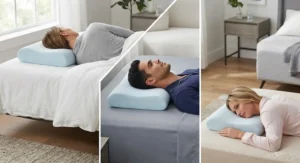
- Match loft to sleep position. Side sleepers generally need a taller loft (6-7 inches) to fill the shoulder gap; back and stomach sleepers do better with a lower profile (3-5 inches) to avoid neck strain.
- Check the fill construction, not just the cover. A cooling cover on top of dense, closed-cell memory foam still traps heat underneath — shredded fill, latex grids, or open-cell foam matter as much as the fabric.
- Consider washability realistically. If night sweats are a regular issue, prioritize a removable, machine-washable cover — you’ll be laundering it often, and delicate hand-wash-only materials become a genuine hassle fast.
- Weigh firmness against support needs. Softer natural fibers like silk feel luxurious but offer less structured support; firmer latex or gel-grid options support alignment better but feel less plush.
- Set a realistic budget band. Passive cooling covers start under $50 and work well for mild heat issues; active-regulation pillows in the $100-$220 range are worth it for chronic, severe night sweats.
- Read the aggregated review sentiment, not just the star rating. A 4.5-star average tells you little — look for recurring themes in the written reviews about how long the cooling effect actually lasts through the night.

Active Cooling Pillow Technology Explained: PCM, Gel, and Heat Flux
Not all “cooling” claims mean the same thing, and understanding the underlying tech helps you avoid paying premium prices for a pillow that’s only marginally better than a basic bamboo cover.
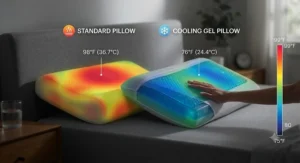
Gel infusion works by distributing gel beads or a gel layer through foam to increase the material’s thermal mass, letting it absorb heat more slowly than plain foam. It’s effective for the first hour or two of sleep but tends to saturate — once the gel absorbs as much heat as it can hold, cooling performance drops off, which is why gel-only pillows often feel great at bedtime and less impressive by 3 a.m.
PCM, or phase change material, works on a fundamentally different principle. As Outlast’s own materials science overview explains, PCM utilizes the thermal energy coming from the user’s body to keep them comfortable, functioning as both a heat storage and heat sink without needing any external power source, and the process runs automatically as the body’s temperature fluctuates. In plain terms: it doesn’t just slow heat absorption like gel, it actively cycles between absorbing and releasing heat to hold your microclimate steady — which is why PCM pillows like the Slumber Cloud UltraCool Pillow tend to outperform gel-only options over a full eight-hour night.
Heat flux is the more technical term for how quickly heat actually transfers away from your skin through a sleep surface — essentially a measurement of cooling speed, not just cooling capacity. A pillow can have excellent thermal mass (able to absorb a lot of heat) but poor heat flux (slow to pull it away from your skin in the first place), which is part of why lab-style heat-flux testing tends to favor open, ventilated structures like the Purple Harmony Pillow‘s grid design over solid, dense foam blocks even when both use similar base materials.
The practical takeaway: gel is a solid budget entry point, PCM is worth the upgrade for chronic night sweats, and structural airflow (grids, shredded fill, mesh panels) matters just as much as the material itself, regardless of which cooling tech a pillow uses.
✨ Not Sure Which Cooling Tech Fits Your Sleep Style?
🔍 Compare the gel, PCM, and grid options above side by side, then click through to check current pricing and availability on the pick that matches your budget. The right cooling pillow can turn tossing-and-turning nights into genuinely restful ones.
Gel Pillow vs Bamboo Pillow for Cooling: Which Wins?
This is one of the most common head-to-head questions hot sleepers ask, and the honest answer is: it depends on what “cooling” means to you.
| Factor | Gel Pillow | Bamboo Pillow |
|---|---|---|
| Cooling mechanism | Absorbs heat via gel-infused foam | Wicks moisture via breathable fiber |
| Best at | Initial cool-to-touch feel | Sustained moisture management |
| Firmness | Typically medium-firm | Typically soft-medium |
| Ideal for | Neck pain + mild overheating | Night sweats + humidity issues |
| Example on this list | Elviros Cervical Cooling Gel Pillow | Coop Home Goods Eden Cooling Pillow |
Gel-infused pillows like the Elviros Cervical Cooling Gel Pillow win on that first-touch coolness — you feel the difference the second your head lands. But gel’s cooling effect is largely about thermal mass, meaning it slows heat buildup rather than removing moisture, so if your main issue is waking up sweaty rather than just warm, gel alone won’t fully solve it. Bamboo-covered pillows like the Coop Home Goods Eden Cooling Pillow, by contrast, excel specifically at pulling moisture away from skin and letting it evaporate, which makes them the stronger pick for genuine night sweats rather than general warmth.
Here’s the honest analysis most comparison articles skip: these two technologies aren’t actually competing, they’re complementary, which is exactly why some premium pillows (including the gel-grid-and-latex combination in the Purple Harmony Pillow) layer breathable fiber covers over gel or foam cores to get both benefits at once. If you’re choosing between a pure gel pillow and a pure bamboo pillow on a budget, base the decision on your actual symptom — overheating points to gel, sweating points to bamboo.
Cooling Pillows for Menopause Night Sweats
Menopause-related night sweats deserve their own section because the underlying cause is genuinely different from simply sleeping in a warm room. As estrogen levels fluctuate and eventually decline, the body’s temperature regulation system gets thrown off, triggering vasomotor symptoms — sudden widening of blood vessels that cause heat surges, along with hormone imbalances that affect the brain’s internal thermostat. That’s a physiological event, not just an environmental one, which means the “cool the room down” advice only addresses part of the problem.
Roughly three-quarters of women experience night sweats during perimenopause and menopause, with about a quarter reporting severe symptoms, so if this describes you, you are dealing with an extremely common — and manageable — issue, not an unusual one. For this specific use case, the honest recommendation shifts slightly from general “hot sleeper” advice: prioritize pillows with genuinely fast heat-release properties over ones that simply start cool, since a sudden hot flash needs a surface that can shed heat quickly, not one that was just cool an hour ago.
That’s where the lightweight, low-mass construction of the Cozy Earth Silk Pillow genuinely shines — thin, breathable natural fibers release absorbed heat faster than dense foam simply because there’s less material to hold onto it. The active regulation in the Slumber Cloud UltraCool Pillow is the other strong option here, since PCM is specifically designed to respond to sudden temperature spikes rather than just resist gradual warming. If night sweats are frequent and severe enough to disrupt sleep regularly, it’s also worth discussing options with a healthcare provider, who can help identify the specific cause and determine whether hormone-related or other treatments make sense alongside bedding changes.
Common Mistakes When Buying a Cooling Pillow
Even with good research, it’s easy to end up with a pillow that underdelivers. Here’s what buyers get wrong most often.
Buying based on the word “cooling” printed on the packaging without checking what mechanism actually creates that effect is the single most common mistake — a thin, cool-to-touch cover slapped over dense, heat-trapping memory foam will feel cool for the first ten minutes and warm for the remaining seven and a half hours. What most buyers overlook is that the fill construction matters as much as the cover fabric, sometimes more.
Ignoring loft height in favor of cooling tech alone is another frequent misstep — a perfectly cool pillow that’s the wrong height for your sleep position will still leave you waking up with neck pain, which then disrupts sleep regardless of temperature. Reviewers consistently note that comfort complaints, not temperature complaints, are actually the most common reason people return cooling pillows.
Skipping the washability check is a subtler mistake but a real one — night sweats mean regular washing, and a pillow with a hand-wash-only cover (like the Cozy Earth Silk Pillow) requires a bigger care commitment than a fully machine-washable option (like the Coop Home Goods Eden Cooling Pillow). Finally, expecting a pillow alone to fix a hot bedroom is a mismatch of expectations — a cooling pillow addresses the surface in direct contact with your head and neck, but it can’t compensate for a bedroom running at 78°F with no airflow.
What to Expect: Real-World Performance
Specs and marketing copy tell you what a pillow is supposed to do; here’s what actually happens once it’s on your bed for a full night.
In the first ten minutes, nearly every pillow on this list will feel cool — that’s the easy part, driven mostly by initial surface temperature and cover texture. The real differentiation happens between hour two and hour six, when passive cooling covers with dense foam cores (think basic gel pillows without airflow structure) start warming back up toward body temperature, while pillows with genuine airflow — shredded fill, open latex, or grid structures — hold their temperature far more consistently.
By the second half of the night, active-regulation pillows like the Slumber Cloud UltraCool Pillow typically separate themselves most clearly from passive options, since PCM is specifically designed to keep responding to your body’s temperature rather than simply running out of cooling capacity. Reviewers who track this over multiple nights tend to report that the biggest satisfaction gap isn’t between “cooling” and “non-cooling” pillows — it’s between pillows that only cool at bedtime and pillows that keep cooling until morning.
Expect a genuine adjustment period, too. Contoured or grid-textured pillows (the Elviros Cervical Cooling Gel Pillow and Purple Harmony Pillow both qualify) typically take three to ten nights before they feel fully natural, since your neck and shoulders need time to adapt to a new shape, independent of temperature performance.
Practical Usage Guide: Setup, Maintenance & Optimization
Getting the most out of a cooling pillow starts before you even sleep on it and continues with a few habits most buyers skip.
Unboxing and first use: Foam-based pillows (like the Elviros Cervical Cooling Gel Pillow and Nectar Tri-Comfort Cooling Pillow) often arrive compressed and need 24-48 hours to fully expand to their intended loft — sleeping on it immediately may feel flatter or firmer than the final product. Air out any new foam pillow in a ventilated room for a day before first use to dissipate manufacturing odor, a step reviewers consistently say makes a noticeable difference.
Pillowcase choice matters more than people think: A thick, dense pillowcase can blunt the cooling effect of even the best pillow underneath — this is especially true for PCM pillows like the Slumber Cloud UltraCool Pillow, where the material needs to be close to skin to regulate temperature effectively. Pair cooling pillows with a lightweight, breathable pillowcase (bamboo or percale cotton) rather than flannel or heavy jersey knits.
Washing schedule: For machine-washable covers, aim for every one to two weeks if night sweats are a regular issue, using cold water and a gentle cycle to protect cooling fibers — pairing this with general healthy sleep hygiene habits tends to compound the benefit far more than the pillow alone. For hand-wash-only materials like the silk cover on the Cozy Earth Silk Pillow, spot-clean between full washes to extend the interval without letting buildup affect breathability.
Common first-30-days mistakes: Sleeping with a second, non-cooling pillow stacked on top (which traps heat regardless of what’s underneath), skipping the airing-out period and blaming lingering odor on defective foam, and giving up on adjustable-fill pillows before finishing the customization process are the three most common regrets reviewers report in the first month.
Real-World Scenarios: Who Needs Which Pillow
The night-shift nurse with unpredictable sleep hours: Sleeping during the day when the house is warmer, with limited time to fuss over pillow adjustments, points toward a low-maintenance, consistently performing option — the Bear Cooling Pillow‘s hybrid foam and mesh venting deliver reliable cooling without any setup fuss, and its washable-cover-adjacent design (if not the cover itself) suits an irregular schedule.
The budget-conscious college student sharing a small dorm room: Limited space, a tight budget, and likely no control over dorm thermostat settings make the Elviros Cervical Cooling Gel Pillow the practical choice — it’s inexpensive, ships small, and its ice-silk cover provides real relief in an un-air-conditioned room without a premium price tag.
The woman navigating menopause-related night sweats in her late 40s: Frequent, sudden temperature spikes rather than steady overheating make active regulation the priority here — either the Slumber Cloud UltraCool Pillow for its PCM responsiveness or the Cozy Earth Silk Pillow for its ultra-lightweight, fast heat-release construction, depending on whether she prioritizes technology or natural materials.
Problem → Solution: Fixing the Most Common Overheating Complaints
Problem: “My pillow feels cool for the first hour, then warms up.” This is almost always a fill-construction issue, not a cover issue — switch to a pillow with genuine airflow structure like shredded fill or an open grid, such as the Coop Home Goods Eden Cooling Pillow or Purple Harmony Pillow, rather than a solid foam block with a cooling-branded cover.
Problem: “I wake up with a damp pillow most nights.” This points to a moisture-wicking gap rather than a heat-retention issue — prioritize bamboo or silk covers, like the Cozy Earth Silk Pillow, which are specifically better at pulling moisture away from skin than gel-infused synthetic covers.
Problem: “The pillow is cool but my neck hurts in the morning.” This is a loft-mismatch problem, not a temperature problem — reassess your sleep position and choose a pillow with adjustable or position-appropriate loft, like the Coop Home Goods Eden Cooling Pillow‘s customizable fill or the Purple Harmony Pillow‘s three height options.
Problem: “The cooling effect faded within a few months.” Gel and PCM materials can lose some effectiveness with heavy washing or sun exposure over time — check the manufacturer’s care instructions closely, and consider that this is one area where investing in higher-quality active-regulation materials, rather than budget gel infusions, pays off in longevity.
Problem: “I sleep hot but my partner sleeps cold.” A reversible pillow solves this without buying two separate products — the Slumber Cloud UltraCool Pillow‘s dual-sided cooling-and-warming design is purpose-built for exactly this mismatch.
Long-Term Cost & Maintenance: Is a Cooling Pillow Worth It?
Running the numbers helps put the price difference between budget and premium options into perspective. A $35 gel pillow that needs replacing every 12-18 months due to flattening fill and fading cooling performance works out to roughly $2-3 per month over two years. A $200 pillow like the Purple Harmony Pillow, built with more durable latex and a warrantied grid structure, often lasts three to four years with proper care — which, done out, lands in a similar or even slightly lower monthly cost once you factor in the budget pillow’s shorter replacement cycle.
That math doesn’t mean budget pillows are a bad choice — the Elviros Cervical Cooling Gel Pillow remains a smart pick for anyone who wants to test whether a cooling pillow helps before committing to a bigger purchase, or who simply prefers replacing pillows more frequently for hygiene reasons regardless of durability. But for anyone confident cooling pillows work for their sleep issues, the long-term math genuinely favors investing once in a durable, higher-performance option rather than repeatedly replacing a budget one.
Maintenance costs matter too. Machine-washable covers cost nothing extra to maintain beyond your existing laundry routine, while delicate hand-wash materials like the silk on the Cozy Earth Silk Pillow may justify an occasional professional cleaning for buyers who want to preserve the fabric’s texture and cooling properties long-term.
✨ Don’t Wait for Another Sweaty Night
🔍 Compare current pricing on the picks above and grab the one that matches your sleep style. A few dollars now could mean a genuinely cooler, more restful night tonight — and given how common vasomotor sleep disruptions actually are, you deserve a setup that fights back.

Frequently Asked Questions
❓ What is the best cooling pillow for hot sleepers in 2026?
❓ Do cooling pillows actually work for night sweats?
❓ How is a gel pillow different from a bamboo pillow for cooling?
❓ Are cooling pillows good for menopause night sweats specifically?
❓ How long does a cooling pillow's effectiveness typically last?
Conclusion
There’s no single “best” cooling pillow for hot sleepers — there’s a best match for your specific version of the problem. If you’re testing the waters on a budget, the Elviros Cervical Cooling Gel Pillow gets you real relief without a big commitment. If night sweats are a chronic, hormone-driven issue, the active regulation in the Slumber Cloud UltraCool Pillow or the ultra-breathable materials in the Cozy Earth Silk Pillow are worth the investment. And if you want the most engineered, structurally-driven airflow on the market, the Purple Harmony Pillow delivers genuinely different technology, not just a cooling label.
What matters most is understanding the mechanism behind each pillow rather than trusting the word “cooling” printed on a box. Gel absorbs, bamboo wicks, PCM actively regulates, and open structures like grids and shredded fill simply let air do what dense foam never can. Match that mechanism to whether your problem is general warmth, genuine sweating, or sudden temperature spikes, and you’ll land on a pillow that actually solves your specific version of waking up too hot — not just one more box with a cooling sticker on it.
✨ Ready to Finally Sleep Cool?
🔍 Revisit the comparison table above, pick the pillow that matches your sleep style and budget, and check current pricing before it changes. Your best night’s sleep this year might start with this one swap.
Recommended for You
- Gel Memory Foam Pillow: 7 Best Picks That Really Cool You (2026)
- Bamboo Pillow for Hot Sleepers: 7 Cooling Picks for 2026
- Best Bamboo Pillow 2026: 7 Cooling Picks That Actually Deliver
Disclaimer: This article contains affiliate links. As an Amazon Associate, I earn from qualifying purchases. If you purchase products through these links, we may earn a small commission at no additional cost to you.
✨ Found this helpful? Share it with your friends! 💬🤗
