In This Article
A hypoallergenic pillow for kids is a small, firm, low-profile pillow made for children about age two and up. Its fill and fabric are chosen to resist dust mites, mold, and irritants, and to stay gentle on sensitive skin. The word “hypoallergenic” isn’t a tightly regulated guarantee, so construction and certifications tell you far more than the label does.

Most kids don’t need a pillow at all. Their heads are proportionally large and their shoulders narrow, so sleeping flat keeps the airway and spine in neutral alignment. The American Academy of Pediatrics safe sleep guidance keeps soft items like pillows out of infant sleep spaces, and the common recommendation is to wait until at least age two. Once a child has moved to a toddler bed and starts stuffing blankets or stuffed animals under their head, a proper pillow becomes a smart upgrade.
Then the shopping starts, and it’s a maze. Some pillows are too big, some are too fluffy, and some say “hypoallergenic” on the tag and little else.
This guide cuts through it. I researched seven real pillows across budget, mid-range, and premium tiers, and compared their specs and aggregated reviewer sentiment. I also built in the practical stuff Amazon listings skip: setup, washing, and troubleshooting. Along the way you’ll see how a hypoallergenic pillow under $40 can hold its own, what a small-loft pillow does for a small neck, and how to pick a hypoallergenic pillow for side sleepers. Child-safe materials and pediatric sleep support get their own sections too.
Quick Comparison Table: 7 Kids’ Pillows at a Glance
| Product | Size | Fill | Price Range | Best For |
|---|---|---|---|---|
| Coop Sleep Goods Original Toddler Adjustable Pillow | 19″ x 13″ | Shredded memory foam + microfiber | Premium tier, check current price | Kids who need adjustable loft |
| Little Sleepy Head Toddler Pillow | 13″ x 18″ | Polyester cluster fiber | Budget, under $30 | First pillow, everyday use |
| KeaBabies My Little Dreamy Toddler Pillow | 13″ x 18″ | Microfiber-style fill, cotton cover | Budget, under $30 | Organic-cotton fans |
| Snuggle-Pedic Toddler & Kids Pillow | Toddler size | Shredded memory foam | Premium tier, check current price | Hot sleepers, side sleepers |
| Simmons Kids Beautyrest Studio Toddler Memory Foam Pillow | Toddler size | Memory foam | Budget, under $25 | Tight budgets |
| kinder Fluff Toddler Pillow (2-Pack) | 10″ x 15″ | Down-alternative fill | Under $25 for the pair | Small-loft, travel, daycare |
| Sealy Baby Soft Cotton Toddler Pillow | 14″ x 19″ | Hypoallergenic fill, cotton cover | Budget, under $30 | Brand-name reassurance |
Look at how the table splits. Three pillows on the list, Little Sleepy Head Toddler Pillow, kinder Fluff Toddler Pillow (2-Pack), and Simmons Kids Beautyrest Studio Toddler Memory Foam Pillow, sit comfortably in hypoallergenic pillow under $40 territory. The two shredded-foam options, Coop Sleep Goods Original Toddler Adjustable Pillow and Snuggle-Pedic Toddler & Kids Pillow, cost more but let you tune the loft. If your child is between sizes, that adjustability may be worth the premium.
💬 Just one click — help others make better buying decisions too!😊
Top 7 Hypoallergenic Pillow for Kids Picks: Expert Analysis
Prices below are ranges as of the time of research and may vary, so check current price before buying. Review commentary reflects aggregated themes from published roundups and retailer listings, not my own testing.
1. Coop Sleep Goods Original Toddler Adjustable Pillow — loft you can tune as they grow
The headline feature is the fill. You can unzip the inner liner and add or remove shredded memory foam and microfiber, so the same pillow can serve a two-year-old and a seven-year-old. The Coop Sleep Goods Original Toddler Adjustable Pillow measures roughly 19″ x 13″ and is recommended for ages 2 to 8. Its foam carries CertiPUR-US certification and the pillow holds GREENGUARD Gold certification, which speaks to chemical emissions.
On paper, that certification pairing is the strongest child-safe materials story in this round-up. Adjustability also means you can start with a thin, small-loft setup and add fill only when your child’s shoulders broaden. That makes it a solid fit for side sleepers, who need extra height to fill the ear-to-shoulder gap.
Editorial testers, including Sleep Foundation’s toddler pillow roundup, consistently praise the adjustability and the removable cover. Reviewers of Coop’s shredded-foam pillows more broadly note that they dry slowly after washing, so plan laundry day around that.
Pros:
- ✅ CertiPUR-US foam and GREENGUARD Gold certification
- ✅ Loft adjusts by adding or removing fill
- ✅ Removable, washable zippered cover
Cons:
- ❌ Slow drying after washing
- ❌ Costs more than fiber-filled options
Price range: premium tier for a kids’ pillow, so check current price. Value verdict: worth it if you’d otherwise replace a pillow every year or two, and probably overkill if you just need a stopgap.

2. Little Sleepy Head Toddler Pillow — OEKO-TEX cotton shell at a friendly price
This is the pillow to beat in the budget tier. The Little Sleepy Head Toddler Pillow is a 13″ x 18″ pillow with a 100% cotton shell and polyester cluster fiber fill. Its listing cites OEKO-TEX Standard 100 certification and CPSC compliance, and it’s machine washable.
In practice, the 13″ x 18″ footprint matches standard toddler beds and fits a cotton pillowcase without bunching. Polyester cluster fiber resists dust mites better than natural down, which is why it shows up so often in allergy-minded picks. The listing tags it as suitable for both back and side sleepers, and its soft-to-medium feel suits kids who wake up cranky when a pillow pushes their head forward.
Roundups describe it as durable and soft, and parents praise it for keeping its shape through repeated washes. Long-term flattening is the common complaint with any fiber-filled pillow, though, so fluff it in the dryer now and then.
Pros:
- ✅ OEKO-TEX Standard 100 certified cotton shell
- ✅ Machine washable for easy allergen control
- ✅ Standard 13″ x 18″ size fits most toddler beds
Cons:
- ❌ Fiber fill can flatten over many months
- ❌ Loft is fixed, so no adjustment
Price range: budget tier, under $30. Value verdict: strong, and a natural pick for anyone shopping a hypoallergenic pillow under $40.
3. KeaBabies My Little Dreamy Toddler Pillow — the organic-cotton crowd-pleaser
Parents who want more natural fabric against their child’s cheek will look here first. The KeaBabies My Little Dreamy Toddler Pillow pairs a 100% organic cotton cover with a soft, plush microfiber fill in a 13″ x 18″ size. Listings mention OEKO-TEX certification, machine washability, and suitability for ages two and up.
The organic cotton cover matters most for kids with eczema-prone or reactive skin, because breathable natural fabric helps limit overheating and sweat, which can aggravate itchiness. The fill is soft, though, so this leans toward the low-firmness end. Marketing copy says it’s “designed by experts for spinal alignment,” and I’d treat that as a marketing claim rather than a clinical finding.
Retailer roundups describe it as a favorite for naps, daycare, and travel, partly because a pillowcase often comes bundled. I couldn’t verify a large body of independent review data, so read current customer feedback on the listing.
Pros:
- ✅ Organic cotton cover suits sensitive skin
- ✅ OEKO-TEX certified and machine washable
- ✅ Pillowcase bundled in some listings
Cons:
- ❌ Softer feel may not suit firm-pillow fans
- ❌ Independent review depth is limited
Price range: budget tier, under $30. Value verdict: good, especially if you prioritize natural fabric.
4. Snuggle-Pedic Toddler & Kids Pillow — cool, adjustable comfort for hot sleepers
If your child kicks off the covers every night, this is the pick to look at. The Snuggle-Pedic Toddler & Kids Pillow is filled with shredded memory foam and wrapped in a bamboo-derived viscose blend cover, with a removable, washable cover and CertiPUR-US-certified foam.
Shredded foam molds around a small head instead of pushing back, which helps side sleepers keep the neck in line with the spine. The bamboo-blend cover feels cooler to the touch, and the fill can be adjusted like Coop’s. Bamboo-blend viscose is not automatically hypoallergenic, but it’s smooth and easy on skin, and the removable cover lets you wash away skin oils and dust regularly.
Mattress Clarity’s 2026 comparison of the adult Snuggle-Pedic and Coop pillows found both have simple cleaning but long drying times. I’d expect the kids’ version to behave similarly, which is a real consideration in damp climates.
Pros:
- ✅ CertiPUR-US-certified shredded memory foam
- ✅ Bamboo-derived cover feels cool
- ✅ Adjustable fill and removable cover
Cons:
- ❌ Drying takes a long time
- ❌ Premium price for a growing child
Price range: premium tier, so check current price. Value verdict: best for hot sleepers or side sleepers, but skip it if you want a hypoallergenic pillow under $40.
5. Simmons Kids Beautyrest Studio Toddler Memory Foam Pillow — the low-price memory foam option
The standout here is simply the price. The Simmons Kids Beautyrest Studio Toddler Memory Foam Pillow appears on retailer listings around the under-$25 range and offers a foam feel from a recognizable mattress brand.
Solid memory foam is firmer and less adjustable than shredded foam, so it suits kids who want a defined edge under the head rather than a squishy nest. It resists dust mite colonization better than natural fills because dense foam leaves little room for mites to burrow. The tradeoff is heat retention, since solid foam can run warmer than fiber.
I couldn’t verify detailed certifications or a deep pool of independent reviews for this exact listing. Before buying, check that the listing states CertiPUR-US foam and see how the cover is made. If those details are missing, treat the “hypoallergenic” label cautiously.
Pros:
- ✅ Firm, supportive memory foam feel
- ✅ Very low price point
- ✅ Dense foam leaves little room for mites
Cons:
- ❌ Certification details need verification
- ❌ Solid foam can sleep warm
Price range: budget tier, under $25. Value verdict: a decent stopgap, but verify certifications first.
6. kinder Fluff Toddler Pillow (2-Pack) — true small-loft pillow with a spare
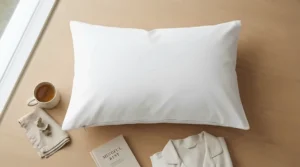
Two pillows means one is always clean. The kinder Fluff Toddler Pillow (2-Pack) offers 10″ x 15″ pillows with a 300-thread-count cotton sateen shell and down-alternative fill, made for ages two and up and machine washable.
This is the smallest and lowest-profile option in the round-up, which makes it the best small-loft pillow for younger toddlers and for kids who sleep on their stomach or back. A 10″ x 15″ pillow won’t overwhelm a small bed, and it fits in a backpack for daycare. For side sleepers, though, the loft may be too low once shoulders widen, so this is a better fit for kids just starting out.
The 2-pack format is the smartest part of the deal. One pillow in the wash and one on the bed means you can wash bedding weekly without a night of no pillow. I couldn’t verify a deep pool of independent reviews, so check customer photos for real-world size.
Pros:
- ✅ Smallest, lowest-loft option here
- ✅ Two pillows for the price of roughly one
- ✅ Cotton sateen shell, machine washable
Cons:
- ❌ Too low for broad-shouldered side sleepers
- ❌ Limited independent review data
Price range: budget tier, under $25 for the pair. Value verdict: excellent for young toddlers and travel.
7. Sealy Baby Soft Cotton Toddler Pillow — brand-name reassurance in a roomier size
Some parents just want a familiar name on the tag. The Sealy Baby Soft Cotton Toddler Pillow is a 14″ x 19″ pillow with a 100% cotton cover and a hypoallergenic fill, sitting slightly larger than most toddler pillows.
The extra inch or so of width gives active sleepers more room to roll without falling off the pillow. It also suits kids in the four-to-six range who have outgrown a 13″ x 18″ size but aren’t ready for a full youth pillow. A cotton cover is breathable and easy to wash, and the fill is polyester-style, which resists mites better than down.
Published roundups describe it as gentle and supportive, but I found little independent review data, so confirm fill details and washing instructions on the current listing. The larger size also means you should watch the loft carefully so it doesn’t push a smaller child’s chin toward the chest.
Pros:
- ✅ Slightly larger 14″ x 19″ surface
- ✅ Cotton cover, breathable and washable
- ✅ Recognizable brand
Cons:
- ❌ Bigger size may overwhelm very small toddlers
- ❌ Little independent review data
Price range: budget tier, under $30. Value verdict: solid mid-size compromise.
Top 7 Products Comparison Table
| Product | Key Claim | Care | Price Range | Best For |
|---|---|---|---|---|
| Coop Sleep Goods Original Toddler Adjustable Pillow | CertiPUR-US, GREENGUARD Gold | Removable washable cover | Premium | Growing kids, side sleepers |
| Little Sleepy Head Toddler Pillow | OEKO-TEX, CPSC compliant | Machine washable | Under $30 | First pillow |
| KeaBabies My Little Dreamy Toddler Pillow | Organic cotton, OEKO-TEX | Machine washable | Under $30 | Sensitive skin |
| Snuggle-Pedic Toddler & Kids Pillow | CertiPUR-US foam | Removable washable cover | Premium | Hot sleepers |
| Simmons Kids Beautyrest Studio Toddler Memory Foam Pillow | Memory foam | Check listing | Under $25 | Tight budgets |
| kinder Fluff Toddler Pillow (2-Pack) | Down alternative, 300T cotton | Machine washable | Under $25 | Travel, small-loft |
| Sealy Baby Soft Cotton Toddler Pillow | Cotton cover, hypoallergenic fill | Check listing | Under $30 | Roomier fit |
The pattern is clear. Fiber-filled pillows win on price and washability, while shredded-foam pillows win on adjustability and contouring. If you value simplicity, pick a fiber pillow with an OEKO-TEX cover, such as the Little Sleepy Head Toddler Pillow, and replace it when it flattens. If your child is a strong side sleeper or runs hot, the Snuggle-Pedic Toddler & Kids Pillow or Coop Sleep Goods Original Toddler Adjustable Pillow justify the premium.
How to Choose a Hypoallergenic Pillow for Kids
The best hypoallergenic pillow for kids is firm enough to support the neck, thin enough to keep the head level with the spine, and washable enough to keep allergens down. Here’s the short method.
- Confirm your child is ready. Wait until at least age two and a move to a toddler bed. Toddlers don’t need pillows for comfort, so this is optional, not urgent.
- Match the size. Toddler pillows (about 13″ x 18″) suit ages two to five, while youth pillows (about 16″ x 22″) suit older kids. Oversized pillows can push the head forward.
- Check the loft. Aim for a low, firm profile. A small-loft pillow keeps the head from tilting, and an adjustable-fill pillow lets you fine-tune it.
- Look for certifications. CertiPUR-US for foam, OEKO-TEX Standard 100 for fabric, and GREENGUARD Gold for emissions are the marks that matter most.
- Pick a washable design. Regular washing is the main way to control dust mites, so choose a machine-washable pillow or a removable cover.
- Avoid loose, fluffy fills. Loose beads and soft down-style pillows raise suffocation and allergen concerns.
- Set a budget. A good hypoallergenic pillow under $40 is realistic, and the extra cost of premium options is mostly for adjustability.
Dust mites are the main allergen concern, and the Asthma and Allergy Foundation of America explains that allergy-friendly pillows and zippered pillow covers help reduce exposure. For kids with confirmed allergies, pairing a certified cover with regular washing is more reliable than trusting the “hypoallergenic” tag alone.

Hypoallergenic Pillow for Side Sleepers: Getting the Loft Right
Side sleeping is the most common reason a child needs a pillow in the first place. When a child lies on their side, the gap between the ear and the mattress equals the width of the shoulder, and the pillow’s job is to fill that gap so the neck stays level.
A hypoallergenic pillow for side sleepers needs three things: enough loft to fill the gap, enough firmness not to collapse under a head, and a smooth cover that won’t irritate a cheek pressed into it all night. Too little loft and the neck bends downward. Too much and the head tilts up, which is just as unhelpful. There’s no verified pediatric standard for the exact loft by age, so use your child’s shoulder width as a rough guide and adjust.
Adjustable pillows solve this best. The Coop Sleep Goods Original Toddler Adjustable Pillow and Snuggle-Pedic Toddler & Kids Pillow let you add fill as shoulders broaden. Fixed-loft options like the Little Sleepy Head Toddler Pillow, which its listing tags for both back and side sleepers, can work for smaller children.
Try this quick test at bedtime. Look at your child from behind while they lie on their side. If their nose points straight ahead and the neck looks level, the loft is right. If it droops or tilts up, adjust the fill or swap pillows.
Child-Safe Materials: Certifications That Actually Matter
“Non-toxic” is a marketing phrase. Certifications are the independent check behind it, and knowing three of them makes shopping much easier.
CertiPUR-US for Foam
CertiPUR-US tests foam for harmful chemicals, heavy metals, and excessive volatile organic compounds. It applies to memory foam and shredded-foam fills, so it’s the mark to look for on the Coop Sleep Goods Original Toddler Adjustable Pillow and Snuggle-Pedic Toddler & Kids Pillow.
OEKO-TEX Standard 100 for Fabric
OEKO-TEX tests textiles for harmful substances. Since the cover touches your child’s face all night, this matters more than most parents realize. The Little Sleepy Head Toddler Pillow and KeaBabies My Little Dreamy Toddler Pillow both cite it.
GREENGUARD Gold for Emissions
GREENGUARD Gold is a low-emissions standard commonly cited for products in children’s rooms, and it appears on the Coop pillow, as Sleep Foundation’s coverage notes.
Fills to Approach with Caution
Natural down attracts dust mites, and loose-fill beads pose safety problems. Polyester cluster fiber and certified foam are safer defaults for child-safe materials. Organic cotton fills are gentle but need regular fluffing and washing, since they can flatten.
Small-Loft Pillow vs. Standard Youth Pillow vs. No Pillow
| Option | Neck Alignment | Allergen Control | Best For |
|---|---|---|---|
| Small-loft pillow, such as kinder Fluff Toddler Pillow (2-Pack) | Keeps head level for young kids | Machine washable | Ages 2-4, back sleepers |
| Adjustable pillow, such as Coop Sleep Goods Original Toddler Adjustable Pillow | Tunable to shoulder width | Removable cover | Side sleepers, growing kids |
| Adult pillow | Often too high | Varies, hard to wash | Not recommended |
| No pillow | Neutral for toddlers | Fewer surfaces for allergens | Many kids under age 3 |
Many kids under three do just fine with no pillow at all, and that’s the lowest-risk, lowest-allergen choice. A small-loft pillow is the natural first step once your child needs one, while an adjustable pillow makes sense for side sleepers. Adult pillows are the one option to avoid, because they’re too tall and too soft for a child’s frame.
Pediatric Sleep Support: Age, Posture, and When to Skip the Pillow
Pediatric sleep support starts with the sleep environment, not the pillow. Children under two should sleep on a firm, flat surface with nothing soft in the sleep space, and many pediatric sources suggest waiting until at least age two before introducing a pillow.
After that, look for signs your child might want one. They start propping their head on stuffed animals or blankets, they sleep on their side, or they show interest in the pillow themselves. If none of these apply, skipping the pillow is fine.
A good pillow supports posture without forcing it. The head should stay in line with the spine, neither tilting up nor bending down. Pillows that are too high or too soft can work against that, which is why small, firm, low-loft designs dominate the recommendations.
Kids with reflux, breathing problems, or sleep disorders deserve individualized advice. This article is educational, not medical advice, so ask your pediatrician before making changes if your child has any of those concerns.
Hypoallergenic Pillow Under $40: Price and Value Analysis
| Product | Price Range | Estimated Lifespan Approach | Best For |
|---|---|---|---|
| Simmons Kids Beautyrest Studio Toddler Memory Foam Pillow | Under $25 | Replace when foam loses shape | Tight budgets |
| kinder Fluff Toddler Pillow (2-Pack) | Under $25 | Rotate two pillows | Travel, small-loft |
| Little Sleepy Head Toddler Pillow | Under $30 | Fluff regularly, replace when flat | First pillow |
| Coop Sleep Goods Original Toddler Adjustable Pillow | Premium | Adjust fill as child grows | Long-term use |
A hypoallergenic pillow under $40 covers most needs. Fiber-filled options in that range are washable and certified, and they do the job well. The catch is longevity, because fiber compresses over time, so you may replace one every year or so.
Premium adjustable pillows cost more upfront but can span ages two through eight, which lowers the cost per year. If your child is on the older end of the range or a confirmed side sleeper, that math can favor the Coop Sleep Goods Original Toddler Adjustable Pillow. If not, the budget picks are the smarter buy.
Practical Setup and Care Guide: First 30 Days
A good pillow still needs a good introduction. Here’s a simple plan.
Days 1-3: Wash the pillowcase and the pillow if the label allows. New pillows can carry manufacturing residue or a slight smell, so air it out for a day before use.
Week 1: Introduce the pillow at nap time first, not overnight. Watch how your child lies. If their chin tucks toward their chest, the loft is too high.
Weekly: Wash pillowcases in hot water, as commonly recommended for dust mite control. Foam pillows generally can’t go through the same treatment, so use a removable cover.
Monthly: Fluff fiber pillows in the dryer on low heat, and spot-check adjustable pillows for lumps.
Every 6-12 months: Check for flattening. If the pillow no longer holds its shape, replace it.
The most common mistakes in the first month are choosing a pillow that’s too big, skipping the pillowcase, and forgetting to wash it. Fix those three and you’ve handled most of the problem. For allergic kids, add a zippered allergen-proof cover, since the AAAAI dust mite practice parameter identifies encasing pillows as an effective way to prevent mite colonization.
Real-World Scenarios: Matching Pillows to Real Kids
Scenario 1: The three-year-old just out of the crib. Budget is tight, the bed is a standard toddler size, and the child sleeps mostly on their back. A Little Sleepy Head Toddler Pillow or kinder Fluff Toddler Pillow (2-Pack) fits well. Both are washable and low-cost, and the two-pack gives you a spare for laundry day.
Scenario 2: The five-year-old side sleeper with dust allergies. Mattress and pillow both need attention. The Coop Sleep Goods Original Toddler Adjustable Pillow offers adjustable loft and a removable cover, and pairing it with a zippered allergen-proof cover and weekly pillowcase washing makes the setup more robust.
Scenario 3: The hot-sleeping seven-year-old. Sweaty nights call for a cooler surface. The Snuggle-Pedic Toddler & Kids Pillow with its bamboo-blend cover is the closest match here, and its adjustable fill can grow with the child.
Scenario 4: The daycare and travel kid. A pillow that goes in a backpack and through the wash often needs to be small and cheap. The kinder Fluff Toddler Pillow (2-Pack) is the natural pick, and KeaBabies My Little Dreamy Toddler Pillow works if you prefer organic cotton.
Problem-Solution Guide: Common Pillow Headaches
Problem: My child keeps waking up sneezy or congested.
Solution: Wash bedding weekly in hot water, add a zippered allergen cover, and keep bedroom humidity in check. If symptoms persist, see an allergist rather than self-diagnosing.
Problem: The pillow flattens after a few months.
Solution: Fluff it regularly, or switch to an adjustable foam pillow like the Coop Sleep Goods Original Toddler Adjustable Pillow, where you can add fill instead of replacing the whole thing.
Problem: My child pushes the pillow off every night.
Solution: Try a smaller pillow. A 10″ x 15″ size such as the kinder Fluff Toddler Pillow (2-Pack) is easier for small kids to manage, and some children simply don’t want one yet.
Problem: The pillow smells odd out of the package.
Solution: Air it out, wash the cover, and if the smell persists, contact the seller. Certifications like CertiPUR-US and GREENGUARD Gold exist precisely to limit chemical emissions.
Problem: My child’s neck seems stiff in the morning.
Solution: Check the loft, since too high or too low can both cause it, and consult your pediatrician if it continues.
Common Mistakes When Buying a Hypoallergenic Pillow for Kids
The biggest mistake is trusting the word “hypoallergenic” on its own. It isn’t a regulated guarantee, so it should be backed by real certifications and a washable design.
The second is buying too much pillow. A big, fluffy pillow looks comfortable, but it can tilt a small head forward and disrupt alignment. Small and firm usually beats big and soft.
Third, parents forget the cover. A pillow with a machine-washable or removable cover is far easier to keep allergen-free than one that can’t be cleaned. That makes covers as important as fills.
Fourth is skipping the age check. Pillows before age two add risk without much benefit, so wait until your child is ready.
Finally, some parents assume a higher price means better quality. In this round-up, the budget picks with OEKO-TEX certification perform well on paper, while premium pillows mostly add adjustability. Spend more only if you’ll use that feature.

FAQ
❓ Is a hypoallergenic pillow for kids worth it if my child has no allergies?
❓ How often should I wash a kids' pillow?
❓ Can a hypoallergenic pillow under $40 still be good quality?
❓ Which hypoallergenic pillow for side sleepers works best for toddlers?
❓ What is the ideal small-loft pillow size for a two-year-old?
Conclusion
Choosing a hypoallergenic pillow for kids comes down to a few clear ideas. Wait until your child is ready, usually at age two or later. Choose a small, firm, low-profile pillow. Look for real certifications like CertiPUR-US, OEKO-TEX, and GREENGUARD Gold rather than trusting a tag. And make sure the whole thing can be washed.
For most families, a budget pick such as the Little Sleepy Head Toddler Pillow, KeaBabies My Little Dreamy Toddler Pillow, or kinder Fluff Toddler Pillow (2-Pack) delivers everything a hypoallergenic pillow under $40 needs to. If your child is a confirmed side sleeper or you want one pillow to last through ages two to eight, the Coop Sleep Goods Original Toddler Adjustable Pillow or Snuggle-Pedic Toddler & Kids Pillow earns its premium. Balanced against that, the Simmons Kids Beautyrest Studio Toddler Memory Foam Pillow and Sealy Baby Soft Cotton Toddler Pillow are worth a look once you’ve verified their details.
Above all, remember that pediatric sleep support isn’t about gear. It’s about a safe, consistent sleep space, good habits, and a pediatrician you trust when questions come up.
Recommended for You
- 7 Best Hypoallergenic Pillows For Asthma In 2026
- Acid Reflux Pillow For Pregnancy: 7 Top Picks For 2026 Relief
- Wedge Pillow Vs Adjustable Bed For Acid Reflux: 7 Top Picks (2026)
Disclaimer: This article contains affiliate links. As an Amazon Associate, I earn from qualifying purchases. If you purchase products through these links, we may earn a small commission at no additional cost to you.
✨ Found this helpful? Share it with your friends! 💬🤗
