
In This Article
Here’s the thing nobody tells you about waking up at 3 a.m. with a damp pillowcase: it’s rarely the room that’s the problem. It’s the six inches of foam or fiber directly under your skull, quietly trapping every degree of heat your head generates for eight straight hours. A cooling pillow for night sweats won’t stop your body from sweating — nothing short of medical treatment can promise that — but it can stop your pillow from turning that sweat into a swampy, sleepless mess.

Roughly 75 to 80 percent of women moving through menopause experience hot flashes and night sweats to some degree, and plenty of men, shift workers, athletes, and just plain warm-blooded sleepers deal with the same 2 a.m. wake-up call. If you’ve already tried cranking the AC and switching to cotton sheets and you’re still peeling off a damp shirt before sunrise, the pillow itself deserves a hard look.
What is a cooling pillow for night sweats? It’s a pillow engineered with breathable fill (gel-infused foam, ventilated latex, or moisture-wicking fiber) and a temperature-regulating cover that pulls heat and moisture away from your skin faster than standard polyester or down can manage, so your head stays cooler and drier through the night.
This guide walks through seven real, currently sold pillows across every price tier, explains what the specs actually mean for a hot, sweaty sleeper, and gives you a decision framework so you’re not gambling $150 on a guess.
Quick Comparison Table: Cooling Pillow for Night Sweats at a Glance
| Pillow | Cooling Method | Best For | Price Range |
|---|---|---|---|
| Himoon Cooling Pillow Set | Moisture-wicking microfiber | Budget shoppers, guest rooms | Under $30 |
| Beckham Hotel Collection Gel Pillow | Gel fiber down-alternative | Side sleepers, hotel-style loft | $30-$50 range |
| Coop Home Goods Eden Cool+ | Gel-infused adjustable foam | Custom loft, all sleep positions | $100-$150 range |
| Purple Harmony Pillow | GelFlex Grid + latex core | Hot sleepers who want max airflow | $160-$180 range |
| Tempur-Pedic TEMPUR-Cloud Breeze | Dual-sided Tempur-breeze gel | Committed memory foam fans | $160-$180 range |
Notice the pattern here: the cheaper the pillow, the more the “cooling” comes from breathable fibers rather than active gel technology, and the more expensive options stack two or three cooling mechanisms on top of each other. That’s not a knock on the budget picks — a well-ventilated microfiber pillow genuinely sleeps cooler than a flat polyester one — it’s just a reminder that price roughly tracks how many independent cooling systems are working for you at once. If you’re a moderately warm sleeper, the mid-tier gel options are probably your sweet spot; if you wake up in a full sweat most nights, the premium latex and gel-layer pillows earn their price tag.
💬 Found a pillow that already caught your eye? Bookmark this page and keep scrolling — the full breakdown for each one is coming up next.
Top 7 Cooling Pillows for Night Sweats: Expert Analysis
Here’s where things get specific. Below are seven real products currently available, spanning budget microfiber to premium latex-and-gel hybrids. Every product mention keeps the name bolded so you can scan the whole list at a glance.
1. Himoon Cooling Pillow Set — best budget pick for guest rooms
The standout feature here is simple math: two queen pillows for less than the price of a single mid-range option, and they still carry a genuinely strong review record.
These pillows use a 100 percent microfiber fill wrapped in a breathable, sweat-absorbing microfiber cover — no gel, no latex, just a fill that’s naturally more breathable than down because air moves through the fiber clusters instead of getting trapped in dense clumps. In practice this means the pillow won’t feel actively cold to the touch the way a gel-topped pillow does, but it also won’t build up the same slow, suffocating heat that a cheap polyester pillow does by 2 a.m.
Based on the spec comparison with other budget fills, microfiber’s biggest advantage for hot sleepers is that it dries faster than down or cotton batting, which matters if you’re already sweating through the night. This is a solid entry point for someone testing whether “cooling pillow” language actually changes their sleep before committing real money.
Reviewers consistently report strong satisfaction for the price, with the Himoon Cooling Pillow Set holding a 4.4-star average across more than 21,300 Amazon reviews. A recurring theme in that feedback is that the pillows arrive well-packaged without the chemical off-gassing smell some cheaper foam pillows carry, and buyers frequently note they held their loft better than expected after repeated washing.
Pros:
- ✅ Two pillows for the price of most single mid-range picks
- ✅ Machine washable without major clumping issues
- ✅ No noticeable off-gassing odor on arrival
Cons:
- ❌ No active gel or latex cooling — relies on fiber breathability alone
- ❌ Some buyers found the loft firmer than expected for stomach sleeping
At under $30 for a pair, this is the lowest-risk way to find out if a breathable cover alone makes a real difference for your night sweats before you spend triple digits on a gel or latex option.

2. Beckham Hotel Collection Gel Pillow — closest thing to a hotel pillow at home
The standout feature is the gel fiber fill, which replicates that plush-but-supportive hotel pillow feel while staying noticeably cooler to the touch than standard polyester fiberfill.
The fill itself is a poly gel fiber down-alternative wrapped in a 250-thread-count cotton cover, and the gel infusion inside the fiber strands promotes airflow between clusters rather than letting them pack down into a dense, heat-trapping mat. What most buyers overlook about this model is that the cooling comes almost entirely from the fiber structure and cotton cover, not from any solid gel layer — so it’s a moderate cooling effect, not a dramatic one.
This is genuinely a good match for side and back sleepers who want a plush, medium-firm feel without paying premium prices, and it’s a poor match for anyone whose night sweats are severe enough to need active heat dissipation from a solid gel or latex core.
Aggregated review sentiment is enormous here — the Beckham Hotel Collection Gel Pillow has accumulated roughly 165,000-plus five-star Amazon ratings, an unusually large sample size for bedding. A recurring pattern in that feedback: reviewers describe the cooling effect as “noticeable but moderate,” a step up from basic polyester but not as dramatically cold as dedicated phase-change or gel-layer pillows.
Pros:
- ✅ Massive, consistently positive review base at a low price point
- ✅ Holds shape well through repeated machine washing
- ✅ Comfortable medium-plush loft for side and back sleepers
Cons:
- ❌ Cooling effect is moderate, not dramatic, per aggregated reviews
- ❌ Too thick for many dedicated stomach sleepers
Sold in pairs typically priced in the $30-$50 range, this is the pick for someone who wants “hotel pillow” comfort with a mild cooling boost, not a dedicated night-sweat solution.
3. Elviros Cervical Memory Foam Pillow with Cooling Cover — best for neck pain plus night sweats
The standout feature is the contour design paired with a cooling-fabric cover, aimed squarely at people dealing with both neck stiffness and overheating at the same time.
The core is a single-piece contoured memory foam block — not shredded or adjustable — with raised “wings” that cradle the neck and a lower center channel that keeps the head from tilting too far back. Layered over that foam is an ice-silk style breathable cover engineered specifically to feel cool against the skin on contact, which matters because solid memory foam blocks are notorious heat-retainers on their own.
Here’s what the spec sheet won’t tell you outright: because this is a dense, solid foam core rather than shredded or gel-infused foam, the cooling here is doing more work at the surface (the cover) than at the core. That’s a meaningful distinction for genuinely hot sleepers — the pillow may feel cool for the first hour or two and then warm gradually as the dense foam absorbs body heat, a pattern several independent testers have flagged with similar single-block memory foam pillows.
Reviewers frequently mention real, measurable neck and shoulder pain relief alongside the temperature benefit, describing the ergonomic curve as a “game-changer” for chronic stiffness, with breathability cited as a secondary but appreciated feature rather than the headline draw.
Pros:
- ✅ Genuine ergonomic neck and shoulder support from the contour shape
- ✅ Ice-silk cover feels cool to the touch immediately
- ✅ CertiPUR-US certified foam construction
Cons:
- ❌ Solid foam core can warm gradually over several hours
- ❌ Requires a 2-4 week adjustment period per the brand’s own guidance
If neck pain is at least as big a problem as your night sweats, this is one of the few pillows in this roundup that’s honestly built to solve both at once, typically priced in the $35-$55 range.
4. Sleep Innovations Gel Memory Foam Contour Pillow — best all-around gel-infused foam pick
The standout feature is straightforward gel-infused memory foam in a contour shape, made in the USA and priced well below most premium gel options.
This pillow uses a single-piece contour memory foam core infused with cooling gel beads, designed with a higher and lower lobe so you can flip it depending on whether you want extra loft or a lower profile. The gel infusion works by absorbing and dispersing heat across a wider surface area than plain memory foam can manage alone, which measurably slows the rate at which body heat accumulates in the foam.
Based on the spec comparison with the Elviros pillow above, this one trades some of the aggressive cervical contouring for a gentler, more universal curve that suits back and side sleepers without requiring the multi-week adjustment period some steeper contour pillows demand.
A recurring theme in customer feedback is that the pillow “always holds its shape” and doesn’t flatten the way cheaper foam pillows do within months, with several reviewers specifically noting they replaced multiple prior pillows that went flat within a year before landing on this one.
Pros:
- ✅ CertiPUR-US certified and manufactured domestically
- ✅ Maintains loft noticeably longer than budget foam alternatives
- ✅ Removable, machine-washable cover
Cons:
- ❌ Some sleepers found the standard loft too soft for firmer support
- ❌ Solid foam block means it can’t be adjusted or fluffed like shredded fill
Typically priced in the $35-$55 range depending on size, this is a dependable middle-ground pick if you want gel-infused foam without the adjustable-fill complexity of pricier options.
5. Coop Home Goods Eden Cool+ Adjustable Pillow — best for custom loft and firmness
The standout feature is full adjustability: you can add or remove fill to dial in exactly the loft and firmness you want, which almost no other pillow on this list allows.
Inside is a proprietary blend of gel-infused, cross-cut memory foam mixed with silky microfiber, and every pillow ships with an extra bag of fill so you’re never stuck guessing. The gel infusion in the cross-cut foam pieces is specifically designed to enhance airflow between the foam chunks rather than relying on a single solid block, and the outer Lulltra fabric cover is independently rated with a Qmax score in the 0.34 to 0.48 range — for reference, higher Qmax numbers on that 0.1-to-0.5 scale indicate a cooler feel against skin, so this cover lands solidly on the cool end.
What most buyers overlook about this model is that “cool” here is relative rather than absolute — several independent testers, including one from a major review outlet, noted the Eden stays temperature-neutral rather than actively icy, with mild heat buildup becoming noticeable after roughly ten minutes of continuous contact. That’s still a meaningful upgrade over standard memory foam, just not the dramatic chill some marketing implies.
Aggregated sentiment is strong, with the pillow holding a 4.7-star average across thousands of Amazon reviews. A common thread in that feedback is appreciation for the adjustability solving fit problems that fixed-loft pillows can’t, alongside occasional mentions of a temporary off-gassing smell in the first day or two after unboxing.
Pros:
- ✅ Fully adjustable fill for a genuinely custom feel
- ✅ CertiPUR-US and GREENGUARD Gold certified
- ✅ Backed by a 5-year manufacturer warranty
Cons:
- ❌ Not an aggressively “cold” pillow — cooling is moderate and gradual
- ❌ Brief off-gassing odor common on unboxing
At around $100-$150 depending on size, the Coop Home Goods Eden Cool+ Adjustable Pillow earns its price through fit customization as much as raw cooling power.
6. Purple Harmony Pillow — best for maximum airflow and hot sleepers
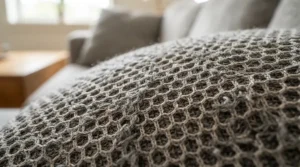
The standout feature is the GelFlex Grid: a honeycomb-patterned hyper-elastic polymer layer with over 1,500 open-air channels sitting directly on top of a ventilated latex core.
Unlike foam-based pillows that rely on infused gel particles to slowly wick heat away, the Purple Harmony’s grid physically can’t trap heat the way a solid surface does — air moves straight through the honeycomb structure in real time. Underneath, the Talalay latex core is naturally breathable and separately ventilated with air holes, and the moisture-wicking mesh cover adds a third independent layer of temperature regulation. That’s three separate cooling mechanisms stacked on top of each other, which is unusual even among premium pillows.
Here’s what the spec sheet won’t tell you but reviewers consistently note: because the grid is springy and responsive rather than slow-sinking like memory foam, it takes most sleepers one to three nights to adjust to the feel, and side sleepers who prefer a deep, cradling sink may find the Harmony’s push-back sensation takes some getting used to. On the flip side, testers who tracked pillow loft over a month reported the grid retained roughly 97 percent of its original height with no measurable softening — a durability edge over foam and down-alternative pillows that typically compress noticeably within a year or two.
Pros:
- ✅ Three independent cooling layers: mesh, grid, and ventilated latex
- ✅ Exceptional shape retention — minimal compression over time
- ✅ Available in three loft heights for different sleep positions
Cons:
- ❌ Premium price point, roughly $160-$180 depending on loft
- ❌ Springy feel requires an adjustment period for memory-foam loyalists
If night sweats are a genuine nightly problem and budget isn’t your main constraint, the Purple Harmony Pillow is one of the most airflow-optimized designs currently sold, though the value/ROI math only pencils out if you’re actually a hot sleeper who’ll notice the difference.
7. TEMPUR-Cloud Breeze Dual Cooling Pillow — best for dedicated memory foam sleepers who run hot
The standout feature is a layer of proprietary Tempur-breeze gel on both sides of the pillow, so you get a fresh cooling surface whether you flip it or not.
The core is a single, dense, solid block of Tempur-Pedic’s signature viscoelastic memory foam — a material with a well-earned reputation for excellent pressure relief but notorious heat retention when used alone. Tempur-Pedic addresses that directly by layering the cooling gel across both faces of the foam block, wrapped in a breathable, machine-washable cotton cover. Independent testers who compared it head-to-head against Coop Eden and Purple pillows found the Tempur-Cloud Breeze delivered the strongest surface-cooling sensation of the group, even though the underlying foam material is inherently one of the warmer options on the market.
What most buyers overlook here is the weight: this pillow is a solid foam block weighing around seven pounds, dramatically heavier than shredded or grid-based alternatives, and the fill isn’t adjustable or fluffable at all — what you unbox is exactly what you sleep on for the life of the product. For sleepers who specifically love the classic memory foam “slow sink” feel and just need help with heat, that trade-off is worth it. For anyone who likes to fluff, knead, or reshape a pillow through the night, it will feel restrictive.
Pros:
- ✅ Strongest immediate cooling sensation among premium pillows tested
- ✅ Classic dense memory foam support and pressure relief
- ✅ Backed by a 5-year manufacturer warranty
Cons:
- ❌ Solid foam core is heavy and cannot be adjusted or fluffed
- ❌ Premium price, roughly $160-$180 for a queen size
At the top of this list price-wise, the TEMPUR-Cloud Breeze Dual Cooling Pillow is the pick for sleepers who already love memory foam’s contouring feel and simply need Tempur-Pedic’s engineering team to solve the heat problem for them.
Setting Up Your New Cooling Pillow for Night Sweats
Buying the right pillow is half the equation — how you set it up in the first 30 days determines whether you actually get the cooling benefit you paid for. Start by unboxing early: most gel and memory foam pillows are vacuum-compressed for shipping, and they need 24 to 48 hours to fully expand and off-gas any manufacturing odor before you sleep on them at full loft.
Skip the thick quilted pillowcase you might reach for out of habit. A dense, tightly woven cotton case can trap the exact heat your pillow’s cooling layer is trying to release, effectively canceling out what you paid for. Pair a gel-infused or grid pillow with a breathable cotton percale, bamboo, or moisture-wicking case instead, and you’ll notice the difference within the first week.
If you chose an adjustable pillow like the Coop Home Goods Eden Cool+ Adjustable Pillow, don’t lock in your fill level on night one. Sleep on it for three to four nights at the factory setting, then remove small amounts of fill gradually until the loft matches your sleep position — too much fill traps more heat against your neck than necessary.
Finally, build a simple maintenance rhythm: wash removable covers every one to two weeks, and let the pillow itself air out in a well-ventilated room once a month if it’s not machine washable. A pillow that’s collecting body oils and trapped moisture will always sleep hotter than a clean one, regardless of how advanced its cooling tech is.
Real-World Scenarios: Who Actually Needs a Cooling Pillow for Night Sweats
Picture three different sleepers, because the “right” pillow genuinely depends on who’s asking. First, there’s the perimenopausal sleeper waking two or three times a night drenched from hot flashes, a well-documented and uncomfortable part of the menopausal transition for the majority of women going through it. For her, a pillow alone won’t eliminate hot flashes, but pairing an actively cooling option like the Purple Harmony Pillow or TEMPUR-Cloud Breeze Dual Cooling Pillow with breathable sheets can meaningfully cut down how long it takes to fall back asleep after waking.
Second, consider the budget-conscious college student or renter furnishing an apartment without central air. They don’t necessarily have chronic night sweats, just a warm room and cheap bedding that traps heat. The Himoon Cooling Pillow Set or Beckham Hotel Collection Gel Pillow solves 80 percent of that problem for a fraction of the cost of a premium pillow, which matters when the budget also has to cover a fan or a portable AC unit.
Third, picture the side sleeper with chronic neck tension who also happens to run hot — a combination that rules out plenty of “just cooling” pillows that ignore ergonomics entirely. That’s the exact use case the Elviros Cervical Memory Foam Pillow with Cooling Cover was built for, solving two problems with one purchase instead of forcing a trade-off between comfort and temperature.
Common Problems With Overheating Pillows (And How to Fix Them)
Problem 1: The pillow feels cool at bedtime but hot by 2 a.m. This is almost always a sign the cooling layer is surface-level only (a cover treatment) rather than built into the core fill. The fix isn’t necessarily a new pillow — try swapping to a genuinely breathable pillowcase first, since that alone resolves a surprising number of “my cooling pillow stopped working” complaints.
Problem 2: One side of the bed runs hotter than the other. Body heat and airflow patterns differ person to person, and a shared mattress often traps more heat on one side depending on airflow, window position, or which partner runs naturally warmer. Rather than replacing both pillows, consider letting the hotter sleeper use a grid or latex pick like the Purple Harmony Pillow while the cooler sleeper keeps a standard option.
Problem 3: The pillow flattens and loses its cooling effect within months. Compressed, flattened fill loses the air pockets that made it breathable in the first place. Rotating between two pillows and washing covers regularly extends this window significantly, but pillows built with adjustable fill or a resilient grid structure — again, the Coop Home Goods Eden Cool+ Adjustable Pillow and Purple Harmony Pillow — resist this specific failure mode better than fixed-fill foam.
Problem 4: Night sweats persist no matter what pillow is used. If hot flashes, fevers, or drenching sweats are happening regardless of bedding changes, that’s a signal to loop in a doctor rather than keep pillow-shopping — managing the underlying triggers behind disrupted sleep can help in ways bedding alone can’t.
How to Choose a Cooling Pillow for Night Sweats
Picking the right one comes down to seven practical checkpoints:
- Identify your sleep position first. Side sleepers generally need more loft than back or stomach sleepers, and a cooling pillow that’s the wrong height will feel uncomfortable regardless of temperature.
- Match your budget to your cooling severity. Mild warmth calls for breathable fiber (budget tier); genuine night sweats justify gel or latex-grid tech (mid-to-premium tier).
- Check the fill type, not just the marketing word “cooling.” Gel-infused foam, latex grids, and moisture-wicking fiber all cool differently — see the dedicated comparison below.
- Look for adjustability if your needs might change. Adjustable-fill pillows let you fine-tune loft as your body or mattress changes, which fixed-loft pillows can’t offer.
- Verify third-party safety certifications. CertiPUR-US or GREENGUARD Gold labeling signals independently tested, low-emission materials — worth checking before buying any foam pillow.
- Pair the pillow with breathable bedding. Even the best cooling pillow underperforms under a heat-trapping pillowcase.
- Read the return policy before buying. Pillow feel is personal; a generous trial window matters more than any single spec.
Gel Pillow vs Gel-Infused Foam Pillow: What’s the Real Difference?
These two terms get used almost interchangeably in product listings, and that’s genuinely confusing for shoppers trying to compare options. Here’s the actual distinction: a gel pillow (like the gel fiber fill in the Beckham Hotel Collection Gel Pillow) uses gel-coated or gel-blended fiber strands as the entire fill material, similar in structure to a down-alternative pillow but with a cooler feel. A gel-infused foam pillow, by contrast, is a solid or shredded memory foam base with gel beads or gel swirls physically infused into the foam itself, as seen in the Sleep Innovations Gel Memory Foam Contour Pillow and the Coop Home Goods Eden Cool+ Adjustable Pillow.
| Type | Fill Structure | Cooling Feel | Best For |
|---|---|---|---|
| Gel Fiber Pillow | Fiber strands with gel coating | Moderate, fiber-based airflow | Beckham Hotel Collection Gel Pillow |
| Gel-Infused Foam | Solid or shredded foam with gel beads | Stronger initial cool, gradual warming | Sleep Innovations Gel Memory Foam Contour Pillow |
The practical takeaway: gel fiber pillows tend to feel lighter, fluffier, and closer to a traditional down pillow while offering a mild cooling boost, whereas gel-infused foam pillows deliver a more pronounced initial cooling sensation and better neck support, at the cost of eventually warming up as the denser foam absorbs body heat over several hours. Neither is objectively better — it depends on whether you prioritize a soft, fluffable feel or firmer ergonomic support.
What Makes a Breathable Pillow for Hot Sleepers?
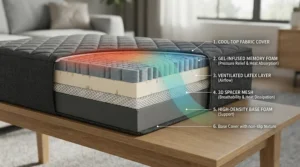
Breathability isn’t one single feature — it’s the combined result of three separate design choices working together. The fill structure matters most: shredded or cross-cut foam, ventilated latex grids, and clustered fiber all leave air pockets that solid foam blocks simply don’t have. The cover fabric matters nearly as much; tightly woven synthetic covers trap heat while looser weaves, mesh panels, and natural fibers like bamboo or TENCEL let warm, humid air escape.
The third factor, often overlooked, is pillow density itself. A denser pillow — even with a breathable cover — insulates more like a blanket than a bare surface, simply because there’s more material for heat to accumulate in before it can dissipate. That’s exactly the trade-off buyers face with the TEMPUR-Cloud Breeze Dual Cooling Pillow: the surface cooling gel is excellent, but the dense foam underneath means true breathability is doing less work than in an open-structure design like the Purple Harmony Pillow.

How Temperature Regulation Actually Works While You Sleep
Your body’s core temperature naturally drops in the hours before and during sleep, part of the same circadian process that signals it’s time to rest. Research on optimal sleeping temperatures suggests a bedroom kept in the 60 to 67 degree Fahrenheit range tends to support this natural cooling process best, and the same logic scales down to what’s directly touching your skin. When a pillow traps heat instead of releasing it, it works against this natural drop, which can translate into more frequent awakenings and lighter, more fragmented sleep.
This is where the fill-versus-cover distinction from the sections above actually matters in practice: a pillow’s job isn’t to actively chill your head like a refrigerator, it’s to stop interfering with the temperature drop your body is already trying to make. That’s a subtle but important reframe — you’re not looking for the coldest pillow on the shelf, you’re looking for the one that gets out of your body’s way.
Moisture-Wicking Fabric: The Unsung Hero of Cool Sleep
Temperature and moisture are two separate problems that tend to get lumped together, but a pillow cover can solve one without the other. A moisture-wicking fabric — commonly polyester-spandex blends, bamboo viscose, or TENCEL lyocell — pulls sweat away from the skin surface and spreads it across a wider area of fabric to evaporate faster, rather than letting it pool and soak in.
Reviewers consistently note that this is exactly why a gel-infused pillow paired with a plain cotton pillowcase can still feel damp: the gel handles temperature, but cotton alone is only moderately absorbent and dries slowly. Pairing a genuinely moisture-wicking case with any of the pillows in this list, budget or premium, meaningfully closes that gap for sleepers whose main complaint is waking up damp rather than simply warm.
Common Mistakes When Buying a Cooling Pillow for Night Sweats
The most frequent mistake is buying based on the word “cooling” in the title alone without checking whether that’s referring to the fill, the cover, or just marketing language — as the earlier gel-versus-gel-infused-foam breakdown shows, those are meaningfully different technologies with different performance profiles. A close second is ignoring sleep position entirely; even the most advanced cooling technology feels wrong if the loft doesn’t match how you actually sleep.
Buyers also frequently skip checking for CertiPUR-US or GREENGUARD Gold certification on foam pillows, which matters because uncertified foam can carry higher VOC emissions and a stronger, longer-lasting off-gassing odor. Finally, many shoppers pair an expensive cooling pillow with a heat-trapping pillowcase and then wonder why it “doesn’t work” — the case matters nearly as much as the pillow itself, a point worth revisiting from the setup guide above.
Long-Term Cost & Maintenance
Thinking in cost-per-use rather than sticker price changes the math considerably. A $25 Himoon Cooling Pillow Set replaced every 12 to 18 months works out to roughly $1.50 to $2 a month per pillow. A $170 Purple Harmony Pillow that holds its shape for three to five years, per independent shape-retention testing, works out closer to $3 to $4.50 a month — a smaller gap than the upfront price difference suggests, once durability is factored in.
Maintenance costs are modest across the board: most covers are machine washable, and foam or latex cores generally require only spot cleaning and occasional airing out. The one true long-term cost differentiator is shape retention. Adjustable-fill and grid-based designs resist the gradual flattening that eventually kills a fixed-fill foam pillow’s cooling performance, since a compressed pillow loses the internal air pockets that made it breathable in the first place.
Safety, Certifications & What to Verify Before Buying
Two certifications are worth actually checking rather than skimming past. CertiPUR-US certification means the foam has been independently screened for chemicals including flame retardants classified as carcinogens, mutagens, or reproductive toxins, and is made without formaldehyde, ozone depleters, or regulated heavy metals. It’s a foam-specific standard, so check that it applies to the actual foam core, not just the packaging language. OEKO-TEX certification covers fabric safety separately and is worth checking on the cover material specifically, since a certified foam core can still be paired with an uncertified fabric.
Of the pillows covered here, the Coop Home Goods Eden Cool+ Adjustable Pillow, Elviros Cervical Memory Foam Pillow with Cooling Cover, Sleep Innovations Gel Memory Foam Contour Pillow, Purple Harmony Pillow, and TEMPUR-Cloud Breeze Dual Cooling Pillow all carry CertiPUR-US certification on their foam components — a meaningful baseline for anyone sensitive to off-gassing odors or chemical exposure concerns.
Frequently Asked Questions
❓ Do cooling pillows actually work for night sweats?
❓ What's the best material for a cooling pillow for night sweats?
❓ How long do cooling pillows typically last?
❓ Can I make a regular pillow cooler without buying a new one?
❓ Are cooling pillows safe for people with allergies?
Conclusion
If there’s one honest takeaway here, it’s that no pillow can promise to stop night sweats outright — managing hot flashes, mood changes, and the other drivers behind disrupted sleep during the menopausal transition often takes more than a bedding swap. But the pillow you sleep on every single night is one of the easiest, lowest-risk variables to fix, and the difference between a heat-trapping polyester pillow and a genuinely breathable gel or latex option is bigger than most people expect until they try it.
Start with your budget and your sleep position, match that against the fill types broken down above, and don’t skip the pillowcase upgrade — it’s doing more work than most shoppers realize. Whether you land on the budget-friendly Himoon Cooling Pillow Set or splurge on the Purple Harmony Pillow, the goal is the same: get your head out of the way of your body’s natural cooling process and let yourself actually sleep through the night.
✨ Don’t Miss These Exclusive Deals!
🔍 Take your search for a cooler night’s sleep to the next level with these carefully selected picks. Click on any highlighted pillow above to check current pricing and availability. A small change tonight could mean a genuinely dry, restful morning tomorrow!
Recommended for You
- Cooling Pillow for Night Sweats: 7 Best Picks for 2026
- 7 Best Pillows to Reduce Snoring for Side Sleepers (2026)
- Anti-Snoring Pillow Under $50: 7 Picks That Actually Work (2026)
Disclaimer: This article contains affiliate links. As an Amazon Associate, I earn from qualifying purchases. If you purchase products through these links, we may earn a small commission at no additional cost to you.
✨ Found this helpful? Share it with your friends! 💬🤗
