
In This Article
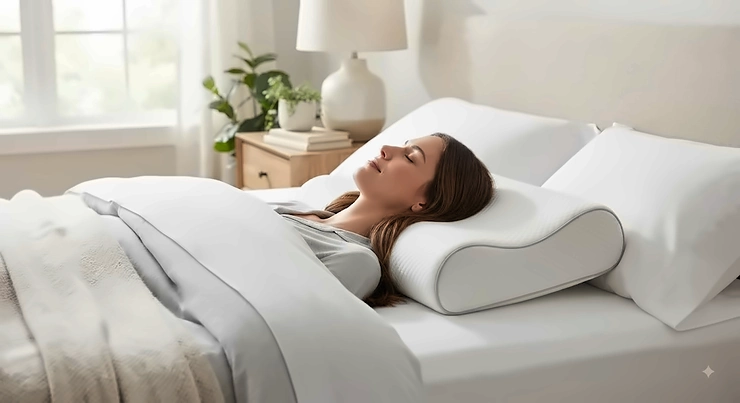
Somewhere around 3 a.m., your neck decides it’s had enough. You wake up, roll your head an inch to the left, and feel that dull, gravel-crunch ache that says your pillow lost the argument hours ago. If that sounds familiar, you’re not imagining things — the wrong headrest really can undo a perfectly good mattress. A pillow for back sleepers with neck support is built around one job: keeping your head, neck, and spine in a straight, neutral line all night instead of letting your chin tip forward or your head sink into a canyon of overstuffed fluff.

The science backs this up more than you’d expect. A PeerJ biomechanics study found that pillow height directly changes cervical spine alignment and pressure — taller pillows increased the neck’s cervical angle and lordosis distance while also raising pressure on the head and neck. In plain English: too much loft cranes your neck forward, too little lets your head drop back, and either one adds up to stiffness by sunrise. Getting that middle ground right is the whole game for anyone who sleeps on their back.
This guide skips the fluff (pun intended) and gets straight to real, researched picks. We dug into actual product specs, aggregated customer sentiment, and independent testing notes from trusted review outlets to build a list of seven genuinely solid options — spanning budget, mid-range, and premium — plus the buying knowledge to pick the right one for your body, your budget, and your particular flavor of neck strain. We’ll also dig into cervical curve support, what to do if lower back pain is part of your nightly puzzle, and why an adjustable pillow might be the smartest $70 you spend this year.
Quick Comparison Table
Before we dive deep, here’s the express-lane version. If you’re the type who reads reviews backward — verdict first, details later — this table is for you.
| Pillow | Best For | Feel | Price Range |
|---|---|---|---|
| Saatva Latex Pillow | Chronic neck pain, adjustable loft | Medium, contouring | $150–$200 range |
| TEMPUR-Neck Pillow | True ergonomic cervical contour | Firm, shape-holding | $130–$190 range |
| Coop Home Goods Eden Adjustable Pillow | Custom loft on a budget | Adjustable, medium-soft | $60–$90 range |
| Purple GridCloud Pillow | Hot sleepers who want cushioned support | Plush yet responsive | $85–$100 range |
Even in this short list, a pattern jumps out: the pillows built specifically for neck support (the Saatva Latex Pillow and the TEMPUR-Neck Pillow) lean firmer and pricier, while the adjustable and grid-style options trade a bit of contouring precision for flexibility and airflow. Neither approach is “wrong” — it depends on whether you value precision-engineered support or the freedom to fine-tune loft yourself. We’ll unpack all seven contenders, including three more picks, in the full breakdown below.
💬 Found a favorite already? Scroll down to see how it stacks up against the rest of the field!
Top 7 Pillows for Back Sleepers With Neck Support: Expert Analysis
We’re covering seven real, currently available products, chosen to represent every price tier and support style — from fully adjustable shredded fill to precision-molded ergonomic foam. Every product name below is bolded on every mention so you can scan quickly and drop in your own affiliate link where indicated.
1. Saatva Latex Pillow — dual-layer design with adjustable loft for cervical support
The standout here is flexibility without guesswork: the Saatva Latex Pillow ships in a “Standard Loft” height of roughly 4 to 5 inches, which happens to sit right in the sweet spot researchers associate with neutral cervical alignment for back sleepers. Under the hood, a shredded latex core does the structural heavy lifting while a layer of microdenier fibers on top adds a plush, almost hotel-pillow softness — so you get cushioning without your head sinking through to the firm part. Latex is also naturally breathable and resists dust mites, which matters if allergies are part of your sleep-disruption story.
Who should care? Anyone with recurring neck stiffness who has bounced between “too soft” and “too firm” pillows and never found the middle. The Saatva Latex Pillow is explicitly positioned by reviewers as a pick for people managing neck pain, not just casual comfort seekers, and the two-layer build means it holds its shape night after night instead of flattening within a month. Aggregated coverage from sleep-testing outlets consistently highlights its “hotel-like feel” and describes the latex core as reliably supportive across a multi-night trial — though as with any single pillow, individual neck length and shoulder width will affect how perfectly it fits.
Pros:
- ✅ Standard Loft height matches research-backed neutral alignment range
- ✅ Latex core resists flattening better than shredded foam alone
- ✅ Machine-washable cover simplifies long-term upkeep
Cons:
- ❌ Firmer latex feel may surprise shoppers used to soft down
- ❌ Sits at the premium end of this list’s price range
Expect to pay in the $150–$200 range at the time of research, and prices may vary by retailer — always check current pricing before buying. For the durability and dedicated neck-support engineering on offer, it’s a reasonable investment if you’ve already burned through two or three cheaper pillows that didn’t hold up.

2. TEMPUR-Neck Pillow — precision-molded ergonomic contour for back and side sleepers
If the Saatva Latex Pillow is about adjustable comfort, the TEMPUR-Neck Pillow is about precision. This is Tempur-Pedic’s original ergonomic design, molded — not stuffed — into a contoured shape that cradles the head while a raised ridge supports the neck’s natural curve. It comes in small, medium, and large profiles, sized to your specific shoulder-to-neck measurement rather than a one-size-fits-all approach, which is a meaningfully different strategy than every other pillow on this list.
The firm, formed TEMPUR-Material means it won’t compress flat under weight the way memory foam bits and shredded fill eventually do, and that firmness is deliberate: it’s designed to keep neck and shoulder muscles supported rather than sunk, encouraging them to actually relax instead of working overtime to hold your head up. This makes it a genuinely ergonomic pillow in the clinical sense, not just a marketing label — the contour is engineered around cervical anatomy rather than general plushness. Brand-reported figures cite over 10 million units sold and roughly 15,000 five-star reviews, and independent retail listings echo consistently positive sentiment around reduced morning stiffness, though we’d note that brand-published review counts should be read as a data point rather than independently verified.
Pros:
- ✅ Sized profiles (small/medium/large) match individual neck length
- ✅ Contoured ridge targets cervical curve more precisely than flat foam
- ✅ Retains shape for years without flattening
Cons:
- ❌ Extra-firm feel takes adjustment if you’re used to soft pillows
- ❌ Sizing mistakes require reordering, which adds cost and hassle
Pricing for the medium profile tends to land in the $130–$190 range depending on retailer promotions, so it’s worth comparing a few sources before you buy. Given the sizing precision, this is the pick for shoppers who want engineering over guesswork — assuming you’re willing to measure your shoulders first.
3. Coop Home Goods Eden Adjustable Pillow — customizable fill for dialing in your own loft
Here’s the adjustable fill pillow for back sleepers that keeps coming up in independent testing roundups, and for good reason: the Coop Home Goods Eden Adjustable Pillow is filled with a gel-infused memory foam and microfiber blend that you can physically add or remove through a zippered access point, letting you tune the loft to your exact body type and sleep position rather than hoping the factory got it right. A 2-inch gusseted edge keeps that fill evenly distributed so you don’t end up with a lumpy center and a flat perimeter after a few weeks of use.
For back sleepers specifically, that adjustability is the whole appeal — most reviewers note the pillow arrives closer to a side-sleeper loft, meaning you’ll want to remove a modest amount of fill right out of the box to bring it down to the lower, flatter profile that keeps your neck neutral while lying flat. Independent reviewers at Mattress Nerd scored it highly for adjustability specifically, noting the included extra half-pound of fill makes fine-tuning genuinely easy, while flagging that it can sleep a touch warm for dedicated hot sleepers and that it doesn’t scrunch or fold the way a down pillow might.
Pros:
- ✅ Removable fill lets back sleepers dial in a lower, flatter loft
- ✅ CertiPUR-US and GREENGUARD Gold certified materials
- ✅ Comes with extra fill included for further customization
Cons:
- ❌ Retains some heat compared to dedicated cooling pillows
- ❌ Doesn’t compress or fold for travel like softer alternatives
At around $60–$90 depending on size, this is the budget-conscious entry point on our list, and arguably the most forgiving option if you’re not entirely sure what loft height your neck actually needs yet.
4. Purple GridCloud Pillow — cushioned support with a cooling grid layer
The Purple GridCloud Pillow takes a different structural approach: a silicone-coated microfiber fill that resists flattening sits above Purple’s signature Gelflex grid, a stretchy honeycomb layer that flexes under pressure points while still pushing back with steady support. For a back sleeper, that grid layer means the pillow doesn’t collapse under head weight the way a plain fiberfill pillow does over time — it keeps offering resistance even after months of nightly compression, which is a common failure point for cheaper down-alternative pillows.
What most buyers overlook about grid-style pillows is the airflow benefit: the open-cell structure of the Gelflex grid lets air move through the pillow instead of trapping body heat against your scalp and neck, which matters if warm sleep has ever pulled you out of a deep-sleep cycle. Independent testers at Tom’s Guide gave the GridCloud Pillow a five-star editor’s score in their most recent roundup, specifically praising its cloud-like responsive support and noting the moisture-wicking cover enhances breathability for people who run hot overnight — though they also flagged it as a pricier pick that currently ships in a single size only.
Pros:
- ✅ Gelflex grid resists flattening better than standard fiberfill
- ✅ Moisture-wicking cover improves airflow for hot sleepers
- ✅ 30-night trial and one-year warranty reduce buying risk
Cons:
- ❌ Only available in one size, limiting fit customization
- ❌ Priced above several comparable mid-range alternatives
Expect this one to sit around $85–$100 at the time of research. If overheating has been your main nightly complaint alongside neck stiffness, the airflow advantage here may be worth the premium over a standard adjustable pillow.
5. Brooklyn Bedding Talalay Latex Pillow — firm, close-contouring support for pressure-point relief
The Brooklyn Bedding Talalay Latex Pillow leans into a thicker profile and medium feel specifically engineered for back and side sleepers who deal with aches or pressure points along the neck. Talalay latex has a distinctive springy, close-contouring character — it compresses under your head’s weight but rebounds quickly, so you’re not left with a lasting dent that forces your neck out of alignment as the night wears on. That responsiveness is a meaningful difference from memory foam, which tends to hold whatever shape it’s pressed into for longer.
Because this pillow prioritizes structural support over plush sink, it pairs well with people whose neck strain traces back to a pillow that was simply too soft to hold a neutral position — the kind of pillow that feels great for the first ten minutes and terrible by 4 a.m. The CertiPUR-US certification means the foam has been tested for harmful substances, which is worth checking on any foam product given how much time your face spends pressed against it. Aggregated sentiment from sleep-review outlets consistently frames this as a firmer, closer-contouring option better suited to sleepers who found the “medium-soft” category too collapsible for real support.
Pros:
- ✅ Talalay latex rebounds quickly instead of holding a lasting dent
- ✅ CertiPUR-US certified foam with a removable, washable cover
- ✅ Close contouring targets pressure points along the neck
Cons:
- ❌ Firmer profile isn’t ideal for sleepers who prefer a plush feel
- ❌ Other components need spot cleaning rather than full machine wash
Pricing generally falls in the $100–$150 range, positioning it as a solid mid-tier pick between the budget adjustable options and the premium ergonomic picks above.

6. Nectar Tri-Comfort Cooling Pillow — versatile support for sleepers who shift positions
Not everyone stays locked on their back all night, and the Nectar Tri-Comfort Cooling Pillow is built with that reality in mind. Its multi-zone construction blends different densities of fill to offer firmer support where back sleepers need it under the neck, while still accommodating the position shifts that happen naturally over an eight-hour stretch. This tri-comfort layering approach is a practical answer to the age-old problem of buying one pillow for a body that doesn’t sleep in just one position.
The cooling element matters here too — Nectar’s cover materials are designed to pull heat away from the head and neck, addressing a complaint that shows up constantly in aggregated reviews of denser support pillows: they sleep supportive but hot. For back sleepers who occasionally roll to their side, this pillow is positioned by sleep-testing outlets as one of the stronger dual-position picks in the current market, striking a reasonable balance rather than optimizing hard for one single sleep position.
Pros:
- ✅ Multi-zone fill supports both back and side sleeping
- ✅ Cooling cover addresses heat retention common in denser pillows
- ✅ Mid-range pricing makes it accessible for most budgets
Cons:
- ❌ Less specialized cervical contouring than dedicated neck pillows
- ❌ Verified independent review volume is more limited than category leaders
At roughly $80–$100 depending on size, it’s a sensible pick for combination sleepers who don’t want to buy two different pillows for two different positions.
7. Brooklinen Marlow Pillow — balanced comfort with structured, all-position support
Closing out the list is the pillow that testing outlets at NCOA named their overall top pick for back sleepers: the Brooklinen Marlow Pillow. Its appeal is balance — testers reported feeling well-supported across sleeping positions, with particular praise for how it performed specifically for back sleeping, where the combination of comfort and structured support kept spinal alignment in check rather than letting the head sink too deep.
That balance comes from a medium firmness that offers enough give to feel comfortable against the head while still holding enough structure to prevent your neck from collapsing into an unsupported hollow. It’s a more forgiving option than the firmer latex and ergonomic picks above — a reasonable entry point if you’re neck-support-curious but not ready to commit to a firm, clinically-shaped pillow just yet. Reviewers note it strikes a “just right” middle ground that many other all-purpose pillows miss by erring too soft.
Pros:
- ✅ Independently rated best overall pick for back sleepers by NCOA testers
- ✅ Medium firmness balances cushioning with structural support
- ✅ Performs well across multiple sleep positions, not just one
Cons:
- ❌ Less specialized than dedicated cervical-contour designs
- ❌ Firmness may feel too moderate for sleepers wanting maximum support
Pricing sits in a broad $65–$165 range across sizes and configurations, so it’s worth comparing options directly on the retailer’s site. As an all-around choice with strong independent testing behind it, it’s an easy recommendation for anyone who wants proven performance without going all-in on a specialty cervical pillow.
Top 7 Picks at a Glance: Specs & Value Comparison
| Pillow | Fill Type | Loft/Firmness | Price Range | Best For |
|---|---|---|---|---|
| Saatva Latex Pillow | Shredded latex + microdenier | Medium, 4–5in | $150–$200 range | Chronic neck pain relief |
| TEMPUR-Neck Pillow | Molded TEMPUR-Material | Firm, contoured | $130–$190 range | Precise ergonomic fit |
| Coop Home Goods Eden Adjustable Pillow | Gel memory foam + microfiber | Adjustable, medium-soft | $60–$90 range | Custom loft on a budget |
| Purple GridCloud Pillow | Microfiber + Gelflex grid | Medium, responsive | $85–$100 range | Hot sleepers |
| Brooklyn Bedding Talalay Latex Pillow | Talalay latex | Medium-firm | $100–$150 range | Pressure-point relief |
| Nectar Tri-Comfort Cooling Pillow | Multi-zone fill | Medium, cooling | $80–$100 range | Combination sleepers |
| Brooklinen Marlow Pillow | Down-alternative blend | Medium | $65–$165 range | All-around balance |
Looking at the table, a clear tier structure emerges: the Coop Home Goods Eden Adjustable Pillow and Brooklinen Marlow Pillow offer the most accessible entry points, the Brooklyn Bedding Talalay Latex Pillow and Nectar Tri-Comfort Cooling Pillow occupy a practical middle ground, and the Saatva Latex Pillow and TEMPUR-Neck Pillow command premium pricing in exchange for more specialized cervical engineering. If your neck pain is mild and occasional, starting in the budget-to-mid tier and upgrading only if needed is a financially sensible approach — you’re not obligated to buy the most expensive option to get real support.
What Is a Pillow for Back Sleepers With Neck Support?
A pillow for back sleepers with neck support is a pillow specifically shaped, filled, or lofted to keep the head level with the spine while lying face-up — supporting the natural cervical curve instead of letting the neck flatten or the chin tilt toward the chest. Unlike generic pillows, it’s engineered around spinal alignment rather than just softness.
That cervical curve matters more than most shoppers realize. Clinical research on chronic neck pain describes the “ideal” pillow as soft yet moderately high — around 10 centimeters — supporting cervical lordosis while a person lies on their back. Miss that target in either direction, and the muscles around your neck spend the night working instead of resting.

How to Choose a Pillow for Back Sleepers With Neck Support
Shopping for a cervical pillow can feel like reading a foreign language — “loft,” “gusset,” “Talalay” — so here’s a straightforward, expert-reasoned checklist to cut through it.
- Start with loft height, not brand name. Aim for a pillow that measures roughly 4–5 inches when compressed under your head’s actual weight — tall enough to fill the gap behind your neck, short enough not to push your chin toward your chest.
- Prioritize adjustability if you’re unsure of your ideal loft. An adjustable-fill pillow like the Coop Home Goods Eden Adjustable Pillow removes the guesswork; you can add or remove material until it feels right, rather than committing blind.
- Match firmness to your body type. Heavier frames typically need firmer support to avoid bottoming out; lighter frames often do better with a touch more give.
- Check the material’s rebound behavior. Latex and grid-style fills spring back quickly after compression, which helps maintain neck support through the night; standard polyester fiberfill tends to flatten and needs more frequent fluffing or replacement.
- Consider temperature regulation. If you run hot, a fully wrapped memory foam core will likely sleep warmer than a latex or grid-layered design — factor this in alongside support.
- Look for real certifications, not marketing buzzwords. CertiPUR-US and GREENGUARD Gold labels indicate the foam has actually been tested for harmful emissions, which is worth confirming before you commit.
- Read the trial and warranty terms before buying. Neck support is deeply personal — a 30- to 45-night trial period, common among the picks above, gives your body real time to adapt before you’re locked in.
✨ Ready to stop guessing and start sleeping? Compare your shortlist against the table above before you check out.
Practical Usage Guide: Breaking In and Maintaining Your New Pillow
A new cervical or adjustable pillow rarely feels perfect on night one, and that’s normal — foam and latex need a short adjustment period, and your neck muscles need time to relearn what “supported” actually feels like after years of sinking into an overstuffed pillow. For the first week, expect some novelty stiffness as your neck muscles recalibrate to a genuinely neutral position; this typically resolves within seven to ten nights.
If you’ve chosen an adjustable-fill option, don’t dump all the extra fill in at once. Add or remove material in small increments — roughly a handful at a time — and sleep on the adjustment for two or three nights before tweaking again. Most back sleepers end up removing fill rather than adding it, since factory settings often skew toward the higher loft that side sleepers need. For maintenance, rotate and fluff foam or fiber pillows weekly to prevent uneven compression, and wash removable covers every one to two weeks per the manufacturer’s care label. A common first-30-days mistake is judging a pillow after a single rough night — give any new cervical support pillow a full two weeks before deciding it’s not the right match.
Real-World Scenarios: Which Pillow Fits Your Life
Sometimes it’s easier to see yourself in a scenario than a spec sheet. Here are three common back-sleeper profiles and the picks that make sense for each.
The chronic neck-pain sufferer on a tight budget. If you’re waking up stiff several times a week and need real support without a premium price tag, the Coop Home Goods Eden Adjustable Pillow is the practical starting point — its adjustability lets you fine-tune loft toward the firmer, flatter setup that chronic pain sufferers often need, without committing $150+ upfront.
The hot sleeper who also has neck stiffness. If overheating wakes you as often as neck pain does, the Purple GridCloud Pillow addresses both problems simultaneously through its breathable Gelflex grid and moisture-wicking cover, making it worth the mid-premium price for dual-symptom relief.
The precision-minded shopper who wants it done right the first time. If you’d rather measure once and buy once than experiment with returns, the TEMPUR-Neck Pillow‘s sized profiles (small, medium, large) offer the closest thing to a custom fit without a custom price tag — provided you measure your shoulder-to-neck distance accurately before ordering.
Buyer’s Decision Framework
Use this simple framework if you’re still torn between options:
- If your main issue is inconsistent loft that never feels right, choose an adjustable-fill pillow like the Coop Home Goods Eden Adjustable Pillow, because it lets you correct the fit yourself instead of hoping a fixed shape matches your neck.
- If your main issue is diagnosed or recurring neck pain, choose a dedicated cervical design like the Saatva Latex Pillow or TEMPUR-Neck Pillow, because their construction is purpose-built around supporting cervical lordosis rather than general comfort.
- If your main issue is overheating at night, choose a grid or cooling-cover pillow like the Purple GridCloud Pillow or Nectar Tri-Comfort Cooling Pillow, because airflow-focused materials directly address heat buildup that disrupts sleep.
- If you’re new to cervical support and unsure what you need, choose a balanced, moderately priced option like the Brooklinen Marlow Pillow, because its medium firmness offers a forgiving entry point before you commit to a more specialized (and pricier) design.
Common Mistakes When Buying a Cervical Pillow for Back Sleepers
The single most common mistake is buying based on softness alone. A pillow that feels luxurious in a store for thirty seconds often collapses under sustained head weight over eight hours, leaving your neck unsupported by 2 a.m. — softness and support are related but not identical, and prioritizing the former over the latter is how most people end up back in the return line.
A second mistake is ignoring loft entirely and shopping only by brand reputation or price. As the same pillow-height research shows, raising pillow height significantly increases pressure on the cranial and cervical regions while also increasing cervical spine extension — meaning the “premium” pillow isn’t automatically the right one if its loft doesn’t match your frame. A third frequent misstep is skipping the trial period fine print; some retailers only offer trials on certain sizes or configurations, so confirm the return policy actually covers what you’re buying before checkout. Finally, plenty of shoppers assume one pillow works for every sleep position — if you regularly shift between back and side sleeping, a rigid, deeply contoured cervical pillow may only serve you half the night.

Cervical Pillow for Back Sleepers vs Standard Bed Pillows
It’s worth being blunt about the difference, since “just get a nice pillow” is common advice that misses the point entirely. A standard bed pillow — the kind bundled in most bedding sets — is designed for generic comfort and often built from loose down or basic polyester fiberfill with little structural engineering. A dedicated cervical pillow for back sleepers, by contrast, is built around a specific goal: holding the cervical curve in a neutral position through firmer cores, contoured shapes, or adjustable fill systems.
| Factor | Standard Bed Pillow | Cervical Support Pillow |
|---|---|---|
| Primary design goal | General comfort | Spinal/neck alignment |
| Loft consistency over time | Flattens quickly | Holds shape longer (latex/grid/foam core) |
| Adjustability | Rarely adjustable | Often adjustable or size-specific |
| Best For | Casual, low-maintenance sleep | Recurring neck pain or stiffness |
The practical takeaway from this comparison is that standard pillows aren’t “bad,” they’re just built for a different job — casual comfort rather than corrective alignment. A randomized controlled trial in the Journal of Chiropractic Medicine notes that cervical pillows primarily work by optimizing head and neck posture and relaxing neck muscles, with a significant body of evidence supporting their ability to reduce pain and disability and improve sleep quality compared to unstructured alternatives. If you’ve only ever slept on standard pillows and dealt with recurring stiffness, switching categories entirely — not just switching brands — may be the actual fix.
Pillow for Back Sleepers With Lower Back Pain: The Whole-Spine Connection
Neck support and lower back pain seem like separate problems, but for back sleepers they’re more connected than most people assume. When your neck sinks too low or cranes too high, your body compensates by shifting tension down through the shoulders and into the lower back, especially over a full eight-hour stretch. A pillow for back sleepers with lower back pain isn’t just about the neck — it’s about restoring a full, neutral spinal line from skull to tailbone, and the pillow is one piece of that chain.
If lower back discomfort is part of your nightly reality, pair your neck pillow choice with attention to your mattress’s support layer, and consider a small pillow or rolled towel under the knees to reduce lumbar strain — a widely recommended low-cost adjustment covered in more depth in this sleep-position support guide. Among our seven picks, firmer, structure-holding options like the Saatva Latex Pillow and Brooklyn Bedding Talalay Latex Pillow are worth prioritizing here, since a neck that’s properly supported reduces the compensatory tension that often radiates downward. This isn’t a substitute for medical care if pain is severe or persistent, but as part of a broader setup, the right pillow genuinely contributes to whole-spine comfort rather than just neck comfort in isolation.
Adjustable Fill Pillows for Back Sleepers: Why Customization Wins
If there’s one theme running through this guide, it’s that no single fixed loft works for every neck. That’s exactly why an adjustable fill pillow for back sleepers deserves serious consideration, even if it feels less “premium” than a molded ergonomic design. Bodies vary — neck length, shoulder width, mattress firmness, even how much your head sinks into your specific pillowcase fabric — and an adjustable pillow lets you respond to your actual sleep feedback instead of hoping a manufacturer’s average-body assumption matches yours.
The Coop Home Goods Eden Adjustable Pillow is the clearest example on this list: its zippered access and included extra fill mean you’re not locked into the factory setting, and reviewers specifically credit that adjustability with making it work across body types and sleep positions that would otherwise need entirely different fixed pillows. The tradeoff is a small amount of trial and error up front — you’ll likely spend your first week removing small amounts of fill to dial in the flatter loft that back sleeping requires. For anyone who has bought and returned multiple fixed-loft pillows without success, that short adjustment period is a worthwhile investment compared to another blind purchase.
What to Expect: Real-World Performance
Specs on a page only tell part of the story, so here’s what the transition to a genuine cervical support pillow tends to feel like in practice. The first few nights often bring a strange, slightly-too-supported sensation — your neck muscles have likely spent months or years compensating for inadequate support, so genuine alignment can initially feel unfamiliar rather than instantly relaxing. That sensation typically fades within one to two weeks as your muscles adjust to actually resting instead of working.
Morning stiffness is usually the first symptom to improve, often within the first week for people whose neck pain was directly tied to pillow loft. Cooling-focused options like the Purple GridCloud Pillow and Nectar Tri-Comfort Cooling Pillow tend to show their benefit more gradually, as reduced overnight overheating leads to fewer wake-ups and, indirectly, more consistent deep sleep. Firmer, structure-holding picks like the TEMPUR-Neck Pillow tend to deliver the most noticeable immediate difference for people whose main issue was a pillow that simply collapsed under head weight — the firmness itself is the fix, and it’s usually felt on night one.
Features That Actually Matter (And Those That Don’t)
Marketing copy loves to pile on features, so let’s separate the genuinely useful from the noise. Loft height and material rebound are the two features that matter most for a back sleeper’s neck — everything else is secondary support for those two priorities. Adjustability matters a great deal if you’re unsure of your ideal loft, and matters far less if you already know your body responds best to a firm, fixed-shape design like the TEMPUR-Neck Pillow.
Cooling covers matter if you run hot, but they’re irrelevant noise if temperature was never your complaint in the first place — don’t pay a premium for a feature that doesn’t solve your actual problem. Certifications like CertiPUR-US and GREENGUARD Gold matter for peace of mind around chemical safety, particularly for foam products you’ll breathe near for eight hours a night, and this is one area worth prioritizing regardless of budget. On the other hand, flashy fabric branding, exotic-sounding proprietary fill names, and inflated “as seen on” marketing claims are largely decorative — they rarely correlate with better cervical support and shouldn’t move the needle on your decision.
Long-Term Cost & Maintenance
A cervical support pillow is a multi-year purchase if you buy the right one and maintain it properly, so it’s worth thinking in terms of cost-per-year rather than sticker price alone. A $70 adjustable pillow that needs replacing every twelve months due to flattening fill actually costs more over three years than a $180 latex pillow that holds its shape for five years or longer — the math favors durable materials once you zoom out.
| Pillow Type | Typical Lifespan | Approx. Cost Per Year (3-yr horizon) |
|---|---|---|
| Basic polyester fiberfill | 6–12 months | Highest ongoing cost |
| Adjustable memory foam/microfiber | 2–3 years | Moderate |
| Latex or grid-supported design | 3–5+ years | Lowest ongoing cost |
The pattern here favors investing in latex or grid-based construction if your budget allows it, since the Saatva Latex Pillow, Brooklyn Bedding Talalay Latex Pillow, and Purple GridCloud Pillow are all built around materials engineered to resist long-term flattening. Maintenance costs stay low across the board if you stick to a basic routine: wash covers regularly, fluff or rotate fill weekly, and replace the pillow once it no longer springs back to shape within a few seconds of removing pressure — that loss of rebound is the clearest sign a pillow, however expensive, has reached the end of its supportive life.
FAQ
❓ What is the best pillow for back sleepers with neck support?
❓ How thick should a pillow be for a back sleeper?
❓ Can the wrong pillow really cause neck strain?
❓ Are adjustable pillows better than fixed-shape cervical pillows?
❓ How often should I replace my neck support pillow?
Conclusion
Neck pain rarely has one single cause, but an unsupportive pillow is one of the most fixable pieces of that puzzle — and unlike a new mattress, it doesn’t require a major budget or a leap of faith to test. Whether you land on the precision-contoured TEMPUR-Neck Pillow, the fully customizable Coop Home Goods Eden Adjustable Pillow, or the balanced, tester-approved Brooklinen Marlow Pillow, the underlying goal is the same: keep your cervical curve supported instead of collapsed, night after night.
Start with the loft-height and adjustability guidance above, match it to your budget and any secondary concerns like overheating or lower back pain, and give whichever pillow you choose a genuine two-week trial before judging it. Small, boring-sounding adjustments — a few added or removed handfuls of fill, a properly sized profile, a firmer core instead of a soft one — tend to matter far more than any single flashy feature. Your neck does a lot of quiet work holding your head up all day; giving it real support at night is one of the easier wins available to you.
✨ Don’t Miss These Exclusive Deals!
🔍 Take your neck support routine to the next level with these carefully researched picks. Click on any highlighted pillow above to check current pricing and availability, and give your cervical spine the nightly support it’s been missing.
Recommended for You
- 7 Best Pillows for Side Sleepers in 2026 (Firm & Body Picks)
- Contour vs Regular Pillow for Side Sleepers: 7 Top Picks 2026
- 7 Best Pillows for Side Sleepers With Shoulder Pain (2026)
Disclaimer: This article contains affiliate links. As an Amazon Associate, I earn from qualifying purchases. If you purchase products through these links, we may earn a small commission at no additional cost to you.
✨ Found this helpful? Share it with your friends! 💬🤗
