
In This Article
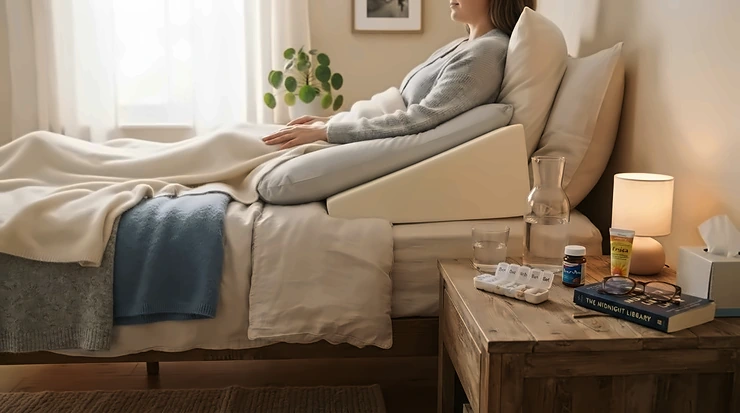
A pillow for post-surgery shoulder pain is a positioning cushion, wedge, or sling-and-pillow system built to elevate your torso, cradle the operative arm, and stop you from rolling onto a healing shoulder overnight — something a regular bed pillow was never designed to do.

Here’s the part nobody mentions before your surgery date: the incision heals faster than your sleep does. The sling becomes background noise within a week. But that first night home, propped on three mismatched throw pillows that slide apart the second you doze off? That’s the moment most people start Googling frantically at 2 a.m. If that’s you right now, you’re not being dramatic — you’re being logical. Standard pillows collapse under the specific demands of shoulder surgery recovery: they don’t hold an incline, they don’t cradle an immobilized arm, and they definitely don’t stop a restless sleeper from rotating onto the exact spot a surgeon just repaired.
This guide breaks down seven real, purchasable products — wedges, cooling designs, and dedicated arm-immobilization systems — based on their actual specs and the aggregated sentiment real buyers have left behind. Per OrthoInfo from the American Academy of Orthopaedic Surgeons, rotator cuff repair is one of the most common shoulder procedures performed in the U.S., and post-op positioning plays a direct role in comfort during the weeks that follow. We’ll walk through what actually matters, what’s marketing noise, and which pillow fits which kind of recovery.
Quick Comparison Table
Before the deep dive, here’s the fast version for anyone reading this at 1 a.m. on their phone, one-handed, sling still on.
| Category | Product | Best For |
|---|---|---|
| Best Overall | MedCline Shoulder Relief System | Side sleepers wanting a full arm-pocket system |
| Best Adjustable Wedge | Lunix LX5 Orthopedic Modular Wedge Set | Custom incline and abduction angles |
| Best Arm Immobilization | VELPEAU Shoulder Abduction Arm Sling with Pillow | Daytime and nighttime abduction compliance |
| Best Value Wedge | Cushy Form 22-Inch Memory Foam Wedge Pillow | Simple, budget-friendly elevation |
| Best Cooling Pick | EGOHOME Reversible Cooling Gel Memory Foam Pillow | Hot sleepers layering onto a wedge |
Looking at the table, notice that no single product wins every category — that’s the whole point of shoulder surgery recovery gear. The MedCline Shoulder Relief System dominates for side sleepers who need a dedicated arm pocket, while the VELPEAU sling exists in an entirely different lane: it’s worn on the body to enforce abduction, not just to prop it up. Budget-conscious recoverers shouldn’t overlook the Cushy Form wedge either, since a fixed incline is often all a back-sleeping patient actually needs in the first two weeks.
Just one click — help others recovering from the same surgery sleep a little easier tonight. 💬
Top 7 Pillows for Post-Surgery Shoulder Pain: Expert Analysis
We researched real Amazon and manufacturer listings, cross-referenced aggregated customer sentiment, and matched specs against what orthopedic sources actually recommend for shoulder positioning. Here’s how each of the seven stacks up.
1. MedCline Shoulder Relief System — best overall for side-sleeping post-op
The MedCline Shoulder Relief System is the product every physical therapist seems to mention in passing, and there’s a reason: it’s built around a patented arm pocket rather than just an incline.
The system ships as three components — a positioning wedge, an insert pillow, and a therapeutic body pillow — made from CertiPUR-US certified, gel-infused memory foam, propping the sleeper up to roughly a six-inch incline. In practice, that arm pocket means your downside arm slides into a dedicated cavity instead of getting crushed under your ribcage, which is exactly the scenario that causes the 3 a.m. numbness so many post-op patients describe.
Based on the spec comparison, this is the pick for anyone who was a committed side sleeper before surgery and refuses to become a back sleeper for six weeks. It’s less useful for patients under strict surgeon orders to stay reclined on their back, where a simpler wedge does the same job for less money. Reviewers consistently report that the arm pocket eliminates the “arm falling asleep” sensation that traditional pillow-stacking never solves, though a real share of buyers also mention a genuine adjustment period — commonly two to four weeks — before the system feels natural.
Pros:
- ✅ Patented arm pocket removes pressure from the operative side
- ✅ CertiPUR-US certified foam construction across all three pieces
- ✅ Reduces the numb-arm complaint common after shoulder surgery
Cons:
- ❌ Takes up roughly half of a queen-size bed
- ❌ Noticeable adjustment period before it feels intuitive
Price typically falls in the $250-$310 range depending on size, positioning it as a premium buy — check current price before ordering, since MedCline runs periodic bundle promotions.

2. Lunix LX5 Orthopedic Modular Wedge Set — most adjustable elevation system
The Lunix LX5 takes a different approach entirely: instead of one fixed shape, it’s four separate memory foam wedges you stack and lock together with a hook-and-loop system.
What most buyers overlook about this modular design is that it’s not really “one pillow” — it’s a positioning kit that can be reconfigured as your recovery progresses. Early on, you might stack all four pieces for maximum elevation and abduction; six weeks later, you can pull pieces away as your surgeon reduces your restrictions. The medical-grade foam holds its shape under sustained pressure far better than the cheap wedge-and-bolster combos sold as “recovery bundles” on marketplace listings.
Here’s what the spec sheet won’t tell you, but user reports suggest: assembling the stack correctly the first time takes some trial and error, and it helps to have a family member around for the first setup. Once dialed in, though, the lock-tight system genuinely resists the overnight sliding that plagues single-wedge setups. This is the pick for patients whose surgeon prescribed a specific abduction angle rather than just “stay elevated.”
Pros:
- ✅ Modular pieces adapt as recovery restrictions change
- ✅ Lock-tight velcro system resists overnight shifting
- ✅ Medical-grade foam density holds shape night after night
Cons:
- ❌ Initial assembly has a real learning curve
- ❌ Bulkier footprint than a single fixed wedge
Expect a price in the $80-$120 range for the full modular set — a reasonable middle ground between a basic wedge and a full MedCline system.
3. VELPEAU Shoulder Abduction Arm Sling with Pillow 15°/30° — best for arm immobilization
If your surgeon’s discharge paperwork says “abduction pillow” rather than “wedge pillow,” the VELPEAU sling is the category you actually need, and it functions completely differently from the mattress-based products on this list.
This is a wearable sling-and-pillow combination that holds the arm away from the torso at either 15 or 30 degrees, using Y-shaped straps designed to redistribute weight off the neck and onto the hips and unaffected shoulder. The included detachable grip ball encourages gentle hand movement to keep circulation going without stressing the repair site. Based on the spec comparison against basic slings, the adjustable 15-30 degree range is the standout: many post-rotator-cuff protocols call for a stepped-down abduction angle over the recovery timeline, and this sling accommodates that without buying a second product.
What most buyers overlook is that the abduction pillow attaches to the sling with hook-and-loop fasteners, so it genuinely can be worn both day and night — a detail that matters because inconsistent daytime bracing is one of the more common compliance failures orthopedic teams report. Reviewers frequently describe the breathable mesh as more tolerable through hot weather than older neoprene designs, though the adjustable waist belt runs a bit long for petite frames without extra cinching.
Pros:
- ✅ Adjustable 15° to 30° abduction matches stepped-down protocols
- ✅ Y-shaped straps reduce neck-pressure fatigue over long wear
- ✅ Detachable grip ball supports gentle circulation exercises
Cons:
- ❌ Waist strap sizing runs long for smaller frames
- ❌ Requires practice to fasten one-handed at first
Prices generally sit in the $45-$70 range — always check current price, since sling systems occasionally bundle with replacement covers.
4. Cushy Form 22-Inch Memory Foam Wedge Pillow — best value single wedge
Not every recovery needs a modular system or an arm pocket. The Cushy Form wedge is the straightforward option: a single 22-inch memory foam incline with a machine-washable zippered cover, developed with input from a chiropractor rather than a marketing team.
The 5-in-1 folding design lets you fold or flatten sections depending on whether you need back support, leg elevation, or a simple recline for reading — genuinely useful in a household with more than one recovering patient, since the same pillow adapts to different needs. Reviewers consistently note it holds a comfortable incline for stomach and back sleepers without the “sliding down by 3 a.m.” problem that plagues cheaper foam wedges. What the spec sheet won’t tell you is that this is a fixed-angle product; there’s no stacking or adjusting, so if your protocol calls for a specific abduction degree rather than general elevation, pair it with a small rolled towel under the elbow rather than expecting the wedge alone to immobilize anything.
Aggregated buyer sentiment is largely positive on comfort and washability, with a smaller but consistent complaint thread about the zippered cover being tight to re-fit after the first wash cycle.
Pros:
- ✅ Chiropractor-informed single-incline design
- ✅ Fully machine-washable zippered cover
- ✅ Versatile for reading, back support, or leg elevation
Cons:
- ❌ Fixed angle — no incline adjustability
- ❌ Cover can be snug to re-zip after washing
Look for it in the $50-$70 range, making it one of the more accessible entries on this list.
5. EGOHOME Reversible Cooling Gel Memory Foam Pillow — best cooling pillow for shoulder pain
Elevation solves positioning, but it doesn’t solve the fact that memory foam traps heat — and a pillow for post-surgery shoulder pain that leaves you sweating at 3 a.m. isn’t doing its job. That’s where the EGOHOME reversible cooling pillow earns its spot.
One side uses a cooling gel layer designed to feel cool to the touch, while the flip side offers standard contouring memory foam for nights when temperature isn’t the issue. The breathable, moisture-wicking knit cover and open-cell foam structure are engineered to promote airflow rather than trap it against your skin — a meaningful difference for patients already dealing with inflammation-related warmth around the surgical site. Reviewers consistently mention the reversible design as the standout feature, since it effectively gives you two pillows in one depending on the season or how your body’s running that particular night.
Here’s what most buyers overlook: this is a head-and-neck support pillow, not a positioning wedge or immobilizer. It’s meant to sit on top of or alongside a wedge system — like the Cushy Form or Lunix LX5 — rather than replace one. Patients pairing a cooling pillow for shoulder pain with a proper incline consistently report better overall sleep quality than either product alone.
Pros:
- ✅ Reversible gel and memory-foam sides for temperature control
- ✅ Breathable moisture-wicking cover resists overheating
- ✅ Contours to head and neck for standard side or back sleeping
Cons:
- ❌ Not a positioning or immobilization product on its own
- ❌ Standard loft may sit too low for higher-incline needs
Expect pricing in the $35-$55 range, making it an easy add-on to whatever wedge system you already own.

6. Vive Health Shoulder Immobilizer Sling with Abduction Pillow — best budget arm immobilizer
For patients whose insurance doesn’t fully cover a discharge-issued sling, or who simply want a backup, the Vive Health immobilizer offers a genuinely budget-friendly path into the abduction-sling category.
It provides a fixed 15-degree abduction angle via a removable dense-foam pillow that attaches to an adjustable sling, plus a 3-inch foam therapy ball for hand exercises. The sling itself and its removable cover are machine washable — a detail that matters more than it sounds like during weeks of near-constant wear, since sweat and skin oils build up fast on any all-day brace. Aggregated buyer sentiment includes multiple accounts of patients finally sleeping through the night once the abduction pillow held their arm in the correct alignment, removing pressure they hadn’t realized was building.
On paper this means solid value, but the trade-off versus the VELPEAU sling above is real: the abduction angle here is fixed at 15 degrees rather than adjustable, and the dense foam pillow insert itself isn’t washable, only its cover. For patients whose protocol calls for a stepped-down abduction schedule, that’s a genuine limitation worth weighing before buying the cheaper option.
Pros:
- ✅ Budget-friendly entry into the abduction-sling category
- ✅ Washable sling and cover for hygiene during all-day wear
- ✅ Includes therapy ball for circulation-focused hand exercises
Cons:
- ❌ Fixed 15-degree angle, not adjustable
- ❌ Foam pillow insert itself is not machine washable
Typically priced in the $25-$40 range, this is the most accessible arm-immobilization option on the list.
7. Eli & Elm Side-Sleeper Pillow — best contour pillow for the non-operative side
Once your surgeon clears side sleeping on the unaffected shoulder — often weeks into recovery — a standard pillow can undo the alignment work your recovery gear has been doing. The Eli & Elm Side-Sleeper Pillow addresses this with a curved notch at the bottom edge where the shoulder rests, rather than fighting against it.
That notch design lets the shoulder sink into the mattress while the neck stays supported and level, which testers report reduces the spinal misalignment that flat, uncontoured pillows tend to create for side sleepers. The adjustable fill is the other notable feature here: you can add or remove material to dial in the exact loft and firmness your frame needs, rather than being locked into a single fixed height like most drugstore pillows.
Reviewers consistently frame this as a “regular pillow that actually gets side-sleeping ergonomics right,” rather than a dedicated recovery product — and that’s an honest way to look at it. It’s not built for the operative arm or for enforcing an incline; it’s built for the night your surgeon finally says you can roll onto your good side again without a specialized system underneath you.
Pros:
- ✅ Curved notch reduces pressure on the resting shoulder
- ✅ Adjustable fill customizes loft and firmness
- ✅ Improves spinal alignment for long-term side sleepers
Cons:
- ❌ Not designed for operative-arm elevation or immobilization
- ❌ Premium price for what is fundamentally a head pillow
Pricing generally lands in the $70-$90 range depending on size selected.
Top 7 Products: Specs & Value Comparison
| Product | Type | Price Range | Best For |
|---|---|---|---|
| MedCline Shoulder Relief System | 3-piece body system | $250-$310 | Committed side sleepers |
| Lunix LX5 Orthopedic Modular Wedge Set | 4-piece modular wedge | $80-$120 | Custom, evolving incline needs |
| VELPEAU Shoulder Abduction Arm Sling | Wearable sling + pillow | $45-$70 | Adjustable abduction compliance |
| Cushy Form 22-Inch Wedge Pillow | Single fixed wedge | $50-$70 | Simple, budget elevation |
| EGOHOME Reversible Cooling Pillow | Head/neck pillow | $35-$55 | Overheating sleepers |
| Vive Health Shoulder Immobilizer | Wearable sling + pillow | $25-$40 | Budget abduction support |
| Eli & Elm Side-Sleeper Pillow | Contour head pillow | $70-$90 | Cleared side-sleeping recovery |
Scanning this table, the split between mattress-based products (MedCline, Lunix LX5, Cushy Form, EGOHOME, Eli & Elm) and wearable sling systems (VELPEAU, Vive Health) is the real decision point, not price alone. If your surgeon’s instructions mention a specific abduction angle, you likely need a wearable sling regardless of budget; if the instructions simply say “stay elevated and don’t roll over,” any of the wedge-based products will do the job at very different price points.

Post-Op Recovery Sleep Setup: A Practical Usage Guide
Getting a pillow for post-surgery shoulder pain is only half the equation — setup in the first 72 hours determines whether it actually works. Start by testing your incline angle while you’re still awake and alert, not at midnight when you’re exhausted and improvising. Most orthopedic sources point to roughly 30 to 45 degrees of torso elevation as the sweet spot for reducing swelling without straining the neck.
Next, build a barrier. Whether you’re using a modular wedge or a simple pillow stack, place a firm pillow or rolled towel behind your back on the operative side — this single habit prevents the unconscious overnight rolling that causes more re-injury scares than almost anything else in early recovery. If you’re using a sling-based abduction system like the VELPEAU or Vive Health, put it on before you get into bed, not after you’re already lying down; adjusting straps one-handed while horizontal is a recipe for frustration.
In the first 30 days, the most common mistake isn’t the pillow choice — it’s inconsistency. Patients who alternate between the recliner one night and a flat bed the next tend to report more discomfort than those who commit to one setup and let their body adapt. Keep a phone charger, water, and any medication within reach of your unaffected arm before you settle in, since reaching across your body defeats the entire purpose of careful positioning.
Real-World Scenarios: Who Needs Which Pillow
Consider a 58-year-old rotator cuff repair patient, previously a lifelong side sleeper, on a budget under $150. This person is the clearest case for pairing the Cushy Form 22-Inch Wedge with the EGOHOME Reversible Cooling Pillow — a fixed incline plus temperature control covers most of what’s needed without approaching MedCline pricing.
Now picture a competitive swimmer recovering from a labrum repair, prescribed a specific stepped-down abduction protocol by their surgeon. This patient’s needs point directly at the VELPEAU Shoulder Abduction Arm Sling, since the adjustable 15-to-30-degree range matches a changing rehab timeline far better than a fixed-angle sling.
Finally, imagine someone recovering in a shared queen bed with a partner, needing maximum comfort and willing to invest in it. The MedCline Shoulder Relief System genuinely earns its premium price here, since its arm-pocket design solves the specific side-sleeping problem that pillow stacking never quite fixes, even if it does occupy real estate on the mattress.
Common Sleep Problems After Shoulder Surgery — And How to Solve Them
Problem: Waking up with a numb, tingling arm. This usually means your downside arm is bearing weight it shouldn’t. A dedicated arm-pocket system like the MedCline Shoulder Relief System addresses this directly, or a rolled towel positioned under the forearm can help in a pinch.
Problem: Sliding out of position overnight. Loose pillow stacks migrate as you shift in sleep. Products with locking mechanisms, like the Lunix LX5’s velcro system, solve this more reliably than free-standing pillows.
Problem: Overheating under memory foam. Dense foam retains body heat, which is uncomfortable at any time but especially so around an inflamed surgical site. A cooling pillow for shoulder pain, such as the EGOHOME reversible design, addresses this without sacrificing support.
Problem: Inconsistent daytime abduction compliance. Patients often wear their sling faithfully at night but skip it during the day. Wearable options like Vive Health’s immobilizer make daytime use simpler since the abduction pillow can stay attached throughout normal activity.
Problem: Difficulty transitioning off recovery gear. Once cleared for side sleeping, jumping straight back to a flat pillow can undo weeks of alignment work — this is where a transitional product like the Eli & Elm Side-Sleeper Pillow earns its keep.
How to Choose a Pillow for Post-Surgery Shoulder Pain
Choosing the right setup comes down to a short checklist rather than guesswork:
- Confirm your surgeon’s specific instructions first — a prescribed abduction angle changes everything about which category you need.
- Identify your dominant sleep position — committed side sleepers benefit most from arm-pocket systems; back sleepers often need only a wedge.
- Decide between fixed and adjustable elevation — recovery protocols that change over weeks favor modular or adjustable products.
- Factor in temperature regulation — a cooling pillow for shoulder pain matters more than most buyers expect once inflammation sets in.
- Weigh footprint against bed size — full-body systems like MedCline take up real mattress space, which matters for shared beds.
- Check washability realistically — recovery means weeks of near-constant use, so removable, washable covers aren’t a luxury detail.
- Set a genuine budget range — effective post-op positioning exists at every price point on this list, from under $40 to over $250.
Wedge Positioning 101: Angles, Heights, and Why They Matter
Wedge positioning isn’t just about propping yourself up — the specific angle and height genuinely affect healing mechanics. Orthopedic sources commonly reference elevating the torso between 30 and 45 degrees, with the goal of keeping the shoulder joint above heart level to help reduce post-surgical swelling.
Here’s what most buyers overlook about wedge height specifically: too steep an incline can push the neck into an unnatural forward angle, trading shoulder comfort for neck strain, while too shallow a wedge fails to reduce swelling meaningfully. This is why modular systems like the Lunix LX5 have an edge over fixed wedges for patients still dialing in their ideal angle — you can test 30 degrees for a week and step up to 45 if swelling persists.
| Setup | Typical Angle | Best For |
|---|---|---|
| Recliner chair | 40-50° | First few days post-op |
| Fixed wedge (Cushy Form) | Single fixed incline | Consistent, low-maintenance elevation |
| Modular wedge (Lunix LX5) | Adjustable, stacked | Changing rehab protocols |
| Flat bed with pillow stack | Inconsistent, prone to slipping | Not generally recommended early on |
The takeaway from this comparison is that recliners and modular wedges dominate the early recovery window precisely because they hold a consistent angle without effort, while a flat pillow stack — despite being free — tends to fail exactly when you need it most, in the middle of the night when nobody’s awake to readjust it.

Cooling Pillow for Shoulder Pain: Does Temperature Control Actually Matter?
It’s tempting to file “cooling” under marketing fluff, but there’s a legitimate mechanism here worth taking seriously. Surgical inflammation raises localized temperature around the shoulder, and memory foam — the material of choice for nearly every positioning product on this list — is notorious for trapping heat against the body rather than dissipating it.
A cooling pillow for shoulder pain, like the EGOHOME Reversible Cooling Gel Memory Foam Pillow, uses gel infusion and breathable, moisture-wicking covers to counteract that heat buildup specifically at the head and neck, where discomfort compounds fastest. Based on the spec comparison, the practical benefit isn’t dramatic temperature swings — it’s the difference between waking up damp and uncomfortable versus staying asleep through the night. Reviewers consistently note the cooling effect is most noticeable in the first hour or two after lying down, which lines up with how gel-based cooling technology generally performs across the pillow category.
The honest caveat: cooling technology solves a comfort problem, not a positioning one. Pair it with an actual wedge or immobilization system rather than expecting a cooling pillow alone to replace the elevation your recovery protocol calls for.
Arm Immobilization Safety: Slings, Abduction Pillows & Surgeon Compliance
Arm immobilization is arguably the single most protocol-sensitive category on this entire list, and it’s worth treating with real caution rather than pure comfort shopping. According to the American Academy of Orthopaedic Surgeons, the repair must be protected from certain activities during early healing, and positioning devices exist specifically to enforce that protection when a patient can’t be trusted to remember it unconsciously overnight.
This is why products like the VELPEAU Shoulder Abduction Arm Sling and Vive Health Shoulder Immobilizer aren’t interchangeable with a wedge pillow, even though they share the word “pillow” in their names. A wedge encourages a position; an abduction sling enforces one, physically holding the arm at a prescribed angle whether you’re asleep, awake, or distracted. If your discharge paperwork specifies an abduction angle, that instruction should take priority over comfort preferences — a softer sling that doesn’t hold the correct angle isn’t actually doing its job, regardless of how it feels.
Two practical safety notes worth flagging: first, always confirm with your surgical team before swapping a prescribed immobilizer for a different consumer product, since angle specifications vary by procedure and surgeon. Second, watch for skin irritation or numbness in the hand during extended sling wear — persistent numbness is worth a call to your care team, not something to just tolerate through the wear-in period.
Shoulder Relief Pillow Review Roundup: What Aggregated Buyer Feedback Reveals
Reading through genuine aggregated review data across these products reveals a consistent pattern worth calling out honestly: nearly every shoulder relief pillow review mentions an adjustment period, regardless of price point or brand. This isn’t a red flag specific to any one product — it’s simply how the body responds to a genuinely new sleep posture after months or years of a different habit.
What’s more telling is where reviews diverge. Aggregated sentiment around arm-pocket systems like MedCline consistently centers on relief from nighttime numbness, while feedback on modular wedges like the Lunix LX5 focuses more on flexibility across recovery stages. Sling-based products draw a different kind of review entirely — buyers of the VELPEAU and Vive Health systems tend to comment on wearability and skin comfort during all-day use rather than sleep quality specifically, which makes sense given how differently these products function.
A common complaint in user reviews across nearly the entire category involves sizing — height-based or frame-based sizing errors show up repeatedly enough that double-checking manufacturer size charts before ordering is worth the extra five minutes it takes.
Common Mistakes When Buying a Post-Surgery Shoulder Pillow
The most frequent mistake is buying based on price alone without checking whether the product category matches the surgeon’s actual instructions — a beautifully reviewed wedge pillow does nothing for a patient who needs enforced abduction. A close second is skipping the manufacturer’s height or frame sizing guidance, which explains a meaningful share of the “too big” or “too small” complaints scattered across aggregated reviews.
Another overlooked mistake: assuming a single product needs to do everything. As covered above, pairing a cooling pillow for shoulder pain with a separate positioning wedge consistently outperforms expecting one all-in-one product to solve both temperature and elevation. Finally, patients sometimes discontinue use the moment discomfort appears during the adjustment period, when aggregated review data suggests most of these products need one to four weeks before the benefit becomes apparent.
Long-Term Cost & Maintenance: Is a Premium Pillow Worth It?
| Consideration | Budget Option (~$25-$70) | Premium Option (~$120-$310) |
|---|---|---|
| Upfront cost | Lower | Significantly higher |
| Adjustability | Often fixed | Modular or multi-angle |
| Expected lifespan | 1-2 recovery cycles | Multiple years, reusable |
| Replacement covers | Sometimes limited | Usually available separately |
The analysis here isn’t as simple as “premium wins.” For a single, one-time shoulder surgery recovery, a budget wedge like Cushy Form or immobilizer like Vive Health often delivers everything needed without the extra cost. The calculus shifts for patients managing chronic shoulder issues, multiple surgeries, or a household likely to need recovery gear again — in that scenario, the durability and adjustability of something like the Lunix LX5 or MedCline system starts to pencil out over a longer timeline, especially since replacement washable covers extend usable life well past a single recovery period.

Frequently Asked Questions
❓ What is the best pillow for post-surgery shoulder pain?
❓ How do you sleep after shoulder surgery without a recliner?
❓ Do cooling pillows help with shoulder pain?
❓ How long do you need an abduction pillow after rotator cuff surgery?
❓ Can you use a regular wedge pillow after shoulder surgery?
Conclusion
Choosing a pillow for post-surgery shoulder pain isn’t about finding the single “best” product — it’s about matching the right category to your surgeon’s actual instructions and your own sleep habits. Side sleepers gravitate toward arm-pocket systems, patients under strict abduction protocols need wearable slings rather than mattress pillows, and anyone dealing with overnight heat buildup benefits from pairing a cooling layer onto whatever positioning setup they’ve chosen.
None of the seven products covered here are interchangeable substitutes for medical advice — they’re tools that work best alongside, not instead of, your surgical team’s guidance. Whatever you choose, prioritize consistency in the first 30 days over perfection; a decent setup used every night beats a perfect setup abandoned after three uncomfortable ones. Recovery sleep isn’t glamorous, but with the right support underneath you, it’s genuinely achievable.
Recommended for You
- Pillow for Rotator Cuff Pain: 7 Best Picks for 2026
- Best Pillow for Shoulder Pain Side Sleepers: 7 Relief Picks (2026)
- 7 Best Pillows for Neck Pain Side Sleepers in 2026 (Tested Picks)
Disclaimer: This article contains affiliate links. As an Amazon Associate, I earn from qualifying purchases. If you purchase products through these links, we may earn a small commission at no additional cost to you.
✨ Found this helpful? Share it with your friends! 💬🤗
