
In This Article
Somewhere between the down pillow that goes flat by 2 a.m. and the memory foam brick that turns your pillowcase into a sauna, there’s a weirder option most people never try: a bag of husks. That’s the honest, unglamorous truth about the best buckwheat pillow on the market — it’s filled with the leftover shells of buckwheat seeds, and it sounds like it should be uncomfortable. It isn’t. It’s one of the few pillow categories that gets more devoted once people actually sleep on one, which is a strange thing to say about something that rustles like a bag of chips every time you roll over.

This guide exists because “just buy a buckwheat pillow” isn’t useful advice. There are firm ones, overstuffed ones, budget ones that feel thin under your cheek, and boutique ones with two-sided cooling covers that cost as much as a nice dinner for two. We dug into real product specs, aggregated customer sentiment from verified reviews, and the (surprisingly thin, and we’ll get into why) clinical research on cervical support pillows to put together seven legitimately good options across every budget tier. You’ll get honest analysis on which buckwheat hull pillow fits which kind of sleeper, how the fill actually behaves under your head at 3 a.m., and where the marketing claims hold up versus where they don’t.
Buckwheat itself isn’t even a wheat — it’s a fruit seed related to rhubarb — but its hulls happen to be one of the best pillow fillings nobody talks about at parties. Let’s fix that.
What Is a Buckwheat Pillow?
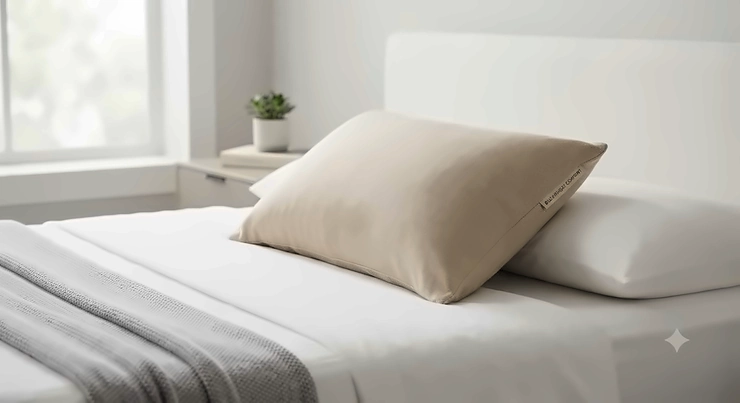
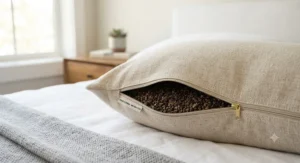
A buckwheat pillow is a cotton or canvas case filled with cleaned buckwheat hulls — the hard outer shells left over after milling the seed for flour. Unlike foam or down, the individual hulls shift and interlock around your head and neck, creating firm, moldable support that doesn’t collapse overnight the way softer fills do.
Quick Comparison Table
Before we dig into the full breakdown, here’s the fast version for anyone who just wants the shortlist.
| Pillow | Best For | Price Range | Firmness |
|---|---|---|---|
| Hullo Buckwheat Pillow | Classic all-American build | $90–$120 | Firm, fully adjustable |
| PineTales Buckwheat Pillow – Platinum Edition | Overall best / premium cooling | $120–$160 | Firm, overstuffed |
| Sachi Organics Buckwheat Pillow | Natural-material purists | $100–$135 | Firm |
| Beans72 Organic Buckwheat Pillow | Budget shoppers | $45–$65 | Firm |
| ComfyComfy Premium Buckwheat Pillow | Multiple body types/sizes | $70–$100 | Medium-firm |
| SweetZzz Organic Buckwheat Pillow | OEKO-TEX certified comfort | $70–$90 | Medium-firm |
| Turmerry Sobakawa Buckwheat Pillow | Traditional feel on a budget | $50–$70 | Firm |
Looking at this lineup, the split isn’t really about quality — every pillow here uses genuine buckwheat hulls and a washable cover. It’s about how much cover engineering and fill preparation you’re paying extra for. The PineTales Buckwheat Pillow – Platinum Edition sits at the top because its two-layer, dual-surface cover does something none of the budget picks attempt, while Beans72 proves you don’t need to spend $130 to get a genuinely firm, supportive night’s sleep.
💬 Already know which type of sleeper you are? Jump straight to the pick that matches your budget below!😊
Top 7 Buckwheat Pillows: Expert Analysis
We picked these seven because they cover every price tier, every level of adjustability, and both the classic sobakawa-style single-shell design and the newer two-cover “boutique” builds. Every product below is a real, currently available item — no invented models, no fictional brands.
1. Hullo Buckwheat Pillow — American-grown hulls milled fresh, not imported
The standout here is sourcing: Hullo mills its own American-grown hulls rather than importing pre-roasted ones, which matters more than it sounds like it should. Roasted or aged hulls go brittle and dusty over time; freshly milled ones keep their shape and airflow far longer.
Each pillow uses a preshrunk 7 oz. organic cotton twill case — heavier than most competitors’ fabric — with double-stitched, overlocked seams built to handle roughly 10 pounds of loose fill without blowing a seam. That weight distinction matters in practice: thinner fabric lets you feel individual hulls pressing through, while twill this heavy smooths that sensation out considerably.
Based on the spec comparison, Hullo lands squarely as a “no surprises” pick — it’s the pillow to buy if you want the traditional buckwheat hull pillow experience without a boutique price tag or a second decorative cover to manage. Reviewers consistently report that neck pain improved within the first week, and several longtime buyers mention returning to Hullo specifically after trying softer alternatives that “went flat” too quickly. A recurring theme in aggregated feedback is the initial rustling noise — most sleepers say it fades from their attention within a few nights, though a few side sleepers never fully adjust to it.
Pros:
- ✅ Fresh-milled American hulls resist dust and crushing longer
- ✅ Heavy 7 oz. twill case reduces the “feeling individual hulls” issue
- ✅ Fully adjustable loft via a single accessible zipper
Cons:
- ❌ Rustling sound takes real adjustment time for light sleepers
- ❌ Single cover only — no secondary cooling layer option
At around $90–$120 depending on size, Hullo represents genuinely solid mid-range value — you’re paying for material quality, not marketing.

2. PineTales Buckwheat Pillow – Platinum Edition — two-layer cover with a dual-side cooling surface
What sets this one apart immediately is the dual-side Bamboo + Cooling outer cover — one face is a soft bamboo-rayon surface, the other a cool-touch surface, so you flip the pillow depending on the season or how warm you’re running that night.
PineTales runs its buckwheat hulls through a 4-stage cleaning process before filling, and every pillow ships intentionally overstuffed so you remove hulls yourself to dial in the exact loft — most competitors leave you stuck with whatever amount they shipped. The inner case and outer cover both use YKK zippers, which sounds like a minor spec until you consider that a failed zipper on a pillow filled with several pounds of loose husks is a genuinely bad day.
Here’s what to weigh: this is the most “finished” product in the category, and the price reflects that. Reviewers describe it as the pillow that finally solved chronic morning neck pain after years of foam and contour pillows failing, with the cradling effect around the neck coming up again and again in verified feedback. What most buyers overlook is that the removable outer cover is genuinely separate from the buckwheat-filled inner case — you can wash the cover on its own without ever touching the hulls, which keeps the whole system cleaner long-term than single-cover designs.
Pros:
- ✅ Reversible bamboo/cooling cover adapts to any season
- ✅ Intentional overstuffing lets you customize loft precisely
- ✅ Two-layer system keeps hulls cleaner between washes
Cons:
- ❌ Premium price compared to single-cover competitors
- ❌ Extra cover layer adds noticeable bulk versus travel sizes
Expect to pay in the $120–$160 range — a fair value verdict given the two-part construction, but not the pillow to buy if you’re just testing whether buckwheat works for you.
3. Sachi Organics Buckwheat Pillow — organic cotton canvas built for natural-bedding purists
The standout feature is material purity: both the cover and the fill carry organic certification, appealing directly to shoppers who already buy organic sheets and mattresses and don’t want to break that streak at the pillow.
The canvas-weight cotton cover is sturdier than lighter cotton alternatives, though testers note it’s not quite as thick as Hullo’s twill, meaning you’ll feel slightly more hull texture through the fabric. The zippered opening sits under a fabric flap specifically so it doesn’t dig into your cheek at night — a small design choice that matters more than it should once you’re actually lying on it.
Based on aggregated review sentiment, Sachi Organics performs best for back and side sleepers who want a genuinely organic buckwheat pillow without paying PineTales-level premium pricing. What most buyers overlook about this model is that the U.S.-grown hull sourcing is independently notable — a lot of “organic” pillow marketing refers only to the cover, not the fill itself, and here both halves qualify. Reviewers frequently mention the cooling effect holding up through warmer nights, consistent with the breathable structure of loose hull fill generally.
Pros:
- ✅ Organic certification covers both fill and cover fabric
- ✅ Zipper flap design prevents digging into your cheek
- ✅ U.S.-grown hulls, not imported
Cons:
- ❌ Canvas cover is thinner than premium twill alternatives
- ❌ Limited size options compared to ComfyComfy
Priced around $100–$135, this is the pick for anyone whose buying decision starts with “organic” and works backward from there.
4. Beans72 Organic Buckwheat Pillow — traditional handcrafted feel at the lowest real price point
The standout here is straightforward: Beans72 has handcrafted sobakawa-style pillows since 1999, and it shows in the price-to-quality ratio — this is the pillow that proves buckwheat doesn’t require a premium budget.
The unbleached cotton casing is triple-cleaned along with the hulls to remove dust and flour residue, and the fill itself is 100% U.S.-grown. Five size options — from Travel/Child up through King — is unusual at this price tier, where most budget competitors offer a single standard size and call it done.
On paper this means Beans72 delivers most of what the premium options do, minus the boutique cover engineering. Reviewers frequently call it the best entry point for anyone testing whether an adjustable buckwheat pillow suits their sleep style before committing to a pricier model. A common complaint in user reviews is that the unbleached cotton cover is noticeably thinner than twill, so hull texture is more perceptible through the fabric — a fair tradeoff most buyers accept given the price gap. The company’s 30-night trial period also comes up repeatedly as a stress-free way to test buckwheat for the first time.
Pros:
- ✅ Lowest genuine price point among tested organic options
- ✅ Five size choices, more than most competitors offer
- ✅ 30-night trial removes first-time buyer risk
Cons:
- ❌ Thinner cover means more perceptible hull texture
- ❌ No cooling-cover upgrade option available
At roughly $45–$65, Beans72 is the clear budget verdict — genuinely good value, not a compromised version of a better product.
5. ComfyComfy Premium Buckwheat Pillow — widest size range for matching your actual body
The standout feature is fit flexibility: ComfyComfy offers up to five size variants plus an extra pound of loose fill included specifically for topping off the loft yourself, which most competitors don’t bundle in.
The 4-pound base fill inside a Classic-size pad, plus that reserve pound, means you’re not stuck guessing at the right amount from day one — you add gradually until the height feels right, then store the rest. The cotton cover uses a similar zippered design to competitors, built to handle repeated adjustment without weakening.
Here’s what to weigh: ComfyComfy is priced above Beans72 but below the two-cover boutique options, occupying a genuine middle ground that a lot of guides skip past. Reviewers consistently describe it as supportive for a range of body types and sleep positions specifically because of the sizing flexibility — a larger-framed side sleeper and a petite back sleeper are choosing genuinely different product dimensions, not the same pillow in name only. What the spec sheet won’t tell you, but reviewers note, is that the extra loose fill bag is genuinely useful rather than a marketing bullet point — most buyers report using at least half of it within the first month of settling in.
Pros:
- ✅ Five size variants accommodate different body frames
- ✅ Extra pound of loose fill included for fine-tuning
- ✅ Zippered design built for frequent adjustment
Cons:
- ❌ Costs more than Beans72 for a comparable base design
- ❌ No dual-surface cooling cover option
Expect $70–$100 depending on size — solid mid-tier value if fit customization matters more to you than cover engineering.
6. SweetZzz Organic Buckwheat Pillow — OEKO-TEX certified, ships with two pillowcases
The standout advantage is the certification: OEKO-TEX Standard 100 verifies the materials are tested against a long list of potentially harmful substances, which matters if you’re sensitive to off-gassing or unclear manufacturing standards in bedding.
The pillow ships with roughly 5 pounds of buckwheat hulls and two organic cotton pillowcases included — a genuine two-for-one that most competitors charge extra for. Both the breathable cover and fill are structured to reduce heat buildup, and testers noted it performing well across all sleep positions, with back sleepers reporting the strongest results.
Based on the spec comparison, SweetZzz’s real differentiator against Hullo and Sachi Organics isn’t the fill itself — it’s the included second cover and the third-party certification stamp, which appeals to buyers who want documentation behind the “safe materials” claim rather than taking a brand’s word for it. Reviewers consistently mention the free shipping and 50-day return window as reasons they felt comfortable trying an unfamiliar pillow category for the first time, and side and stomach sleepers frequently mention removing a portion of the fill to get the loft right for their position.
Pros:
- ✅ OEKO-TEX Standard 100 certification for material safety
- ✅ Two pillowcases included at no extra cost
- ✅ 50-day return window reduces first-try risk
Cons:
- ❌ Side/stomach sleepers need manual fill adjustment
- ❌ Less brand history than PineTales or Hullo
Priced around $70–$90, this is a strong pick specifically for shoppers prioritizing verified material safety over brand pedigree.
7. Turmerry Sobakawa Buckwheat Pillow — traditional Japanese-style design at an accessible price
The standout feature is authenticity of form: this is a straightforward sobakawa-style buckwheat pillow — one shell, one zipper, adjustable loft — without added covers or accessories inflating the price.
Like the other budget entries, hulls can be freely added or removed to change the overall height, and the simple cotton casing keeps the design close to the original centuries-old Japanese construction rather than a modernized reinterpretation. There’s little to complicate here, which is precisely the point for shoppers who just want the traditional experience.
On paper, Turmerry competes directly with Beans72 for budget buyers, and the honest analytical take is that neither is meaningfully “better” — they’re close cousins at a similar price with slightly different cover fabrics. What most buyers overlook is that the simplicity here is a feature, not a shortcoming: a Japanese sobakawa pillow was never meant to have a two-layer cooling cover, and Turmerry’s version respects that history while still being easy to find and order on Amazon. Reviewers describe it as a low-risk way to try the moldable natural pillow category before deciding whether to upgrade to a premium build later.
Pros:
- ✅ Authentic single-shell sobakawa construction
- ✅ Fully adjustable loft via accessible zipper
- ✅ Lowest-friction way to try buckwheat for the first time
Cons:
- ❌ Basic cotton cover shows more wear over time
- ❌ No size variety beyond the standard option
At $50–$70, it’s a reasonable budget alternative to Beans72, particularly if you specifically want the traditional sobakawa form factor.
Practical Usage Guide: Your First 30 Nights
Buckwheat pillows reward a little patience up front. Unzip the case the day it arrives and remove roughly 15–20% of the hulls before your first night — nearly every complaint about a buckwheat hull pillow being “too firm” traces back to sleeping on a fully-stuffed pillow straight out of the box. Store the extra hulls in a sealed bag; you’ll likely add some back later as you dial in your preferred height.
Expect an adjustment period of three to seven nights. The rustling sound and the firmness both feel foreign at first, and that’s normal rather than a sign you bought the wrong product. During week one, side sleepers should aim for enough loft to keep the ear roughly level with the shoulder, while back sleepers generally want noticeably less fill than they’d expect.
For maintenance, never machine-wash the hulls themselves — only the removable cover. Hulls that get wet can mold or stain the fabric, so if hulls ever need cleaning, spread them on a towel in indirect sunlight for a few hours rather than soaking them. Most manufacturers recommend replacing the hull fill every two to three years as the shells slowly crush down and lose loft; replacement bags typically start around $50 for enough hulls to refill a standard pillow.
✨ Don’t Miss These Exclusive Deals!
🔍 Ready to actually try one of these? Click through to check current pricing and availability on any pick above — availability shifts quickly on the more popular sizes, especially heading into fall.
Real-World Scenarios: Who Actually Benefits Most
The side sleeper with chronic shoulder tension: Someone who sleeps almost exclusively on their side and wakes with a stiff shoulder needs enough loft to keep the spine level — the PineTales Buckwheat Pillow – Platinum Edition or a well-filled Hullo both accommodate the extra height side sleeping demands, and the moldable fill fills the gap between ear and shoulder more precisely than foam.
The budget-conscious first-timer: If you’re not sure buckwheat is for you and don’t want to gamble $150 finding out, Beans72 or the Turmerry Sobakawa Buckwheat Pillow let you test the category with a real trial period and minimal financial risk.
The hot sleeper who also has neck pain: Someone dealing with both overheating and morning stiffness benefits most from SweetZzz’s certified breathable design or PineTales’ dual-side cooling cover — the airflow through loose hulls addresses heat directly, while the firm structure addresses the neck-pain half of the problem simultaneously.
Problem → Solution Guide
Problem: The pillow feels too hard the first week. Solution: remove 20–25% of the fill immediately rather than waiting it out — firmness should feel supportive, not rigid, from night one.
Problem: Hulls shift to the edges overnight. Solution: most cases have internal baffling or can be hand-flattened before bed; redistributing hulls by hand each night for the first two weeks trains the fill into a more stable shape.
Problem: The rustling noise is disruptive. Solution: a pillowcase over the buckwheat case muffles sound noticeably, and the noise itself typically fades from conscious awareness within a week regardless.
Problem: Neck pain hasn’t improved after a few nights. Solution: reassess loft before assuming the pillow doesn’t work — too much or too little fill is the single most common cause of continued discomfort, more so than pillow choice itself.
How to Choose a Buckwheat Pillow
- Start with your sleep position. Side sleepers need more loft than back sleepers; stomach sleepers generally want the least fill of all three groups.
- Decide your budget tier honestly. Budget picks like Beans72 deliver genuine buckwheat support; premium picks add cover engineering, not better hulls.
- Check for a real trial or return window. Anything under 30 days is a red flag given how much adjustment buckwheat pillows require.
- Look for organic or third-party certification if it matters to you. Sachi Organics and SweetZzz carry documentation; not every brand does.
- Confirm the fill is adjustable, not fixed. An adjustable buckwheat pillow with an accessible zipper is non-negotiable — fixed-fill pillows can’t be corrected if the loft is wrong.
- Read aggregated reviews for your specific sleep position, not just overall star ratings, since firmness needs vary dramatically by position.
- Plan for hull replacement every 2–3 years as a normal cost of ownership, not a sign of product failure.

Common Mistakes When Buying a Buckwheat Pillow
The most frequent mistake is buying a fixed size without checking whether the brand offers loft adjustment — a pillow you can’t customize defeats much of the point of choosing buckwheat in the first place. A close second is expecting an overnight fix for neck pain; research on cervical support pillows generally shows meaningful improvement over weeks, not a single night, and pillow shape and height matter as much as material.
Buyers also frequently skip checking cover thickness, then complain about feeling individual hulls through thin fabric — that’s a cover-quality issue, not a fill-quality one, and it’s avoidable by checking material weight before ordering. Finally, some shoppers assume “organic” claims automatically apply to both the fill and the cover; as covered above, that’s not always true, and it’s worth confirming which half of the product actually carries certification.
Buckwheat Pillow vs Memory Foam Pillow
Memory foam contours to pressure and slowly returns to shape, while buckwheat hulls shift instantly and hold their position without any recovery lag — that’s the core mechanical difference, and it explains most of the practical tradeoffs between the two categories. Memory foam tends to retain body heat since it’s a solid mass with limited airflow, while loose hulls allow continuous air circulation, which is why buckwheat consistently sleeps cooler in aggregated review feedback.
On support, memory foam softens and can flatten over 1–2 years, while a well-maintained buckwheat hull fill holds firmness for 2–3 years before needing replacement, and even then a refill costs a fraction of a full new pillow. One published systematic review on pillow design found that pillow shape and height affected cervical alignment more than the specific fill material tested, which is a useful reality check against marketing claims that any single material is a guaranteed fix for neck pain — fit and adjustability matter enormously regardless of what’s inside.
Where memory foam wins is initial “plushness” and zero adjustment period — there’s genuinely no learning curve. If instant softness matters more to you than adjustable firmness and cooling, memory foam remains the more familiar choice; if you want a pillow you can precisely tune over years of use, buckwheat is the better mechanical design.
Buckwheat Pillow for Neck Pain: What the Research Actually Shows
Here’s an honest note before the recommendations: clinical research specifically isolating buckwheat hull pillows is thin. Most peer-reviewed studies on cervical support pillows test latex, spring, or contour foam designs rather than buckwheat specifically, so claims about buckwheat’s neck-pain benefits rely more on aggregated user experience than controlled trials. That’s worth knowing going in, even as the mechanism — firm, moldable support that holds cervical alignment without collapsing — lines up with what the broader research says matters.
A peer-reviewed randomized trial on cervical pillows and neck pain found that pillow users reported statistically significant reductions in neck disability scores compared to a non-pillow-intervention group, particularly in morning symptoms — consistent with what buckwheat pillow reviewers report anecdotally about waking pain improving within the first couple of weeks. Separately, a broader review of pillow design research concluded that shape and height influence cervical spine positioning more heavily than fill material alone, reinforcing why the adjustability point earlier in this guide matters as much as which pillow you buy.
Practically speaking, this means the buckwheat pillow for neck pain claim holds up reasonably well — not because buckwheat is uniquely magic, but because the fill lets you dial in the exact height your neck needs, which the research consistently flags as the more important variable.
Long-Term Cost & Maintenance
A single buckwheat pillow purchase covers roughly 2–3 years before the hulls compress enough to need replacing, at which point a refill bag — typically 10–12 pounds of fresh hulls — starts around $50. Compare that to memory foam, which manufacturers generally recommend replacing entirely every 18–36 months at full pillow price, and the total cost of ownership tips meaningfully in buckwheat’s favor over a 5-year window.
| Fill Type | Typical Lifespan | Refill/Replace Cost | Ownership Model |
|---|---|---|---|
| Buckwheat hulls | 2–3 years | ~$50 (hulls only) | Refill same case |
| Memory foam | 1.5–3 years | Full pillow price | Full replacement |
| Down/feather | 1–2 years | Full pillow price | Full replacement |
This comparison makes the case for buckwheat mostly on maintenance economics rather than upfront price — the Beans72 or Turmerry Sobakawa Buckwheat Pillow may cost more than a bargain-bin foam pillow initially, but neither requires full replacement every year or two the way cheaper foam does.
Buckwheat Hulls vs Other Pillow Fills: Benefits Comparison
| Fill Type | Cooling | Adjustable Loft | Allergen Profile |
|---|---|---|---|
| Buckwheat hulls | Excellent | Yes (add/remove) | Hypoallergenic, no dust mite habitat |
| Memory foam | Poor–fair | No | Can trap allergens over time |
| Down/feather | Fair | No | Common allergy trigger |
| Latex | Good | No | Generally hypoallergenic |
The clearest differentiator in this table is adjustability — buckwheat is the only fill type here you can meaningfully customize after purchase, which matters enormously given how individual the “right” pillow height turns out to be. Cooling performance also separates buckwheat and latex from memory foam and down, both of which trap heat against a mass of material rather than allowing airflow through loose components.

FAQ
❓ What is the best buckwheat pillow for side sleepers?
❓ Is an organic buckwheat pillow worth the extra cost?
❓ How firm should an adjustable buckwheat pillow feel?
❓ Do buckwheat pillows help with neck pain?
❓ How is a Japanese sobakawa pillow different from other buckwheat pillows?
Conclusion
If there’s one honest takeaway from this whole buckwheat pillow review roundup, it’s that the fill itself is remarkably consistent across price points — the real differences live in cover quality, certification, and how much engineering you’re paying for on top of the same basic hulls. Beans72 and the Turmerry Sobakawa Buckwheat Pillow prove you can get genuine, adjustable support without spending big, while PineTales’ Platinum Edition and SweetZzz’s certified build justify their higher prices with real material and cover upgrades rather than just branding.
Whichever tier you land in, the adjustment period matters more than the specific brand — remove some fill before night one, give it a week, and reassess loft before assuming a pillow “didn’t work.” That single habit resolves more first-time complaints than any spec difference between these seven picks.
For a deeper look at buckwheat pillow construction and sizing across the category, the Sleep Foundation’s buckwheat pillow guide is a solid additional reference if you want a second opinion before ordering.
✨ Ready to Sleep Better Tonight?
🔍 Pick the buckwheat pillow that matches your budget and sleep position above, and check current pricing before it changes — the budget picks especially tend to sell out fast once cooler months hit.
Recommended for You
- Dunlop vs Talalay Latex Pillow: 7 Best Picks for 2026
- 7 Best Organic Latex Pillow Picks in 2026: GOLS Certified & Non-Toxic
- Natural Latex Pillow 2026: 7 Picks That Actually Deliver
Disclaimer: This article contains affiliate links. As an Amazon Associate, I earn from qualifying purchases. If you purchase products through these links, we may earn a small commission at no additional cost to you.
✨ Found this helpful? Share it with your friends! 💬🤗
