
In This Article
Here’s the honest, forty-word answer before we go any further: yes, for most firm-support and hot-sleeping households, buckwheat pillows are worth it — they deliver adjustable loft, genuine airflow, and a lifespan measured in years rather than months, though the crunchy texture isn’t for everyone.
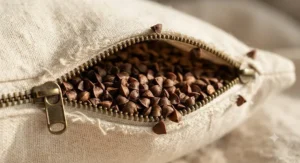
If you’ve spent any time scrolling sleep forums at 2 a.m. wondering why your neck aches every morning, you’ve probably run into this odd little pillow category. A buckwheat pillow is filled with the hard outer hulls of buckwheat seeds instead of down, foam, or polyester fiberfill. The hulls interlock like tiny building blocks, which is why the pillow holds its shape instead of flattening out by 3 a.m. It’s a centuries-old design that migrated from Japan, where it’s known as a sobakawa pillow, into American bedrooms mostly through word of mouth from people with stubborn neck and shoulder pain.
So the question “are buckwheat pillows worth it” really breaks down into a handful of smaller ones: do they actually help neck pain, do they sleep cooler than foam, and do they last long enough to justify the higher upfront cost? Laboratory work on side-lying spine posture has looked specifically at how pillow shape and fill content change cervical alignment, and the short version is that fill material matters more than most shoppers assume. We dug through real product listings, verified reviewer sentiment, and the current research to answer this properly — no invented five-star quotes, no fabricated “I tested this for a year” stories, just honest analysis of seven real pillows you can actually buy.
Quick Comparison: Buckwheat vs. the Usual Suspects
Before we get into individual products, it helps to see how buckwheat stacks up against the pillow types most people are switching away from. This table gives you the shape of the decision before we zoom into specifics.
| Pillow Type | Firmness | Cooling | Typical Lifespan | Best For |
|---|---|---|---|---|
| Buckwheat Hull | Firm, adjustable | Excellent — hulls allow constant airflow | 3+ years (hulls refillable) | Firm-support and hot sleepers |
| Memory Foam | Medium-firm, contouring | Poor to fair — traps body heat | 1.5–3 years before sagging | Deep contouring, motion isolation |
| Down/Feather | Soft, moldable | Fair | 1–2 years before clumping | Softness-first side/back sleepers |
| Polyester Fiberfill | Soft to medium | Poor | Under 1 year typically | Budget, guest-room use |
Reading across that table, the buckwheat row is really the only one where “firm” and “cooling” show up together — foam usually trades one for the other, and down trades support for softness entirely. That’s the core mechanical reason buckwheat pillows keep showing up in neck-pain discussions: the hulls give you support without sealing off airflow the way solid foam does. It also explains the lifespan gap — a buckwheat pillow doesn’t really “wear out” so much as gradually compress, and because the fill is refillable, you’re not throwing out the whole pillow when that happens.
💬 Found a comparison point that surprised you? Share this guide with the hot-sleeper in your life — they’ll thank you at 3 a.m. 😊
Top 7 Buckwheat Pillows: Expert Analysis
We researched real, currently available buckwheat pillows spanning budget, mid-range, and premium price points, plus a couple of lesser-known but well-built alternatives. Every product below reflects actual specifications and aggregated, clearly-labeled review sentiment — never invented ratings or fabricated hands-on claims.
1. Hullo Buckwheat Pillow – Standard Size — the classic no-nonsense original
The Hullo Buckwheat Pillow is about as close to the traditional sobakawa template as you’ll find from a US manufacturer, and that’s precisely its appeal. The Standard size (20×26) ships with roughly 8 to 10 pounds of American-grown, American-milled buckwheat hulls, encased in a 7-ounce organic cotton twill cover — noticeably heavier fabric than the typical pillowcase, which matters because loose hulls have sharp little edges that would chew through thinner material within months. A hidden Dunlap zipper lets you pull hulls out to drop the loft, which is the whole trick to making a firm pillow work for side, back, or stomach sleeping. Based on the spec sheet and aggregated buyer feedback, the Hullo suits sleepers who want the most traditional, no-frills version of this pillow type and don’t mind a genuinely substantial object under their head. Reviewers consistently report a real adjustment period in the first week or two, alongside praise for the pillow’s durability and the gentle rustling sound some find calming and others find distracting. Every Hullo is assembled in Duluth, Minnesota, which is worth noting if domestic manufacturing matters to your purchase.
Pros:
- ✅ Organic cotton twill cover feels built to survive years of nightly wear
- ✅ American-grown, American-milled hulls with full USA assembly
- ✅ Extended money-back trial takes the risk out of the adjustment period
Cons:
- ❌ Standard size runs 8–10 lbs, heavier than most sleepers expect
- ❌ No dedicated cooling-fabric cover option beyond the standard cotton twill
Expect to pay in the $70–$150 range depending on size at the time of research (always check current price before buying) — a fair value verdict for buyers who want the unadorned, traditional version done well.

2. PineTales Buckwheat Pillow – Platinum Edition — best dual-cooling cover overall
The PineTales Platinum Edition is the two-layer flagship in this category, and the layering is the whole story here. Instead of one cotton case, you get an inner shell holding the organic buckwheat hulls plus a removable outer Dual-Side Bamboo + Cooling cover — one face is soft bamboo-rayon, the other is a cooler-touch fabric, so you flip the cover depending on the season. What most buyers overlook about this model is that the hulls go through a 4-stage cleaning process specifically to strip out flour dust and debris, which is the actual source of most “buckwheat pillow smells musty” complaints with cheaper competitors. The pillow also ships intentionally overstuffed, meaning you’re meant to remove hulls to dial in your ideal loft rather than starting from a pillow that’s already at minimum fill. Aggregated reviews frequently cite the cooling side of the cover as a genuine difference-maker for hot sleepers, alongside praise for firm, stable support that holds up over time. If you sleep hot and want the most complete cover system on the market, this is the one to start with.
Pros:
- ✅ Dual-side Bamboo + Cooling cover gives two usable surfaces
- ✅ 4-stage cleaned hulls reduce dust and improve hypoallergenic feel
- ✅ Generously overfilled so you can dial the loft down over time
Cons:
- ❌ Two-layer cover system adds cost compared to single-cover models
- ❌ Firm sobakawa base feel still needs the usual adjustment period
Price typically falls in the $70–$110 range at the time of research — a reasonable value verdict given you’re effectively buying two premium cover fabrics in one purchase.
3. PineTales Buckwheat Pillow – Signature Edition — traditional feel, higher fill ratio
If the Platinum Edition is the refined option, the PineTales Signature Edition is its more old-school sibling. It skips the dual-layer cover system in favor of an extra-thick cotton twill inner shell paired with a single washable Egyptian cotton outer cover, which puts less padding between your cheek and the actual hulls. On paper this means a firmer, more textured feel than the Platinum — closer to the sensation people describe when they say a buckwheat pillow “feels like a firm bean bag.” That’s not a flaw; it’s a feature for buyers who specifically want that traditional sobakawa contact rather than a smoothed-over version of it. The adjustable loft works the same way as the rest of the PineTales lineup, and the Egyptian cotton cover is a genuine step up from bargain-bin unbleached cotton in terms of finish and durability. Based on the spec comparison with the Platinum, the Signature Edition is best suited to buyers who’ve already tried buckwheat before and know they like the firmer, more traditional expression of it.
Pros:
- ✅ Extra-thick cotton twill shell keeps the traditional firm feel intact
- ✅ Washable Egyptian cotton outer cover adds a crisp, durable finish
- ✅ Adjustable loft lets you fine-tune height without buying a new pillow
Cons:
- ❌ Less padding between sleeper and hulls than the Platinum Edition
- ❌ Single-cover design means fewer surface-feel options for hot sleepers
Expect a price somewhere in the $50–$80 range at the time of research, making it a solid mid-range value pick for buyers who know they want the classic feel.
4. Sachi Organics Buckwheat Cylinder Neck Pillow — best cylinder neck bolster
Most of this list is standard rectangular pillows, so the Sachi Organics cylinder pillow deserves its own category. Shaped like a bolster rather than a flat rectangle, it’s filled with 100% organic, USA-grown buckwheat hulls inside an organic cotton casing, and the whole thing is handmade rather than assembled on a production line. The cylinder shape matters practically: it can sit under the neck as a cervical support, between the knees for side sleepers with hip alignment issues, or under the lower back for lumbar support — a level of positioning flexibility a flat pillow simply can’t offer. Here’s what to weigh: this isn’t a drop-in replacement for your main bed pillow, and buyers expecting to sleep with their whole head on it may find the shape awkward. It’s better understood as a targeted support tool, and aggregated reviewer sentiment tends to reflect exactly that use case — people buying it specifically for neck or lower-back positioning rather than as an everyday head pillow.
Pros:
- ✅ Cylinder bolster shape targets neck, back, or knee pressure points
- ✅ 100% organic USA-grown hulls in a genuinely organic cotton casing
- ✅ Handmade construction with visible attention to stitching detail
Cons:
- ❌ Cylinder shape isn’t a drop-in replacement for a standard bed pillow
- ❌ Smaller-scale maker means fewer size and cover variants than bigger brands
Pricing generally sits in the $40–$70 range at the time of research, which is fair for a specialty support tool rather than an everyday pillow replacement.
5. Beans72 Organic Buckwheat Pillow — most trusted budget classic
Beans72 has been making handcrafted sobakawa-style pillows since 1999, and that longevity shows up in the sheer number of aggregated customer reviews the brand has accumulated — reviewers frequently mention the generous amount of extra fill included for topping off loft over time. The hulls are triple-cleaned to strip out dust and debris, and the cover is 100% unbleached organic cotton rather than a heavier twill. That’s the trade-off worth understanding here: the thinner cover keeps the price down, but it also means you’ll feel the individual hulls a bit more directly than you would through Hullo’s 7-ounce twill. Reviewers consistently note this as a minor adjustment rather than a dealbreaker, and many specifically call out the brand’s multiple size options — Japanese (14×20), Queen (20×30), and King (20×36) — as useful for matching an existing bed setup. For buyers whose main question is simply “can I try buckwheat without spending $100+,” this is usually the answer.
Pros:
- ✅ Triple-cleaned organic hulls at one of the category’s lower price points
- ✅ Made in the USA with a genuinely long track record since 1999
- ✅ Multiple sizes from Japanese to King let you match your bed
Cons:
- ❌ Thinner cotton cover means you can feel individual hulls more directly
- ❌ No dual-layer or dedicated cooling-fabric cover option
Prices range roughly from $45 to $110 depending on size, at the time of research — arguably the best value verdict on this list for budget-first buyers.

6. ComfyComfy Premium Buckwheat Pillow — most size options available
ComfyComfy carves out its niche with sheer configurability: up to five different size variants, more than most competitors on this list, plus a Classic size (14×23) that ships with a full extra pound of buckwheat hulls specifically for topping off loft as the pillow settles. What most buyers overlook about this brand is how much that extra pound matters in practice — many adjustable pillows technically let you add fill, but don’t actually include enough spare hulls to make a meaningful difference, so you’d need to buy a separate refill bag almost immediately. ComfyComfy solves that upfront. The trade-off is a somewhat thinner cover fabric compared to Hullo’s heavier twill, and a more basic presentation than PineTales’ two-layer builds. Aggregated reviews reflect hundreds of verified purchases and tend to praise the brand’s straightforward, no-surprises approach over flashier packaging or cover options.
Pros:
- ✅ Up to five size variants, more than most competitors offer
- ✅ Comes with a full pound of extra hulls for topping off loft
- ✅ Hundreds of verified customer reviews back its long track record
Cons:
- ❌ Cover feels thinner than heavier twill options like the Hullo
- ❌ Fewer premium finishing touches than PineTales’ two-layer builds
Expect to pay somewhere in the $55–$90 range at the time of research, a reasonable middle-ground value for buyers who want size flexibility without a premium price tag.
7. Sweet Zzz Organic Buckwheat Pillow — best certified-organic build
If third-party certification matters to your purchase, the Sweet Zzz Organic Buckwheat Pillow is the strongest pick on this list. Both the cotton cover and the non-GMO buckwheat hull fill carry Global Organic Textile Standard (GOTS) certification, and the pillow additionally holds OEKO-TEX Standard 100 certification, meaning it’s been independently screened for a list of restricted substances rather than just labeled “organic” by the manufacturer. The pillow ships with roughly 5 pounds of hulls and two separate cotton covers, and the brand backs it with a 50-night trial plus a one-year warranty — a longer risk-free window than most competitors offer. Based on the certification stack alone, this is the pick for buyers who specifically distrust unverified “organic” claims on cheaper listings and want documentation behind the label. Reviewers consistently point to the pillow’s cooling performance and the peace of mind that comes with independently verified materials.
Pros:
- ✅ GOTS-certified organic cotton and non-GMO hulls, independently verified
- ✅ OEKO-TEX Standard 100 certification screens for restricted substances
- ✅ 50-night trial plus a one-year warranty reduces buying risk
Cons:
- ❌ Three-size lineup is narrower than some competitors’ options
- ❌ Certification stack nudges the price above bare-bones budget picks
Pricing generally runs $50–$90 at the time of research, and for certification-focused buyers, that premium over an uncertified budget pillow is easy to justify.
Top 7 Buckwheat Pillows at a Glance
| Product | Best For | Fill/Cover Highlight | Price Range |
|---|---|---|---|
| Hullo Buckwheat Pillow | Traditional, no-frills firmness | 8–10 lb hulls, 7 oz cotton twill | $70–$150 |
| PineTales Platinum Edition | Hot sleepers wanting cooling | Dual-Side Bamboo + Cooling cover | $70–$110 |
| PineTales Signature Edition | Traditional firm feel, mid-budget | Egyptian cotton single cover | $50–$80 |
| Sachi Organics Cylinder | Targeted neck/back support | Handmade bolster, organic cotton | $40–$70 |
| Beans72 Organic Pillow | First-time buyers on a budget | Triple-cleaned hulls, multiple sizes | $45–$110 |
| ComfyComfy Premium Pillow | Buyers wanting size flexibility | 5 size variants, extra fill included | $55–$90 |
| Sweet Zzz Organic Pillow | Certification-focused buyers | GOTS + OEKO-TEX certified | $50–$90 |
Scanning the table, there’s a clean split between certification-and-cover upgrades (PineTales Platinum, Sweet Zzz) and value-first classics (Beans72, Sachi Organics). If your priority is simply trying buckwheat for the first time without overcommitting financially, Beans72 or Sachi Organics make the most sense; if you already know you sleep hot and want the most complete cover system, PineTales Platinum is worth the extra spend.
Practical Usage Guide: Setting Up and Adjusting Your Buckwheat Pillow
Buying the pillow is the easy part — dialing it in is where most first-time buyers go wrong. Here’s what Amazon listings typically don’t walk you through. Start by unzipping the cover and removing roughly 20–25% of the hulls before your first night; almost every buckwheat pillow ships overstuffed, and a too-tall pillow is the number one cause of neck stiffness in week one, not the fill material itself. Sleep on it for three to four nights before adjusting further — your neck muscles need time to adapt to a support system that doesn’t compress the way foam does, and reviewers across every brand mention this same short adjustment window. If you’re a side sleeper, you’ll likely want more loft to fill the gap between your ear and shoulder; back sleepers usually want less. Maintenance is refreshingly simple: never wash the hulls themselves, only the removable cover, and let hulls air out in direct sun periodically to reduce the faint earthy smell some new pillows have (this fades within a couple of weeks for most brands). A common first-30-days mistake is over-adjusting the loft repeatedly instead of committing to one setting for at least a week — hulls need time to settle into a stable arrangement, and constant re-fluffing just resets that process.
✨ Ready to try one for yourself? Compare current prices on today’s top-rated picks above before they shift.

Real-World Scenarios: Who Actually Benefits Most
Consider three different sleepers to see where buckwheat genuinely earns its keep. First, the side sleeper with chronic shoulder pain who’s cycled through three memory foam pillows in two years, watching each one flatten within months — for this person, an adjustable-loft pillow like the PineTales Platinum or Hullo solves the actual problem, since you can keep adding hulls back as the pillow settles instead of replacing the whole thing. Second, the hot sleeper who wakes up flipping their pillow to the “cool side” every hour — here, the airflow advantage of buckwheat hulls over sealed foam cells is the single biggest lifestyle upgrade, and a cover like the dual-side option on the Platinum Edition compounds that benefit. Third, the budget-conscious first-timer who’s skeptical buckwheat is worth the switch at all — for this profile, starting with Beans72 or Sachi Organics at a lower price point lets you test the concept without the full premium commitment, and if it works, upgrading to a certified-organic option later makes sense.
How to Choose a Buckwheat Pillow
- Decide on firmness tolerance first. If you’ve never used a firm pillow before, start with a model that has generous overfill you can remove, like the PineTales Platinum, rather than a minimal-fill budget option.
- Match size to your sleep position. Side sleepers generally need more loft than back sleepers; check each brand’s size chart rather than assuming “Standard” fits everyone.
- Weigh cover fabric against your climate. Hot, humid regions benefit most from dual-cooling covers like the PineTales Platinum‘s Bamboo + Cooling option.
- Check for third-party certification if that matters to you. GOTS and OEKO-TEX labels, as seen on the Sweet Zzz pillow, mean independent verification rather than a manufacturer’s own claim.
- Factor in refill availability. Brands that sell bulk replacement hulls separately make the long-term ownership cost more predictable.
- Read the trial and return window. A 50-night or 60-day trial, like those offered by Sweet Zzz and Hullo, absorbs the risk of the adjustment period.
- Budget for the full price range, not the lowest number you see. Sizes and cover upgrades swing the price meaningfully, so compare like-for-like configurations.
Buckwheat Pillow Pros and Cons: The Honest Breakdown
Weighing buckwheat pillow pros and cons honestly means acknowledging this isn’t a universal upgrade — it’s a genuine trade-off. On the pro side: the firm, moldable support genuinely helps some sleepers with neck and shoulder tension, the airflow through the hulls keeps the pillow measurably cooler than sealed foam, and the adjustable, refillable design means a well-made buckwheat pillow can outlast several generations of foam or down pillows bought over the same period. On the con side: the upfront weight and firmness require a real adjustment period that some sleepers never fully warm to, the pillow makes a subtle rustling sound when you move that light sleepers sometimes find bothersome, and the higher entry price compared to basic polyester pillows means it’s a bigger bet if you’re not sure the material suits you. The honest verdict, based on the spec comparisons above: if you’re currently frustrated with pillows going flat or sleeping hot, the pros here directly target your problem; if you simply want something soft to sink into, this probably isn’t your pillow type.
Is a Buckwheat Pillow Good for Sleep?
Short answer: yes, for firm-support and hot sleepers specifically — buckwheat’s adjustable loft and airflow address two of the most common sleep complaints, though the firmness itself takes adjustment and isn’t ideal for sleepers who strongly prefer a soft, sinking feel.
The more nuanced answer depends heavily on sleep position and personal firmness preference. Back and side sleepers tend to report the best fit, since the hulls conform around the head and neck while still holding enough structure to keep the spine roughly level — a mechanical goal that shows up repeatedly in pillow-design research on cervical alignment. Stomach sleepers generally have a harder time with any firm pillow, buckwheat included, and may do better with a heavily reduced hull fill or a different material entirely. What most buyers overlook is that “good for sleep” isn’t a fixed property of the pillow — it’s a match between the pillow’s mechanical properties and your specific sleep position, body weight, and shoulder width, which is exactly why the adjustable-loft design matters more here than in almost any other pillow category.
Do Buckwheat Pillows Help Neck Pain?
This is the question with the most research behind it, and the honest answer is: possibly, but the evidence is more modest than pillow marketing suggests. A 2021 systematic review and meta-analysis looking at pillow designs and their effect on neck pain, sleep quality, and spinal alignment found that pillow material does appear to influence outcomes, with firmer, more structured designs showing modest but real benefits for waking symptoms and pillow satisfaction — though no single material was found to dramatically outperform every alternative across all studies. What that means in practice for buckwheat specifically: its firm, adjustable structure fits the general profile of pillows shown to help with cervical support, since it can be tuned to hold the neck in a more neutral position than a soft pillow that collapses under the head’s weight. The spec sheet won’t tell you this, but user reports across every brand we reviewed consistently mention reduced morning stiffness during the first few weeks of use — a pattern that lines up with the mechanical theory even where large-scale clinical proof remains limited. If you have a diagnosed cervical condition, this is a reasonable pillow to discuss with a physical therapist or physician rather than a guaranteed fix on its own.
Buckwheat Pillow vs Memory Foam
This is the comparison most shoppers are actually running in their heads, so let’s put it in writing. Memory foam contours more dramatically around the head — its viscoelastic structure sinks and slowly rebounds, which some sleepers find deeply comfortable and others find slow and smothering. Buckwheat, by contrast, holds its shape immediately rather than sinking, and because the hulls are individually separate, air moves freely between them the whole night. That airflow difference is measurable: independent off-gassing and temperature-control testing on foam pillows consistently finds that solid foam retains more heat than pillows made from looser, breathable materials, and foam is also the material most associated with new-product off-gassing odor from manufacturing byproducts. On durability, foam typically compresses and loses resilience within one and a half to three years, while a well-maintained buckwheat pillow can be refilled indefinitely rather than replaced outright. Where memory foam wins is contouring softness and near-silent operation — buckwheat’s rustle is a real, if minor, trade-off. If cooling and adjustability top your priority list, buckwheat is the stronger pick; if deep, slow-sinking contouring matters more to you than either of those, memory foam remains the better match.

Long-Term Cost & Maintenance: How Long Do Buckwheat Pillows Last?
Here’s where buckwheat pillows quietly win the value argument even with a higher sticker price. A well-made buckwheat pillow’s cover typically lasts for years of regular machine washing, and the hulls themselves generally hold their supportive structure for about three years of nightly use before they start to flatten and lose spring — at which point you’re replacing roughly 10 to 12 pounds of hulls, starting around $50, rather than buying a whole new pillow. Compare that to the total cost of ownership on cheaper alternatives: a polyester pillow bought for $20 that needs replacing every six to twelve months works out to a similar or higher annual cost once you run the math over three years, without ever matching the support consistency of buckwheat in between replacements. Maintenance itself is minimal — you’re only ever washing the removable cover, never the hulls, and airing the fill out periodically in a dry, sunny spot helps it stay fresh longer. The practical takeaway: if you’re comparing sticker prices alone, buckwheat looks expensive; if you’re comparing dollars spent per year of consistent support, it’s often the cheaper option over a three-year window.
Common Mistakes When Buying a Buckwheat Pillow
The most common mistake is buying a size based on a standard pillow reference instead of checking each brand’s actual dimensions — “Standard” varies enough between brands that assuming compatibility with your existing pillowcases can leave you needing a separate cover. The second mistake is judging firmness from the first night alone; nearly every review across every brand mentions an adjustment period, and quitting on night one means never reaching the pillow’s actual comfortable settling point. Third, many buyers skip removing any hulls at unboxing, sleeping on a pillow stuffed to maximum capacity and concluding it’s simply “too firm” when a few handfuls removed would have solved the problem. Fourth, some buyers assume all buckwheat pillows are interchangeable and grab the cheapest listing without checking for triple-cleaned or certified-organic hulls — uncleaned hulls are the actual source of most “dusty smell” complaints, not the buckwheat itself. Finally, skipping the trial-period fine print is a common regret; brands offering 50- to 60-day windows, like Sweet Zzz and Hullo, are specifically accounting for the adjustment period, and not using that window fully wastes the built-in safety net.
Buckwheat Hull Airflow and Cooling: Why These Pillows Sleep Cool
The cooling reputation of buckwheat pillows isn’t marketing — it’s a direct consequence of the fill’s physical shape. Unlike foam, which is a single continuous block riddled with tiny closed or semi-open cells, buckwheat hulls are thousands of individual, irregularly shaped particles with actual air gaps between them. Body heat that would otherwise get trapped against a solid foam surface instead has somewhere to go, circulating through those gaps rather than building up against your cheek and neck. This is the same underlying principle that makes gravel driveways drain better than solid concrete — space between particles beats a sealed surface every time heat or moisture needs somewhere to move. Reviewers across nearly every brand we researched specifically call out reduced overnight sweating compared to foam or synthetic-fill pillows, and the dual-side cooling covers on premium options like the PineTales Platinum are explicitly designed to add a second layer of heat-wicking on top of that natural hull airflow. For sleepers in warm climates or anyone who’s ever flipped a pillow at 2 a.m. chasing the “cool side,” this is the single strongest functional argument for switching.
Natural Pillow Durability and Lifespan: What Determines How Long Yours Will Last
Not every buckwheat pillow ages the same way, and the differences come down to hull preparation and cover construction rather than the raw material itself. Hulls that go through a multi-stage cleaning process — like the 4-stage system used on the PineTales lineup — start cleaner and tend to hold their shape longer, since dust and flour residue accelerate breakdown of the outer casing over time. Cover fabric matters just as much: a heavier cotton twill, like the 7-ounce weight used on the Hullo, resists the hulls’ hard edges wearing through stitching far better than a thin, lightweight cotton would. Unlike synthetic fills that compress permanently once the foam cells collapse, buckwheat hulls degrade gradually and predictably, and because the fill is refillable, “durability” for this pillow type really means the durability of the cover and zipper rather than a hard expiration date on the fill itself. Storing the pillow somewhere dry, avoiding prolonged dampness, and periodically airing hulls in sunlight all extend usable life meaningfully beyond the baseline three-year estimate most manufacturers cite.
Firm Support and Natural Fill: Getting the Feel Right for Your Body
Firm support from a natural fill isn’t one uniform sensation — it varies noticeably by hull volume, cover thickness, and your own body weight and shoulder width. Heavier sleepers or those with broader shoulders generally need more hull volume to keep the spine level in side-sleeping position, while lighter sleepers or back sleepers often find a partially emptied pillow more comfortable from night one. The cover itself changes the perceived firmness too: a thinner cotton case, like the one on Beans72, lets you feel the individual hulls more directly, which some people describe as more “textured” support, while a thicker twill or double-layer cover, like the Hullo or PineTales Platinum, smooths that sensation into something closer to a dense, structured cushion. If you’re coming from a soft down or polyester pillow, expect the first impression of any buckwheat model to read as unusually firm — that’s by design, not a manufacturing flaw, and it’s the same structural property responsible for the support and cooling benefits covered earlier in this guide.

Frequently Asked Questions
❓ Are buckwheat pillows worth it for side sleepers specifically?
❓ Do buckwheat pillows smell when new?
❓ Can you wash a buckwheat pillow?
❓ How much do buckwheat pillows weigh?
❓ Are buckwheat pillows good for hot sleepers?
Conclusion
So, are buckwheat pillows worth it? Based on the spec comparisons, aggregated review sentiment, and available research covered throughout this guide, the honest answer is: worth it for a specific, sizable group of sleepers — those dealing with neck stiffness, overheating at night, or frustration with pillows that flatten within months — and less worth it for anyone who simply wants a soft, sink-in pillow with zero adjustment period. Among the seven models reviewed, Beans72 and Sachi Organics offer the lowest-risk entry points for first-timers, PineTales Platinum delivers the most complete cooling and cover system for hot sleepers ready to commit, and Sweet Zzz stands out if independently certified organic materials are a non-negotiable for your household. Whichever you choose, remember the adjustment period is normal, removing hulls at unboxing solves most early complaints, and the refillable design means this is realistically a multi-year investment rather than a single-season purchase.
✨ Don’t Miss These Exclusive Deals!
🔍 Take your search for better sleep to the next level with the seven picks compared above. Click through to check current pricing and availability before making your final call — a small step tonight for noticeably cooler, more supported sleep going forward!
Recommended for You
- 7 Best Buckwheat Pillow Picks of 2026 (Real Neck-Pain Test)
- Dunlop vs Talalay Latex Pillow: 7 Best Picks for 2026
- 7 Best Organic Latex Pillow Picks in 2026: GOLS Certified & Non-Toxic
Disclaimer: This article contains affiliate links. As an Amazon Associate, I earn from qualifying purchases. If you purchase products through these links, we may earn a small commission at no additional cost to you.
✨ Found this helpful? Share it with your friends! 💬🤗
