In This Article
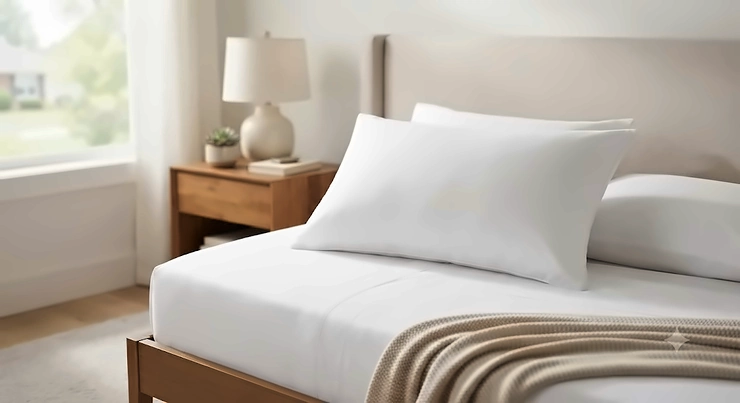
Here’s a fact nobody puts on a bedroom mood board: you spend roughly a third of your life with your face jammed into a pillow, and that pillow is quietly hosting a colony of dust mites having the time of their lives. Gross, but true. A hypoallergenic pillow for allergies is a pillow made with fill and cover materials — think shredded memory foam, down alternative fibers, latex, or tightly woven cotton — engineered to resist dust mites, mold, and other allergen buildup that triggers sneezing, congestion, and itchy eyes.

If you wake up foggy-headed even after eight solid hours, your pillow might be the culprit, not your sleep schedule. Standard down and feather pillows are basically five-star resorts for dust mites: warm, humid, and packed with the skin flakes mites eat. Swap that pillow for a genuinely hypoallergenic pillow for allergies, and you’re not chasing a marketing buzzword — you’re removing a nightly allergen source from six inches away from your nose.
This guide skips the vague “hypoallergenic” label-reading and gets specific. We researched seven real, currently available pillows spanning budget gel-fiber picks to premium organic latex builds, so whether you’re managing a confirmed dust mite allergy, asthma, eczema-prone skin, or just tired of morning sniffles, there’s a genuine option below — not a rewritten spec sheet.
Quick Comparison Table
Before diving into full reviews, here’s the fast version for anyone in a scanning mood.
| Pillow | Fill Type | Best For | Price Range |
|---|---|---|---|
| Beckham Hotel Collection Gel Pillow | Gel-fiber down alternative | Budget shoppers, guest rooms | $45-$60 (2-pack) |
| Coop Home Goods Original Adjustable Pillow | Shredded memory foam + microfiber | Dust mite allergy, custom loft | $60-$90 |
| Columbia Down-Alternative Allergen Barrier Pillow | Gel-fiber down alternative | Allergen barrier cover seekers | $25-$45 |
| BreatheWell Certified Asthma & Allergy Friendly Pillow | Cluster polyester fiberfill | Asthma sufferers | $20-$35 |
| Casper Original Pillow | Down alternative, pillow-in-pillow | Sensitive skin, hot sleepers | $45-$95 |
| Avocado Green Pillow | Organic latex + kapok | OEKO-TEX/organic priority | $120-$155 |
| Tempur-Pedic TEMPUR-Cloud Breeze | Solid memory foam, gel layers | Premium cooling + support | $100-$150 |
Looking at this lineup, the spread tells its own story: Beckham Hotel Collection Gel Pillow wins on pure dollar-per-pillow value, but Avocado Green Pillow and the Tempur-Pedic TEMPUR-Cloud Breeze justify their higher price tags with third-party certifications and denser, longer-lasting materials. If you’re specifically managing a diagnosed dust mite allergy rather than general sniffles, the adjustable shredded foam in the Coop Home Goods Original gives you more control over airflow and washability than a solid foam core ever could.
💬 Which pillow matches your allergy triggers? Keep reading — the breakdown below explains exactly why each one made the list.
Top 7 Hypoallergenic Pillows for Allergies: Expert Analysis
1. Beckham Hotel Collection Gel Pillow — best value for allergy-friendly bulk buying
Sold in pairs, this is the pillow that shows up in nearly every hotel-quality bedding roundup, and there’s a real reason for that: it delivers a plush, hotel-soft feel at a price that lets you replace pillows on a schedule instead of nursing one for a decade. The gel-fiber down alternative fill is hypoallergenic by design and the covers are OEKO-TEX Standard 100 certified, meaning the finished product has been independently tested against harmful substances rather than just labeled as safe by the manufacturer.
Based on the spec comparison, this pillow’s biggest allergy-relevant advantage is frequency of replacement. Because it’s inexpensive enough to buy in pairs and toss in the wash regularly, allergen buildup never gets the multi-year head start it does in a $200 pillow nobody wants to retire. It’s a smart pick for guest rooms, growing kids, or anyone who wants a fresh allergen-free surface every six to twelve months rather than babying one pillow for years. Reviewers consistently report that it holds shape well initially, though several long-term testers note the loft softens noticeably within three to six months of nightly use — a real tradeoff for the price, not a dealbreaker.
Pros:
- ✅ Sold in pairs for a genuinely low per-pillow cost
- ✅ OEKO-TEX certified, machine washable in minutes
- ✅ Hypoallergenic gel-fiber fill resists dust mites well
Cons:
- ❌ Loft and support degrade within 3-6 months of use
- ❌ Runs warm for people who sleep hot
At around $45-$60 for a queen 2-pack, this pillow earns its keep by being cheap enough to replace before allergens accumulate — arguably the smartest long-term allergy strategy at this price point.

2. Coop Home Goods Original Adjustable Pillow — best for a dust mite allergy needing custom loft
Where the Beckham pillow wins on price, the Coop Home Goods Original wins on control. This is a shredded memory foam and microfiber pillow that ships with an extra half-pound bag of fill, so you can add or remove material until the loft actually matches your sleep position instead of settling for whatever a factory decided.
What most buyers overlook about shredded-fill pillows is that the open structure isn’t just about comfort — it’s about airflow, and airflow matters enormously if you’re managing a dust mite allergy specifically. Solid foam blocks trap heat and moisture, which is exactly the environment dust mites thrive in; the cross-cut, ventilated fill here lets that moisture escape instead. The materials are CertiPUR-US and GREENGUARD Gold certified, covering both foam-emission safety and dust mite resistance in one product. Reviewers consistently note the pillow “keeps its shape well, showing little or no change in height or fluffiness” in independent testing, and it earned a Consumer Reports recommendation for exactly that durability.
Pros:
- ✅ Adjustable fill lets you fine-tune loft for your sleep position
- ✅ CertiPUR-US and GREENGUARD Gold certified for safety
- ✅ 100-night trial plus a 5-year warranty backs it up
Cons:
- ❌ Cover is washable, but the foam core itself is not
- ❌ Needs time in the dryer to fully expand after shipping
Priced in the $60-$90 range depending on retailer and size, it’s the pillow to reach for if a dust mite allergy is your specific, doctor-confirmed trigger rather than a vague sensitivity.
3. Columbia Down-Alternative Allergen Barrier Pillow — best dedicated allergen barrier cover
Columbia built this one around a single job: keeping allergens out, not just resisting them. The ultra-soft cover functions as an allergen barrier that’s designed to block household allergens and pollen from settling into the fill in the first place, paired with moisture-wicking fabric so the barrier layer doesn’t trap heat the way vinyl encasements sometimes do.
Here’s what the spec sheet won’t tell you outright: an allergen barrier cover only works as well as its weave density, and Columbia backs this one with a 10-year limited warranty, which is a longer commitment than most brands make on a sub-$40 pillow — a signal the company expects the barrier fabric to hold up under repeated washing rather than degrade after a season. The gel-fiber down-alternative fill inside is genuinely hypoallergenic, and the medium-firm density suits side sleepers particularly well thanks to the gusseted construction. Aggregated customer sentiment is mixed but leans positive: buyers consistently praise the softness and shape retention, while a smaller group reports the loft flattening faster than expected for back sleepers who need more height.
Pros:
- ✅ Purpose-built allergen barrier cover, not just a hypoallergenic fill
- ✅ Moisture-wicking fabric avoids the clammy feel of vinyl covers
- ✅ Backed by a 10-year limited warranty
Cons:
- ❌ Some back sleepers report insufficient loft over time
- ❌ Barrier fabric needs gentle wash cycles to preserve its weave
At a budget-friendly $25-$45 range, this is the pick for anyone whose main frustration is allergens accumulating in the cover itself, not just the fill.
4. BreatheWell Certified Asthma & Allergy Friendly Pillow — best for asthma sufferers specifically
This is one of the few pillows on this list carrying an actual third-party medical certification rather than a manufacturer’s self-applied “hypoallergenic” sticker. It’s certified by the Asthma and Allergy Foundation of America’s certification program, which independently verifies the outer fabric blocks allergen passage, resists chemical off-gassing linked to asthma triggers, and holds up under the wash cycles needed to keep allergen levels down over time.
Based on the spec comparison, that certification matters more for asthma specifically than a generic hypoallergenic claim does, because asthma attacks can be triggered by airborne particulates escaping through a loosely woven cover even when the fill itself is allergen-resistant. The 300-thread-count cotton cover here is tightly woven for exactly that reason, and the cluster-shaped polyester fiberfill inside provides adjustable-feeling support without the density of memory foam. Reviewers consistently mention the pillow needs machine washing roughly every six weeks to maintain its certified performance — a maintenance detail that’s easy to forget but genuinely affects how well the allergen barrier keeps working.
Pros:
- ✅ Third-party AAFA asthma and allergy certification, not self-labeled
- ✅ Tightly woven 300TC cotton cover blocks allergen passage
- ✅ Machine washable for ongoing allergen control
Cons:
- ❌ Some buyers report it loses loft faster than pricier alternatives
- ❌ Firmness feels soft for sleepers who want structured neck support
Typically found in the $20-$35 range, this pillow is worth prioritizing if asthma — not just seasonal sniffles — is the specific condition you’re managing.
5. Casper Original Pillow — best for sensitive skin and hot sleepers
Casper’s pillow-in-pillow design pairs a springy inner core with a plush outer layer, both filled with a down-alternative microfiber, wrapped in a 100% cotton percale cover. The reason this one lands specifically as a sensitive-skin pick is the cover fabric itself: cotton percale is smooth, breathable, and far less likely to cause the friction irritation that coarser synthetic weaves can produce against sensitive or eczema-prone skin overnight.
What the marketing copy won’t spell out is why the two-layer construction actually matters for allergy sufferers: because you can remove the inner pillow entirely, you get a pillow that adapts from a low, flat profile to a fuller loft without needing multiple pillows in rotation, which means less total fabric surface area collecting dust in your bedroom. The fill resists clumping better than basic polyester fiberfill, and the whole thing is fully machine washable, letting you clear built-up allergens on a normal laundry schedule instead of spot-treating. Aggregated reviews are notably positive on temperature regulation — a common complaint about down-alternative pillows is that they sleep hot, but the percale cover here consistently gets credit for staying cool even for side sleepers who run warm.
Pros:
- ✅ Cotton percale cover is gentle on sensitive or eczema-prone skin
- ✅ Removable inner pillow lets you adjust loft without buying extras
- ✅ Machine washable and resists clumping over time
Cons:
- ❌ Cannot add or remove fill the way adjustable pillows allow
- ❌ Not ideal for stomach sleepers who need a very flat profile
Priced roughly $45-$95 depending on size and current promotions, it’s a smart middle-ground pick between the budget gel pillows and the premium organic options further down this list.

6. Avocado Green Pillow — best organic and OEKO-TEX certified option
If your priority is minimizing chemical exposure altogether — not just allergen exposure — this is the pillow built for that concern. The fill is a blend of GOLS-certified organic latex and GOTS-certified organic kapok fiber, stuffed inside an organic cotton jersey liner and wrapped in a GOTS-certified organic cotton cover. On top of those textile certifications, the finished pillow is OEKO-TEX Standard 100 certified and GREENGUARD Gold certified, meaning it’s been independently tested against a long list of substances that can off-gas or trigger sensitivities, not just marketed as “natural.”
Here’s what most shoppers overlook: kapok fiber is naturally hypoallergenic and resists moisture better than down, while natural latex is inherently resistant to dust mites and mold without needing chemical treatments to achieve that resistance — a genuine advantage for people with chemical sensitivities layered on top of standard allergies. The pillow is also fully adjustable via a zippered access panel, so you can dial in loft the same way you would with a shredded foam pillow, just with natural materials instead. Reviewers with diagnosed allergies and sensitive skin consistently describe sleeping better on it, and one tester specifically noted managing both pregnancy-related discomfort and skin sensitivity found real relief switching to it, though a handful of buyers describe the latex-and-kapok blend as feeling slightly lumpy compared to memory foam.
Pros:
- ✅ GOLS, GOTS, and OEKO-TEX certified organic materials throughout
- ✅ Naturally dust mite and mold resistant without chemical treatment
- ✅ Adjustable fill via zippered access panel
Cons:
- ❌ Highest price point on this list
- ❌ Some reviewers describe the fill as lumpy versus foam alternatives
Expect to pay in the $120-$155 range depending on size — a real investment, but one grounded in five separate finished-product certifications rather than a single hypoallergenic claim.
7. Tempur-Pedic TEMPUR-Cloud Breeze Dual Cooling Pillow — best premium cooling support
Tempur-Pedic’s memory foam pillows have a well-earned reputation, and the Cloud Breeze variant adds cooling gel layers on both sides of a solid TEMPUR-Material core specifically for people who run hot at night — a real consideration for allergy sufferers, since overheating tends to increase perspiration, and perspiration accelerates the moisture buildup that feeds dust mites. The 100% cotton cover is removable and machine washable, even though the memory foam core itself cannot be washed directly.
On paper, this means you get Tempur-Pedic’s signature slow-response contouring alongside genuine allergen resistance, since solid memory foam doesn’t offer dust mites the loose fiber gaps they favor in traditional down or cluster-fill pillows. Based on the spec comparison against the shredded-foam Coop Home Goods pillow above, the tradeoff is flexibility: this is a single, non-adjustable foam block, so what you feel out of the box is what you get for the life of the pillow. Reviewers consistently praise the cooling performance as genuinely noticeable rather than a gimmick, and the 5-year warranty reflects Tempur-Pedic’s confidence in the foam’s longevity, though a subset of side sleepers report needing an additional pillow underneath for full neck support.
Pros:
- ✅ Dual gel cooling layers measurably reduce overheating at night
- ✅ Solid memory foam offers no loose-fiber gaps for dust mites
- ✅ Backed by a 5-year manufacturer warranty
Cons:
- ❌ Fill is not adjustable — one loft, no customization
- ❌ Side sleepers may need extra support underneath
At a price typically in the $100-$150 range, this is the pick for allergy sufferers who specifically run hot at night and want cooling and allergen resistance in the same purchase.
Practical Usage Guide: Setting Up Your Hypoallergenic Pillow for Allergy Relief
A hypoallergenic pillow only performs as advertised if you actually use it right, and the first 30 days matter more than people expect. Fresh foam and fiber pillows often ship compressed, so give shredded-foam or solid-foam pillows 24 to 48 hours to fully expand before judging the loft — testing it on night one, while it’s still compressing back into shape, is the single most common mistake new buyers make.
Once it’s expanded, build a maintenance rhythm immediately rather than waiting for symptoms to return. Machine-washable pillows like the Beckham, Casper, and BreatheWell picks above should go through a full wash cycle every four to six weeks, using hot water where the care label allows, since heat is what actually kills dust mites rather than detergent alone. For solid memory foam cores that can’t be washed, like the Tempur-Pedic Cloud Breeze, wash the removable cover on that same schedule and consider adding a zippered allergen-barrier pillow protector underneath it — that single step often does more for allergy control than the pillow’s inherent fill ever could on its own.
Sun exposure helps too: UV light is a natural dust mite deterrent, so airing a pillow outdoors on a dry day every couple of months, weather permitting, adds a free layer of protection between washes. And don’t skip the tag — replacing any pillow every 1 to 2 years, hypoallergenic or not, resets the allergen clock even for well-maintained ones.
Real-World Scenarios: Matching a Pillow to Your Triggers
The dust-mite-sensitized side sleeper. If you’ve had allergy testing confirm dust mites as a trigger and you sleep on your side most nights, the Coop Home Goods Original’s adjustable shredded foam gives you the loft control side sleeping demands, plus the open fiber structure that keeps moisture — and mite populations — from building up the way a dense solid core can.
The asthmatic on a budget. If asthma attacks are your specific concern rather than general congestion, and you need something affordable enough to replace on a strict wash-and-rotate schedule, the BreatheWell pillow’s actual AAFA certification is worth prioritizing over a cheaper pillow that only claims to be allergy-friendly without third-party verification behind it.
The sensitive-skin sleeper who also runs hot. If nighttime breakouts or skin irritation show up alongside your allergy symptoms, and you also wake up sweaty, the Casper Original’s cotton percale cover addresses both problems in one purchase — smooth fabric for skin comfort, plus genuine breathability that a synthetic microfiber cover usually can’t match.
The chemical-sensitivity shopper who wants proof, not promises. If you’ve reacted to synthetic fill or off-gassing in the past, and marketing claims alone don’t cut it anymore, the Avocado Green Pillow’s stack of independent certifications — GOLS, GOTS, OEKO-TEX, GREENGUARD Gold — gives you documentation rather than adjectives.
Problem → Solution: Common Hypoallergenic Pillow Pain Points
Problem: You bought a “hypoallergenic” pillow and still wake up congested. Solution: check whether the claim covers the fill only or the finished product cover too — a hypoallergenic fill inside a loosely woven, non-certified cover still lets allergens accumulate on the surface. Look for an actual allergen barrier cover like Columbia’s, or add a zippered protector.
Problem: Your pillow smells musty within a few months. Solution: that’s usually trapped moisture, not the fill itself. Switch to a pillow with better airflow — shredded or cross-cut foam rather than a dense solid block — and wash the cover on a shorter cycle, especially in humid climates.
Problem: You can’t find your specific loft after switching to a new hypoallergenic pillow. Solution: prioritize adjustable-fill pillows like the Coop Home Goods Original or Avocado Green Pillow, both of which let you add or remove material until the height actually fits your sleep position instead of guessing at firmness ratings online.
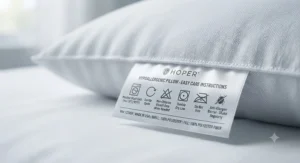
Problem: You’re not sure a certification label is legitimate. Solution: check for a specific certifying body — OEKO-TEX, GOTS, GOLS, CertiPUR-US, GREENGUARD, or AAFA — printed by name. Generic “hypoallergenic” text with no named certifying organization behind it is a marketing claim, not a verified one.
How to Choose a Hypoallergenic Pillow for Allergies
Picking the right pillow comes down to a handful of decision points, not dozens of specs. Here’s the shortlist that actually moves the needle:
- Identify your specific trigger first. Dust mites, asthma, and general sensitivity call for different priorities — a certified allergen barrier matters more for asthma, while adjustable airflow matters more for dust mites specifically.
- Check for named, third-party certifications. OEKO-TEX, CertiPUR-US, GREENGUARD Gold, GOTS, and AAFA all mean independent testing occurred; “hypoallergenic” alone on a listing means nothing regulatory.
- Match fill type to your sleep position. Solid foam suits back and side sleepers who want structure; shredded foam and down alternative suit combination sleepers who reposition often.
- Confirm the cover is washable, not just the pillow. A removable, machine-washable cover is what actually lets you maintain allergen control long-term.
- Weigh price against replacement frequency. A $20 pillow you replace yearly can outperform a $150 pillow you keep for a decade without washing.
- Look for a trial period or warranty. Sleep trials of 30-120 nights let you test real-world allergy response before committing.
- Consider cover fabric for skin sensitivity separately from fill. Cotton percale and jersey knits reduce friction irritation that synthetic microfiber covers can cause, independent of the fill’s allergen resistance.
Hypoallergenic Pillow vs Traditional Down Pillow
Traditional down and feather pillows feel luxurious, but structurally they’re close to worst-case for allergy sufferers: loose, warm, and humidity-retentive, which is precisely the environment dust mites need to reproduce. The Centers for Disease Control and Prevention specifically recommends avoiding down-filled pillows and using allergen-proof covers as part of standard asthma control guidance — that’s not brand marketing, that’s public health advice.
Hypoallergenic pillows — whether foam, latex, or down alternative — close that gap in two ways: the fill materials themselves resist moisture and mite colonization better than natural down, and most are machine washable, which real down pillows often aren’t without professional cleaning. The tradeoff is feel: down enthusiasts sometimes find foam or fiber alternatives less “cloud-like.” Based on the spec comparison, though, that softness gap has narrowed significantly — pillows like the Casper Original and Beckham Gel Pillow are specifically engineered to mimic down’s loft using down-alternative clusters, closing most of the comfort difference while keeping the allergen advantage intact.
Pillow for Dust Mite Allergy: What Actually Works
Dust mites don’t just live in pillows — they thrive there, feeding on shed skin cells in a warm, humid microclimate. According to the American Lung Association, most human exposure to dust mite allergens actually happens during sleep, which makes pillow choice one of the highest-leverage changes an allergy sufferer can make.
What actually reduces exposure isn’t a single fill type — it’s a combination of resistant material and washability. Shredded memory foam, like the fill in the Coop Home Goods Original, allows better airflow than a solid block, discouraging the humidity buildup mites need. Meanwhile, a genuine allergen barrier cover, like Columbia’s, physically blocks mite waste particles — the actual allergen — from escaping the pillow into the air you breathe. Reviewers consistently note that combining a resistant fill with a barrier cover, rather than relying on either alone, produces the most noticeable symptom improvement.
Pillow for Asthma Sufferers: What to Look For
Asthma and dust mite allergy overlap heavily but aren’t identical, and the Asthma and Allergy Foundation of America notes that roughly eight out of ten people in the U.S. are exposed to dust mites, making bedding one of the most common — and most fixable — asthma triggers in the home.
For asthma specifically, prioritize a pillow with an actual asthma-and-allergy-friendly certification rather than a generic hypoallergenic label, since the certification process tests for chemical off-gassing that can independently trigger airway irritation, separate from allergen exposure. The BreatheWell pillow above carries exactly that certification. Beyond the pillow itself, zippered allergen-proof covers on both the pillow and mattress are a low-cost addition the CDC specifically recommends alongside pillow choice, not instead of it.
Pillow for Sensitive Skin: Why Fabric Matters as Much as Fill
It’s easy to focus entirely on fill material and forget that the cover touching your face all night matters just as much for sensitive or eczema-prone skin. Synthetic microfiber covers can trap heat and create friction that irritates already-reactive skin, even when the fill underneath is perfectly hypoallergenic.
Here’s what most shoppers overlook: OEKO-TEX Standard 100 certification, present on both the Avocado Green Pillow and Beckham Gel Pillow, specifically verifies the finished textile has been tested against over 1,000 substances that could irritate skin on contact — not just dust or allergens. Cotton percale and organic cotton jersey, used in the Casper Original and Avocado Green Pillow respectively, tend to breathe better and generate less friction than tightly woven synthetics. If sensitive skin is a bigger concern than allergies specifically, weigh cover fabric and certification as heavily as fill type when comparing options.
OEKO-TEX Certified Pillow and Other Safety Labels, Explained
Certification labels are easy to skim past, but they’re the difference between a marketing claim and an independently verified one. OEKO-TEX Standard 100 certification means every component of the finished product — fabric, thread, even zippers — has been tested by an independent lab against a defined list of substances that could harm human health, not just the raw fabric before assembly.
Other labels worth recognizing: CertiPUR-US covers foam specifically, testing for substances like heavy metals and formaldehyde in the foam itself; GREENGUARD Gold adds stricter chemical emissions limits, often required for products used by children; and GOTS/GOLS apply specifically to organic textiles and organic latex respectively. None of these certifications are interchangeable, and none of them are legally required, which is exactly why their presence — or absence — on a product listing tells you something real about how seriously a brand tested its own materials.
Allergen Barrier Pillow Cover: Do You Still Need One?
Even the best hypoallergenic fill benefits from an allergen barrier cover layered on top, and this is a genuinely underused upgrade. A barrier cover is a tightly woven or specially treated fabric layer that physically blocks dust mite waste particles — the actual allergen, not the mite itself — from passing through to the air you breathe while sleeping.
The Columbia pillow reviewed above builds this barrier directly into the pillow’s outer shell, but you can also add a separate zippered allergen-proof protector to any pillow, including ones that don’t ship with a barrier built in. The CDC’s asthma control guidance recommends exactly this approach — allergen-proof covers on both pillows and mattresses — as a standalone intervention, independent of what fill material you choose. If you already own a pillow you like and don’t want to replace it, this is the lowest-cost way to add real allergen protection without buying anything new for the fill itself.
Common Mistakes When Buying a Hypoallergenic Pillow for Allergies
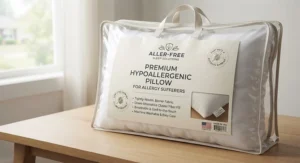
The most common mistake is trusting the word “hypoallergenic” on its own, with no certifying body named anywhere in the listing — it’s an unregulated term, and virtually any pillow can technically be marketed that way regardless of actual allergen resistance.
A second frequent misstep is buying based on softness reviews alone and ignoring washability entirely; a pillow that feels incredible on day one but can’t be laundered regularly will accumulate allergens just as fast as a standard pillow within a year. Third, shoppers often skip checking the cover fabric separately from the fill, missing that a synthetic, non-certified cover can undercut an otherwise excellent hypoallergenic fill underneath it. Finally, many buyers assume a higher price automatically means better allergen resistance — as this list shows, a well-certified $25 pillow can outperform an uncertified $80 one on the specific allergy metrics that matter.
Frequently Asked Questions
❓ What is the best pillow for allergies and asthma?
❓ How often should you replace a hypoallergenic pillow?
❓ Can you wash a hypoallergenic pillow?
❓ Is memory foam or down alternative better for dust mite allergies?
❓ Do allergen barrier pillow covers actually work?
Conclusion
A hypoallergenic pillow for allergies isn’t a single product category — it’s a set of tradeoffs between fill type, cover fabric, certification, and your own specific trigger, whether that’s dust mites, asthma, sensitive skin, or general congestion you’ve been blaming on everything except your bedding. The good news is that real, independently certified options now exist at nearly every price point, from the sub-$60 Beckham Hotel Collection two-pack to the fully organic, multi-certified Avocado Green Pillow.
The fastest path to relief is matching the pillow to the trigger you actually have, rather than grabbing whatever’s labeled “hypoallergenic” on the shelf. Check for a named certification, confirm the cover is washable, and consider layering an allergen barrier cover on top regardless of which pillow you choose. Small changes to the six inches closest to your face can outsize almost anything else you do to your bedroom for allergy control.
✨ Ready to Sleep Allergen-Free Tonight?
🔍 Compare current prices on any pillow above and pick the one that actually matches your trigger — your sinuses will thank you by morning.
Recommended for You
- Down Alternative Pillow Guide: 7 Fluffiest Picks for 2026
- Hotel Quality Down Pillow: 7 Picks That Beat the Marriott (2026)
- Goose Down vs Duck Down Pillow: 7 Best Picks for 2026
Disclaimer: This article contains affiliate links. As an Amazon Associate, I earn from qualifying purchases. If you purchase products through these links, we may earn a small commission at no additional cost to you.
✨ Found this helpful? Share it with your friends! 💬🤗
