
In This Article
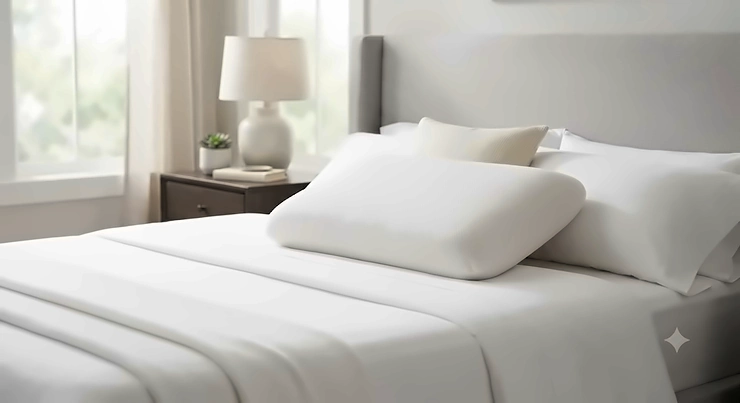
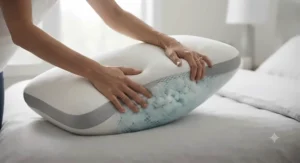
Here’s a confession most pillow shoppers won’t admit out loud: they flip their pillow over at 2 a.m., searching for the “cold side,” like it’s some kind of nightly ritual. If that sounds familiar, you’re not broken — your pillow probably is. A gel memory foam pillow is a memory foam pillow with cooling gel worked into or layered onto the foam, designed to pull heat away from your head and neck instead of trapping it like standard foam does. That’s the whole pitch, and when it’s done well, it actually works.

The tricky part is that “gel” gets slapped on packaging the way “natural” gets slapped on snack food — sometimes it means something, sometimes it’s marketing dressed up as science. Some pillows use a thin gel layer that cools for twenty minutes before matching room temperature. Others use gel worked all the way through open-cell foam, or shredded gel-infused foam you can scoop out and adjust. A few lean on phase change material instead of gel entirely, which is a different trick with the same goal.
We dug into real products sold in the U.S. right now — specs, materials, and aggregated review sentiment from verified sources — to build this guide. No invented five-star raves, no fictional pillows. Just seven real options across budget, mid-range, and premium tiers, plus the analysis you need to pick the right one for how you actually sleep. Research on pillow height and cervical alignment, published through the National Institutes of Health, backs up something worth remembering before we go further: the material matters, but so does the shape and the loft you choose.
Quick Comparison Table
| Pillow | Tier | Fill Type | Best For |
|---|---|---|---|
| DUMOS Gel Memory Foam Pillow | Budget | Solid gel-infused foam | Side sleepers wanting honeycomb airflow |
| Weekender Ventilated Gel Memory Foam Pillow | Budget | Ventilated solid foam | Combo sleepers on a tight budget |
| Sealy Dreamlife Memory Foam Gel Pillow | Budget-Mid | Solid gel foam | Buyers who want a trusted mattress brand |
| Coop Home Goods Original Loft Pillow | Mid | Shredded gel-infused foam | Anyone who wants adjustable loft |
| MALOUF Z Zoned Dough Pillow | Mid | Gel bead-infused zoned foam | Side and back sleepers needing neck support |
| Purple Dreamlayer Pillow | Premium | Gel grid + adjustable foam | Sleepers who want a customizable dual layer |
| Tempur-Cloud Breeze Pillow | Premium | Gel foam + phase change material | Hot sleepers who want proven cooling tech |
Look at that spread for a second. Budget doesn’t mean bad here — the DUMOS Gel Memory Foam Pillow and Weekender Ventilated Gel Memory Foam Pillow both use genuine ventilation engineering, not just a marketing sticker. But if you run hot every single night regardless of the season, the phase change layer in the Tempur-Cloud Breeze Pillow is doing something structurally different from a basic gel infusion, and that difference is worth the price jump for chronic hot sleepers specifically.
💬 Already have a favorite from the table above? Scroll down to see exactly why it earned its spot — or keep reading to compare all seven side by side.
Top 7 Gel Memory Foam Pillows: Expert Analysis
We picked these seven to cover every kind of sleeper and every kind of budget — from a $30 two-pack to a premium pick that costs more than some people’s monthly grocery run. Each one earned its spot for a specific reason, not because it showed up first in a search result.
1. DUMOS Gel Memory Foam Pillow — best budget honeycomb cooling design
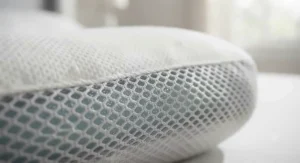
The standout here is the honeycomb ventilation structure molded directly into the foam, which sounds like a gimmick until you realize it’s just physics: more surface area exposed to air means heat has somewhere to go instead of building up under your cheek. The pillow uses gel-infused open cell foam in a queen-size (24″ x 16″) shape with roughly a 4.7-inch loft, which lands in medium-firm territory — supportive enough for side sleepers without feeling like a brick.
Based on the spec comparison, this is a pillow built for people who sleep hot but don’t want to spend real money finding out if gel pillows work for them. The honeycomb channels plus a washable mesh cover do real, structural cooling work rather than relying on a thin surface gel layer alone. Reviewers consistently mention that side sleepers with neck strain notice a difference within the first week, particularly compared to old flat pillows that had gone lumpy.
Pros:
- ✅ Genuine airflow channels, not just a marketing claim
- ✅ Washable mesh cover resists odor buildup
- ✅ Sold in a 2-pack, which lowers the per-pillow cost
Cons:
- ❌ Medium loft may sit too high for strict stomach sleepers
- ❌ Less plush feel than shredded-fill alternatives
Priced in the $30-$45 range for the pair at the time of research, this is the pick if you want to test whether gel memory foam actually changes your sleep temperature before committing to a pricier model. Value-wise, it’s hard to beat for a first-time buyer.

2. Weekender Ventilated Gel Memory Foam Pillow — most breathable ventilation channels
This one’s standout feature is aggressive perforation — small holes drilled straight through the foam core, which is a more old-school but genuinely effective cooling method than a thin gel coating. It’s a solid gel-infused foam pillow, not shredded, so it holds a consistent shape all night rather than shifting under your head.
What most buyers overlook about ventilated foam is that it solves a different problem than gel infusion does. Gel pulls heat away chemically; perforation lets heat escape physically through the holes. Combining both, as this pillow does, tackles the overheating problem from two angles rather than one, which is exactly why it holds up in the “cooling gel pillow Amazon” conversation despite its low price point. It’s firm enough for back sleepers who need consistent neck support, though side sleepers with broader shoulders may find the loft slightly shallow.
Pros:
- ✅ Dual cooling approach — perforation plus gel infusion
- ✅ Maintains shape better than shredded-fill pillows
- ✅ Budget-friendly for a name-brand Amazon exclusive
Cons:
- ❌ Firmer feel may not suit sleepers who want a plush sink-in pillow
- ❌ Standard loft can run shallow for wide-shouldered side sleepers
Expect a price in the mid-$20s to low-$30s range at the time of research — genuinely one of the lowest-cost entries in this whole category, and a smart pick if this is your first cooling pillow purchase.
3. Sealy Dreamlife Memory Foam Gel Pillow — best trusted-brand value pick
The standout feature is simple brand trust backed by real manufacturing scale — Sealy has decades in mattress engineering, and that experience shows up in consistent foam density from unit to unit, something budget no-name brands can’t always promise. It’s a solid gel memory foam construction in a classic standard size, positioned as an accessible entry point rather than a specialty cooling product.
Here’s what the spec sheet won’t tell you directly: mainstream mattress brands like Sealy tend to formulate their foam for durability over flashy features, which means this pillow won’t lose its shape as fast as some of the flashier gel-bead competitors. It’s a dependable, no-drama choice for people who just want a normal pillow that happens to sleep cooler than the flat, dense foam pillow they’re replacing. Aggregated retailer feedback points to consistent satisfaction around support and shape retention, with fewer complaints about sagging compared to entry-level competitors.
Pros:
- ✅ Backed by an established, high-volume mattress manufacturer
- ✅ Consistent foam density and shape retention over time
- ✅ Frequently discounted, improving already-solid value
Cons:
- ❌ Cooling effect is milder than dedicated ventilated designs
- ❌ Limited size options compared to specialty brands
Pricing tends to sit in the $30-$40 range at the time of research, occasionally dipping lower during retailer sales — check current price before buying, since Sealy’s promotions shift often.
4. Coop Home Goods Original Loft Pillow — most adjustable loft and firmness
The defining feature is the zippered design that lets you physically remove or add fill, which solves the single biggest complaint about foam pillows: you’re stuck with whatever loft the manufacturer picked for you. Inside is a blend of shredded gel-infused memory foam and microfiber, wrapped in a breathable bamboo-derived viscose and polyester cover.
Based on the spec comparison, this is the pick for anyone who has never been able to find “the right pillow” because every pillow they’ve tried was either too flat or too tall. The shredded fill contours more like a cloud than a slab, which back sleepers and combination sleepers tend to prefer over the firmer feel of solid foam blocks. Reviewers frequently report that the ability to scoop out fill solved persistent neck stiffness that firmer, non-adjustable pillows had failed to fix, and the CertiPUR-US certification gives an added layer of confidence about what’s actually inside.
Pros:
- ✅ Fully adjustable fill level for personalized loft
- ✅ CertiPUR-US certified foam, GREENGUARD Gold rated cover
- ✅ Comfortable across back, side, and combination sleeping
Cons:
- ❌ Shredded fill feels less structured than solid foam
- ❌ Some initial off-gassing smell reported before first wash
Expect to pay somewhere in the $60-$80 range at the time of research — a fair jump over the budget tier, justified by the adjustability most competitors simply don’t offer.
5. MALOUF Z Zoned Dough Gel-Infused Memory Foam Pillow — best gel bead cooling for side sleepers
The standout is the zoned technology: larger perforated holes in the center cradle the head while a denser perimeter supports the neck, and that structure is built around a genuine gel bead pillow insert woven into the “Dough” foam formula. The result is a memory foam that’s noticeably softer and more responsive than traditional viscoelastic foam, while the gel beads work to distribute heat rather than let it pool.
What most buyers overlook about zoned designs is that they’re solving a positioning problem, not just a temperature problem — the varied hole sizes change how your head sinks in versus how your neck stays supported, which matters enormously for side sleepers who need extra loft under the neck without extra pressure on the ear. Paired with a removable Tencel cover known for moisture-wicking, this pillow tackles both heat and humidity, which is the one-two punch that actually causes night sweats. Aggregated buyer feedback highlights the “doughier,” slower-rebound feel as a major differentiator from firmer competitors, though a handful of buyers describe a lengthy break-in period before the foam fully relaxes.
Pros:
- ✅ Genuine gel bead pillow insert, not just a surface coating
- ✅ Zoned airflow holes improve both cooling and support
- ✅ Removable, washable Tencel cover for moisture control
Cons:
- ❌ Softer “dough” feel isn’t ideal for sleepers wanting firm support
- ❌ Break-in period before the foam reaches full loft
Pricing generally falls in the $65-$90 range at the time of research depending on size and loft — mid-tier money for what’s genuinely a mid-tier-plus construction.

6. Purple Dreamlayer Pillow — best dual-layer customization
The defining feature is Purple’s signature gel grid layer sitting atop an adjustable foam base, giving you two totally different textures in one pillow — a bouncy, airy top layer and a supportive foam bottom you can add or remove booster inserts to. It’s an unusual hybrid that doesn’t fit neatly into “solid foam” or “shredded foam” categories.
Here’s what most reviews miss: the gel grid isn’t really “gel-infused foam” in the traditional sense — it’s a flexible polymer grid designed to flex under pressure points while staying open enough for air to move freely through it, which is a genuinely different cooling mechanism than gel-infused open cell foam. That distinction matters if you’re comparing this pillow to the others on this list expecting an apples-to-apples cooling comparison. Sleepers who liked Purple’s mattress technology tend to gravitate toward this pillow for the same “it moves with you” feel, though the unconventional texture is genuinely polarizing — some sleepers love the grid, others find it too unusual against bare skin.
Pros:
- ✅ Unique gel grid layer offers real, structural airflow
- ✅ Adjustable booster layers for custom loft
- ✅ Distinctive contouring feel unlike standard foam
Cons:
- ❌ Noticeable off-gassing smell reported when first unboxed
- ❌ Higher price point relative to loft adjustability offered
Expect a price generally in the $150-$180 range at the time of research, placing it firmly in premium territory — justified mainly by the unique grid engineering rather than raw materials cost.
7. Tempur-Cloud Breeze Dual Cooling Pillow — best phase-change cooling technology
The standout feature is the combination of gel memory foam with an actual phase change material layer, plus a mesh cover — three cooling mechanisms stacked together rather than relying on gel alone. This is the pillow for people who’ve already tried “cooling” pillows that turned warm by 3 a.m. and want something built around a fundamentally different cooling principle.
Based on the spec comparison, phase change material works differently than gel: instead of just distributing heat, it actually absorbs heat as it transitions between solid and liquid states, then releases it slowly once your body cools down — the same principle NASA engineers refined for astronaut suits, as documented in NASA’s own spinoff research. That’s a meaningfully different mechanism than a simple gel coating, and it’s why premium brands charge more for it. Independent testers report no noticeable heat buildup through the night, describing the feel as reliably neutral rather than icy-cold-then-warm, which is the exact complaint leveled at cheaper gel-surface pillows.
Pros:
- ✅ Combines gel foam with genuine phase change material
- ✅ CertiPUR-US certified, quick-responding “adaptive foam” core
- ✅ Long sleep trial and multi-year warranty for peace of mind
Cons:
- ❌ Premium price puts it out of reach for budget shoppers
- ❌ Medium-firm feel may be too structured for plush-pillow lovers
Pricing typically runs in the $150-$200 range at the time of research — a genuine investment, but one backed by materials science rather than marketing alone.
Gel Fiber Pillow vs Gel Foam Pillow: What’s the Real Difference?
This is the comparison that trips up more shoppers than any other, and honestly, the names don’t help. A gel fiber pillow uses polyester or down-alternative fiber clusters coated or infused with gel, giving you a soft, fluffable feel closer to a traditional pillow — think the Coop Home Goods Original Loft Pillow‘s microfiber blend. A gel foam pillow, by contrast, uses solid or shredded memory foam infused with gel, like the DUMOS Gel Memory Foam Pillow or Sealy Dreamlife Memory Foam Gel Pillow, giving you denser contouring and slower rebound.
The practical difference shows up the moment you lie down. Gel fiber pillows compress and rebound quickly, letting you punch and fluff them like a classic bed pillow — great if you toss and turn a lot. Gel foam pillows sink slowly and hold their shape, cradling your head and neck in one position rather than letting you reshape them on the fly, which is exactly why side sleepers with neck pain tend to prefer foam over fiber. Neither is objectively “better” — it’s a genuine trade-off between plush adjustability and structured support, and your sleep position should be the deciding factor, not the marketing copy.
Phase Change Cooling Layers vs Gel Infusion: How Do They Actually Cool You?
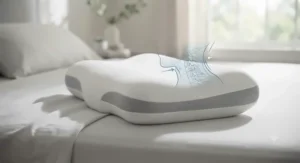
Gel infusion and phase change material both promise “cooling,” but they’re solving the heat problem through completely different physics, and understanding that difference will save you from buyer’s remorse. Gel-infused foam works through conductive heat transfer — the gel particles pull heat away from your skin and spread it across a wider surface area of the pillow, similar to how a metal spoon feels cooler to the touch than a wooden one. It’s passive, immediate, and effective for mild overheating, but it doesn’t fundamentally change how much heat the pillow can hold before it warms up too.
A phase change cooling layer, like the one in the Tempur-Cloud Breeze Pillow, works differently: the material absorbs a large amount of heat energy as it melts from a near-solid to a more liquid state at body-adjacent temperatures, then slowly releases that heat once you cool down again. This is the same passive thermal regulation strategy NASA developed for spacesuits, later commercialized into bedding and apparel. What most buyers overlook is that this means phase change layers can theoretically keep working longer through the night before “saturating,” whereas thin gel layers can warm up faster once they’ve absorbed their capacity. For occasional hot flashes, gel infusion is often enough. For sleepers who run hot every single night, a genuine phase change layer is the more durable long-term fix.
Gel Bead Pillow Insert Explained: The Tech Inside
Not all “gel” in gel memory foam pillows is the same substance, and the gel bead pillow insert used in pillows like the MALOUF Z Zoned Dough Pillow deserves its own explanation. Instead of liquefying gel into the foam during manufacturing, some brands embed small solid gel beads directly into the memory foam formula — tiny pockets of a cooler-feeling material distributed throughout the pillow rather than mixed molecularly into it.
The practical upshot: gel beads tend to hold their cooling properties longer than fully liquefied gel infusions, because the beads act almost like tiny thermal batteries scattered through the foam rather than a single layer that saturates all at once. Reviewers who’ve used both types over the years tend to note that pillows using distinct gel beads feel cooler further into the night compared to pillows relying purely on a thin gel-coated surface layer. The trade-off is texture — gel bead foam sometimes has a slightly different, “doughier” give than uniformly gel-infused foam, which is part of why the MALOUF Z Zoned Dough Pillow feels noticeably softer underhand than the firmer Weekender Ventilated Gel Memory Foam Pillow.
How to Choose a Gel Memory Foam Pillow
Picking the right pillow isn’t about finding the “best” one in some universal sense — it’s about matching construction to your sleep position, temperature sensitivity, and budget. Here’s the framework we’d walk a friend through:
- Identify your primary sleep position first. Side sleepers generally need more loft (5-6 inches); back sleepers need medium loft; stomach sleepers need low loft to avoid neck strain.
- Decide how hot you actually sleep. Occasional warmth suits basic gel infusion; nightly overheating justifies paying more for phase change material.
- Choose solid foam or shredded fill based on adjustability needs. Shredded, like the Coop Home Goods Original Loft Pillow, lets you customize loft; solid foam holds a consistent shape.
- Check for CertiPUR-US certification. This confirms the foam was independently tested for harmful chemicals and heavy metals — a meaningful trust signal, not just a logo.
- Match firmness to body weight. Heavier sleepers typically compress foam more and may need a firmer, denser pillow to avoid bottoming out overnight.
- Read the trial and warranty terms before buying. Pillows with 30+ night trials, like several premium picks here, let you actually test the cooling claim risk-free.
- Compare price ranges, not exact prices. Prices shift constantly — focus on which tier (budget, mid, premium) fits your needs rather than chasing the lowest number today.
Common Mistakes When Buying a Gel Memory Foam Pillow
Even careful shoppers fall into predictable traps here, and most of them come down to trusting marketing language over material facts. The first mistake is assuming “gel-infused” automatically means “stays cold all night” — as we covered above, a thin gel layer can and does warm up once it’s absorbed its capacity, especially in solid foam without ventilation.
The second common mistake is buying based on loft height alone without considering sleep position, which is exactly the finding echoed by a systematic review of pillow interventions for neck pain — pillow shape and support matter just as much as material choice. The third mistake is skipping the CertiPUR-US label entirely, assuming all foam is equally regulated; it isn’t, and imported no-name foam has occasionally tested positive for banned flame retardants in the past. The fourth mistake — and this one’s sneaky — is judging cooling performance from the first five minutes in-store. Gel and phase change cooling both perform differently after hours of sustained body heat than they do on a quick showroom test.
🔍 Don’t Miss These Cooling Pillow Picks!
Take your sleep setup to the next level with these carefully researched gel memory foam pillows. Click on any highlighted pick above to check current pricing and availability — the right pillow could be the easiest sleep upgrade you make all year.
Gel Memory Foam Pillow Pros and Cons
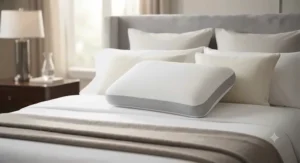
Stepping back from individual products, it’s worth weighing what gel memory foam pillows deliver as a category compared to plain memory foam or traditional down alternatives.
Pros:
- ✅ Meaningfully reduces heat buildup compared to standard memory foam
- ✅ Retains memory foam’s contouring support and pressure relief
- ✅ Widely available across every price tier, from budget to premium
Cons:
- ❌ Cooling effect varies significantly by construction quality and gel type
- ❌ Denser foam options can feel too firm for plush-pillow lovers
The honest takeaway: gel memory foam solves overheating better than plain foam almost universally, but “gel” alone doesn’t guarantee dramatic cooling — construction quality, ventilation, and gel type all shape the real-world result far more than the word “gel” on the box.
Benefits vs Traditional Alternatives
| Factor | Gel Memory Foam | Traditional Down/Fiber | Plain Memory Foam |
|---|---|---|---|
| Cooling | Moderate to strong, varies by design | Naturally breathable but low support | Poor — traps heat |
| Support/Contouring | Strong, consistent | Minimal, compresses flat | Strong |
| Durability | 3-5 years typical | 1-2 years before flattening | 3-5 years typical |
| Best For | Coop Home Goods, MALOUF Z Zoned Dough for hot + supportive sleep | Traditionalists prioritizing softness | Budget shoppers not sensitive to heat |
The pattern here is straightforward once you see it laid out: gel memory foam is essentially plain memory foam with the one major flaw — heat retention — specifically engineered out. Traditional down and fiber pillows breathe naturally but sacrifice the neck support that side and back sleepers with pain issues actually need. If you’ve been choosing between “supportive but hot” and “cool but flat,” gel memory foam is built to close that exact gap.
Gel Memory Foam Pillow for Hot Sleepers and Side Sleepers
If you fall into both categories — hot-blooded and side-sleeping — your shopping list narrows fast. You need enough loft to fill the gap between your ear and shoulder (typically 5-6 inches), plus a cooling mechanism robust enough to handle a full night of sustained head contact, since side sleeping concentrates more surface area against the pillow than back sleeping does.
The MALOUF Z Zoned Dough Pillow‘s zoned perforation plus gel bead pillow insert is purpose-built for exactly this combination — extra loft under the neck, ventilation under the head. The Tempur-Cloud Breeze Pillow is the upgrade pick if you’re willing to pay more for phase change material’s longer-lasting cooling effect. For hot sleepers on a budget, the DUMOS Gel Memory Foam Pillow‘s honeycomb structure is the most cooling-focused option under $50 in this list, though it won’t outperform premium phase change technology over a full eight hours.
Long-Term Cost & Maintenance
A pillow’s sticker price is only half the real cost story — the other half is how long it lasts before you’re shopping again. Budget gel foam pillows in the $25-$45 range often need replacing within 2-3 years as the foam compresses and loses responsiveness, meaning the true annual cost isn’t dramatically lower than a mid-tier pick that lasts 4-5 years for roughly double the upfront price.
Premium options like the Tempur-Cloud Breeze Pillow and Purple Dreamlayer Pillow typically carry longer warranties (3-5 years) and sleep trials exceeding 100 nights, which meaningfully lowers the real financial risk even at a higher sticker price — you’re not stuck if the pillow doesn’t work for you. Maintenance-wise, removable and washable covers (found on the MALOUF Z Zoned Dough Pillow and Coop Home Goods Original Loft Pillow) extend usable life significantly, since oil and sweat breakdown of the cover fabric is often what makes a pillow feel “done” long before the foam core actually fails.
Setting Up and Caring for Your New Gel Pillow
Getting a gel memory foam pillow to perform at its best starts before you even sleep on it. Fresh-from-the-box memory foam is usually vacuum-compressed for shipping, so give it 24-48 hours to fully expand and off-gas in a well-ventilated room before first use — skipping this step is the single most common first-week complaint, mistaken for a “chemical smell that won’t go away.”
Once it’s expanded, wash the removable cover before first use if the pillow has one; this alone resolves a surprising number of “still feels warm” complaints, since manufacturing residue can temporarily reduce a cover’s breathability. For shredded-fill pillows like the Coop Home Goods Original Loft Pillow, resist the urge to remove fill immediately — sleep on it for a week at factory loft first so you actually know what you’re adjusting away from. Long-term, avoid machine-washing the solid foam core itself (only the cover), and fluff or reshape shredded-fill pillows every few weeks to keep the fill evenly distributed rather than clumping toward one end.
Real-World Scenarios: Which Gel Pillow Fits Your Life?
The night-shift nurse sleeping days in a warm apartment: Heat sensitivity is amplified by daytime sleep in a brighter, often warmer room. The Tempur-Cloud Breeze Pillow‘s phase change layer is worth the investment here, since sustained daytime heat is exactly the scenario phase change material was designed to outlast.
The college student on a tight budget, sharing a dorm with questionable AC: The DUMOS Gel Memory Foam Pillow 2-pack solves two problems at once — one pillow for the bed, one for the inevitable couch nap, at a price that survives a student budget without sacrificing cooling entirely.
The side sleeper with chronic neck stiffness who’s tried three pillows already: Both the MALOUF Z Zoned Dough Pillow and Coop Home Goods Original Loft Pillow target this directly — one through zoned support, the other through fully adjustable loft — making either a reasonable next step before assuming the problem is unsolvable.
Problem → Solution: Fixing Common Gel Pillow Complaints
Problem: “My gel pillow felt cool for the first hour, then got warm.” Solution: this points to a thin surface-only gel layer without ventilation. Look for solid gel-infused open cell foam with perforation, like the Weekender Ventilated Gel Memory Foam Pillow, or upgrade to phase change material for longer-lasting cooling.
Problem: “The pillow is too firm and my neck hurts more, not less.” Solution: solid foam may be too dense for your body weight or preferred feel. Try shredded gel-infused foam like the Coop Home Goods Original Loft Pillow, which contours more softly.
Problem: “It lost its shape within a year.” Solution: this is common with uncertified, low-density foam. Prioritize CertiPUR-US certified pillows from established manufacturers like Sealy Dreamlife or MALOUF Z Zoned Dough, which are built for shape retention.
Problem: “There’s a strong chemical smell I can’t get rid of.” Solution: ventilate the pillow for 48+ hours before use, and check that it’s CertiPUR-US certified — that certification specifically screens for high-VOC emissions.
Safety, Certifications & What “CertiPUR-US” Actually Means
CertiPUR-US isn’t just a logo manufacturers slap on packaging — it’s an independent, third-party certification program that tests foam samples for banned flame retardants, heavy metals, and volatile organic compound emissions, according to CertiPUR-US’s own published standards. Foam producers submit to lab testing at accredited facilities, and certification requires re-testing annually, not a one-time check that’s never revisited.
For gel memory foam pillow shoppers specifically, this matters because gel additives and phase change microcapsules are relatively newer materials layered into foam manufacturing, and not every brand submits every formula for testing. Pillows in this guide carrying CertiPUR-US certification — including the Coop Home Goods Original Loft Pillow and Tempur-Cloud Breeze Pillow — have had their specific foam formulations independently verified, which is a meaningfully higher bar than a brand simply claiming its materials are “safe” on the product page. If a listing doesn’t mention certification at all, that’s worth a direct question to the seller before buying, not an assumption in the brand’s favor.
FAQ
❓ What is a gel memory foam pillow?
❓ Is gel memory foam pillow good for neck pain?
❓ How long does a gel memory foam pillow last?
❓ Do gel pillows really stay cool all night?
❓ What's the difference between gel fiber and gel foam pillows?
Conclusion
If there’s one thing worth carrying away from all this, it’s that “gel memory foam pillow” isn’t one product — it’s a category with real engineering differences hiding behind similar-sounding marketing language. A honeycomb-vented budget pick like the DUMOS Gel Memory Foam Pillow solves a genuinely different problem than a phase-change powerhouse like the Tempur-Cloud Breeze Pillow, and neither is wrong — they’re built for different sleepers.
Start with your sleep position and how hot you actually run at night, then let the construction — solid versus shredded, gel infusion versus phase change, zoned versus uniform — guide you from there rather than the price tag alone. Whether you land on the budget-friendly Weekender Ventilated Gel Memory Foam Pillow or splurge on the Purple Dreamlayer Pillow‘s unusual gel grid, the goal is the same: fewer 2 a.m. pillow flips, more actual sleep.
Recommended for You
- Bamboo Pillow for Hot Sleepers: 7 Cooling Picks for 2026
- Best Bamboo Pillow 2026: 7 Cooling Picks That Actually Deliver
- Water Pillow for Neck Pain: 7 Best Picks for Real 2026 Relief
Disclaimer: This article contains affiliate links. As an Amazon Associate, I earn from qualifying purchases. If you purchase products through these links, we may earn a small commission at no additional cost to you.
✨ Found this helpful? Share it with your friends! 💬🤗
